
Logistics Players Urge Government to Strengthen Import Oversight
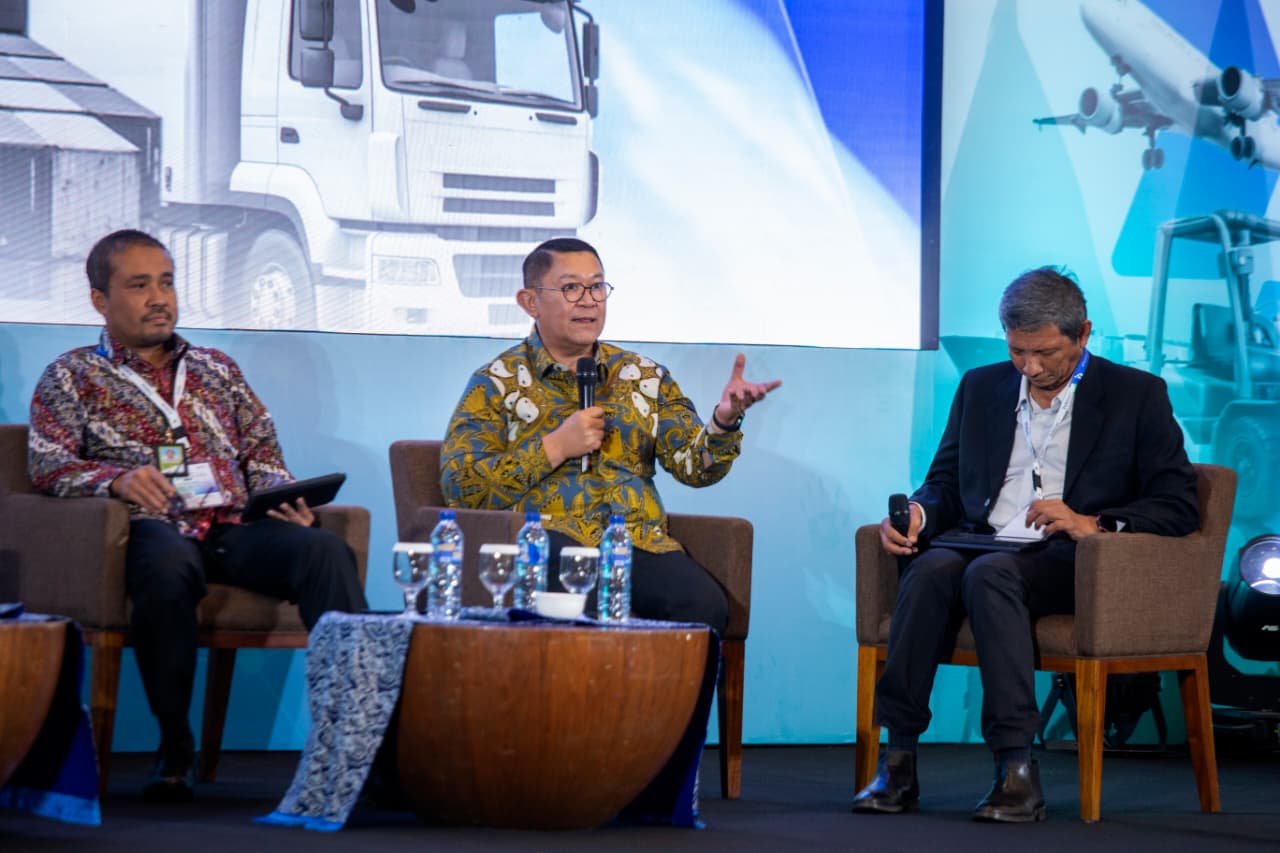
Logistics and supply chain stakeholders support the government’s move to strengthen import governance through Minister of Trade Regulation (Permendag) Number 18 of 2026. However, they believe the success of this regulation’s implementation must maintain a balance between supervisory functions, the smooth flow of goods, logistics efficiency, and the needs of the national industry to ensure economic competitiveness remains protected.
Minister of Trade Regulation Number 18 of 2026, which comes into effect on 4 June 2026, is the second amendment to Permendag Number 16 of 2025 regarding Import Policies and Regulations. This regulation introduces several improvements, including the issuance of Surveyor Reports (LS) after the expiry of Import Approvals (PI) and the strengthening of data validation between licensing documents and Import Goods Notifications (PIB), which have frequently been administrative hurdles for businesses.
Yukki Nugrahrahawan Hanafi, Chairman of the Advisory Board of the ASEAN Federation of Forwarders Associations (AFFA) and the Advisory Board of the Chartered Institute of Logistics and Transport (CILT), believes that these regulatory improvements are fundamentally aligned with business needs. He stated that businesses support the government’s steps to increase compliance and strengthen import governance. However, implementation must consider the smooth supply of raw materials and capital goods required by the industrial sector.
Yukki emphasised that the primary goal of import policy should not only focus on controlling goods entering Indonesia but also on strengthening national industrial competitiveness, increasing exports, and creating efficient and sustainable supply chains. He noted that ideal regulations must be able to protect the domestic market without reducing the industry’s ability to produce and compete in the global market.
Data from the Central Bureau of Statistics (BPS) shows that Indonesian imports are still dominated by production sector needs. Throughout 2025, the national import value reached US$241.86 billion, with approximately 70% (US$169.30 billion) consisting of raw materials and auxiliary materials, and 20% (US$50.13 billion) consisting of capital goods. Consequently, almost 90% of national imports are used as inputs for industrial activities.
Reflecting on these conditions, Yukki warned that additional administrative requirements must not create new obstacles that could potentially slow down goods distribution and increase logistics costs. He argued that amidst global economic uncertainty, the smoothness of the supply chain is a crucial factor determining Indonesia’s competitiveness. Therefore, administrative processes must be designed so as not to create bottlenecks that impact production cost increases.
To support such efficiency, he encouraged the harmonisation of systems between agencies, including the Ministry of Trade, the Directorate General of Customs and Excise, the Indonesia National Single Window (INSW), Online Single Submission (OSS), and other technical ministries. Such steps are considered vital to avoid duplication of processes or differing policy interpretations that could create uncertainty for businesses.
Furthermore, Yukki emphasised that import supervision should focus on protecting national industry without hindering the entry of raw materials, auxiliary materials, and capital goods that support production activities, job creation, and export performance.
He also highlighted the importance of a socialisation and transition period so that businesses have sufficient time to adjust to the new provisions without disrupting trading activities. In his view, the success of import governance is ultimately determined not by the number of restrictions applied, but by the government’s ability to maintain a balance between supervision, the smooth flow of goods, logistics efficiency, and the strengthening of national industrial competitiveness.