
Logistics Players Stress Supply Chain Fluidity as Key to Competitiveness
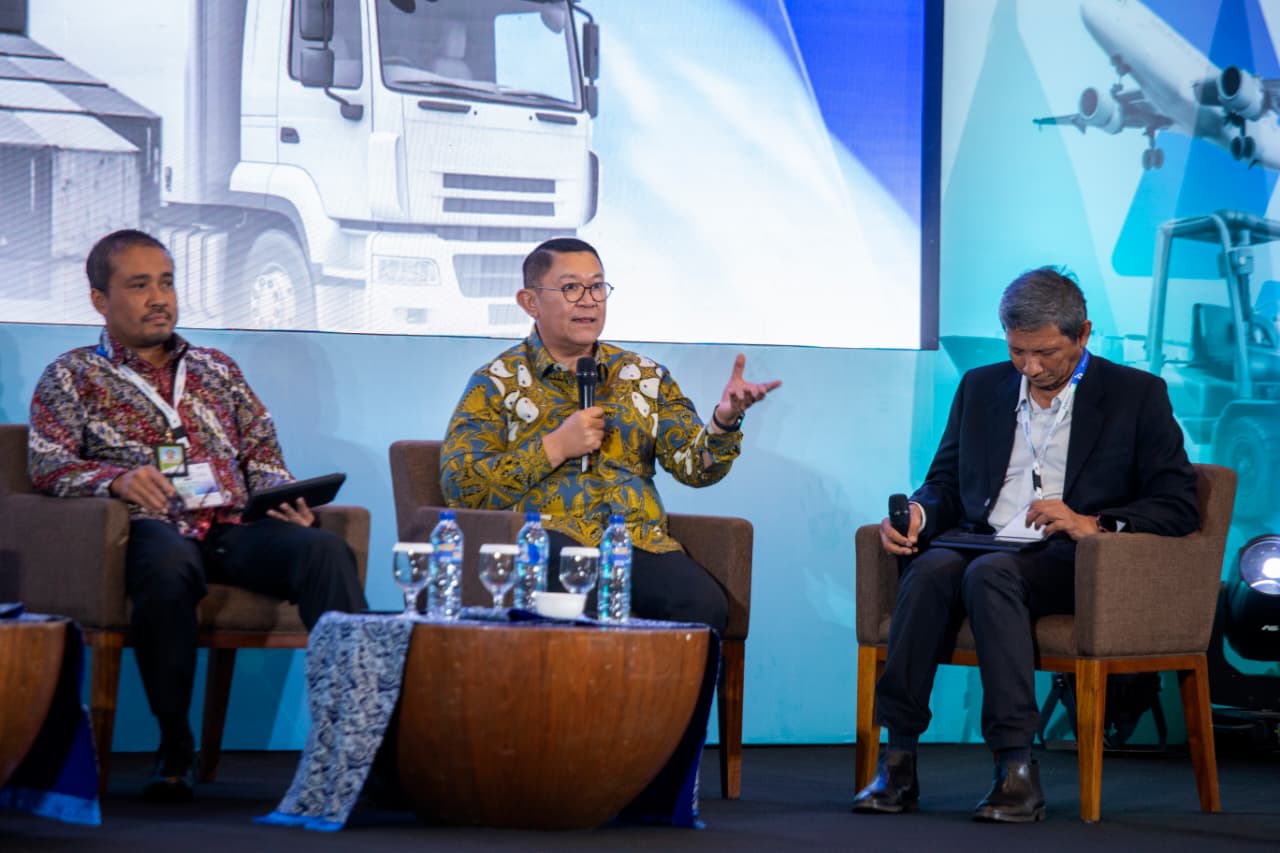
The strengthening of import governance through Trade Minister Regulation (Permendag) No. 18/2026 on Import Policy and Regulation is viewed as a positive step to enhance legal certainty and the effectiveness of licensing services. However, logistics and supply chain players caution that the success of import policy is ultimately not measured by the number of restrictions, but by its ability to maintain a balance between oversight, the smooth flow of goods, logistics efficiency, and the improvement of national industrial competitiveness.
Permendag No. 18/2026, which came into effect on 4 June 2026, is the second amendment to Permendag No. 16/2025 on Import Policy and Regulation. This regulation, among other things, governs the issuance of Surveyor Reports after the validity period of Import Approvals has expired, as well as the strengthening of data validation between licensing documents and the Import Declaration, two areas that frequently become administrative bottlenecks in the field.
Yukki Nugrahawan Hanafi, Chairman of the Advisory Board of the ASEAN Federation of Forwarders Associations and Advisory Board member of the Chartered Institute of Logistics and Transport, assessed that the spirit of refining this regulation aligns with the needs of the business community. “In principle, the business community supports the government’s efforts to strengthen import governance and improve business compliance. However, its implementation needs to maintain a balance between the oversight function and the smooth supply of raw materials and capital goods required by national industry,” said Yukki.
He stressed that the ultimate goal of import policy should not stop at controlling incoming goods. “The ultimate goal is how to strengthen the competitiveness of national industry, increase exports, and create an efficient and sustainable supply chain. Good regulation must be able to protect the domestic market without reducing the competitiveness of the production and export sectors,” Yukki stated.
Data from the Central Statistics Agency shows that Indonesia’s import structure is still heavily dominated by production needs. Throughout 2025, the national import value reached US$241.86 billion, with raw materials and auxiliaries accounting for around 70 percent, or US$169.30 billion, and capital goods around 20 percent, or US$50.13 billion. This means nearly 90 percent of Indonesia’s imports are inputs for industry.
In this context, Yukki reminded that additional administrative requirements should not turn into new obstacles. “In the current state of global uncertainty, supply chain fluidity is a critical factor for Indonesia’s competitiveness. Additional administrative requirements must not create bottlenecks that actually increase logistics and production costs,” he asserted.
To maintain this efficiency momentum, Yukki encouraged the harmonisation of systems across agencies. “Businesses need procedural certainty and system harmonisation between the Ministry of Trade, Customs, the Indonesia National Single Window, the Online Single Submission system, and other technical ministries, so that there is no duplication of processes or differing interpretations in the field,” he said.
He also requested special attention to the flow of raw materials, auxiliaries, and capital goods. According to him, import oversight should be more directed at protecting national industry without hindering the entry of production inputs that actually run factories, sustain employment, and support export performance.
The readiness of businesses, Yukki continued, is key to successful implementation, and he urged that the socialisation and transition period be a focus of attention for businesses to adapt without disrupting trade activities.
Ultimately, an effective import policy is one that places national competitiveness as its goal. “The success of import governance is not measured by how much we restrict, but by how well we balance oversight with the smooth flow of goods, logistics efficiency, and industrial strengthening. That is where Indonesia’s future competitiveness lies,” Yukki concluded.