
Logistics Businesses Utilise Telematics for Fleet Management
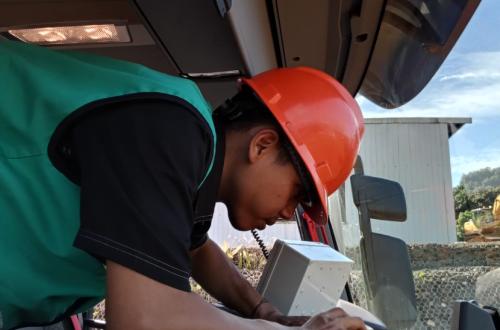
Transport and logistics companies require more efficient fleet management to reduce operational costs while maintaining vehicle safety and security. The use of telematics has become a method for processing vehicle data, ranging from location and travel routes to driver behaviour and fuel consumption.
This data can be used by companies to evaluate fleet performance, optimise routes, control operational costs, and develop business plans based on real-world conditions.
CEO of PT GPSKU Karya Indonesia, Mh. Arya, stated that the use of telematics is helping to change fleet management patterns in several companies from a reactive approach to problem prevention.
“The most fundamental change we see in our clients is a shift in work culture, from reactive to proactive. Previously, problems were only identified after they occurred. Now, many issues can be prevented before they have a significant impact on operations,” Arya said in a press release on Thursday (24/09/2026).
From a safety perspective, telematics data can be used to monitor driving behaviour, such as speed, sudden braking, acceleration, and compliance with safety procedures. This data serves as a basis for more measurable driver evaluation and training.
Regarding security, GPS trackers can monitor vehicles in real-time using geofencing and provide alerts when a vehicle moves outside of specified patterns. On certain devices, companies can also utilise remote engine cut-off features with proper authorisation.
The application of telematics is being utilised across various sectors. Logistics companies use it to improve the accuracy of delivery information and route management, while the mining and plantation sectors can use it to monitor vehicles and heavy equipment in areas with limited connectivity.
In conditions of limited connectivity, the system can temporarily store data and synchronise it once a connection becomes available. This technology ensures that vehicle data remains recorded even when operating in areas with unstable networks.
In the pharmaceutical and frozen food industries, GPS trackers can be integrated with temperature sensors to monitor cold chain distribution. The combination of location and temperature data allows companies to monitor journeys while documenting the condition of the cargo during distribution.
GPSKU noted internal evaluation results showing a decrease in vehicle theft cases among several corporate clients. This data provides an illustration of how telematics is utilised for fleet security, although results may vary depending on the specific conditions and management systems of each company.
Head of Marketing at GPSKU, Ihsan, stated that the use of vehicle data will become increasingly linked to fleet management and corporate digital systems.
“In the future, a company’s ability to utilise vehicle data will become a vital component in managing fleets more efficiently, safely, and measurably,” said Ihsan.
Vehicles can now be connected to corporate systems, internal dashboards, and various digital platforms. This integration allows operational vehicle data to serve as a fundamental basis for corporate decision-making.
Source: jawawa.id (https://jawawa.id/newsitem/logistics-businesses-utilise-telematics-for-fleet-management-1790250947)
Originally published by Republika (https://ekonomi.republika.co.id/berita/tlv26h416/bisnis-logistik-manfaatkan-telematika-untuk-kelola-armada), translated from Indonesian