
Lockheed Surprise: F-16G Offered to US Air Force
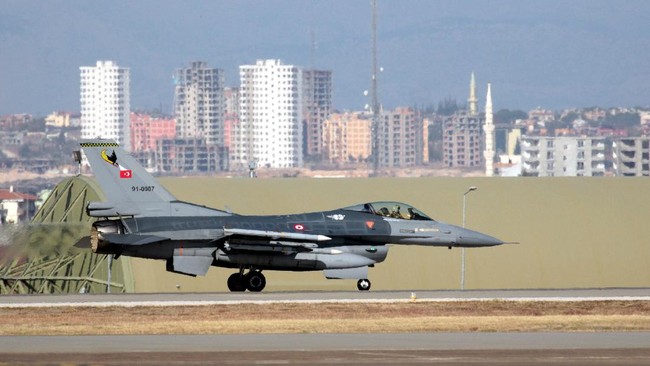
The F-1t6 fighter jet remains one of the most widely used combat aircraft in the world. This US-made jet is designed for both air-to-air combat and ground-attack missions.
Utilising a single engine, the F-16 is smaller and more cost-effective to operate compared to several heavy-class fighter jets. Despite its size, it remains capable of carrying missiles, bombs, cannons, and various target acquisition and locking systems.
While the aircraft first flew in 1974 and its basic design is over half a century old, the F-16 undergoes continuous upgrades. Although the airframe may appear similar, its radar, engines, cockpits, weaponry, and defensive systems evolve with every new generation.
This long journey is now poised for a new chapter. Lockheed Martin is offering the F-16G to the US Air Force to replace portions of its ageing F-16 fleet.
According to Aviation Week, the F-16G is developed from the F-16 Block 70, which is the most modern production version of the Fighting Falcon family. The aircraft will receive several enhancements to increase its range and target detection capabilities.
One such feature is conformal fuel tanks, which are additional fuel tanks fitted to the aircraft’s fuselage. This positioning ensures that the weapon pylons under the wings remain available for use.
The F-16G will also carry 600-gallon capacity fuel tanks on the wings. This additional fuel can extend its flight range, reducing the frequency of reliance on aerial tankers for mid-air refuelling.
Target acquisition capabilities will be bolstered by Infrared Search and Track (IRST) technology. This device detects the heat emitted by other aircraft engines, allowing pilots to locate adversaries without always activating their radar.
Other equipment includes the Sniper pod, a cylindrical device mounted externally on the aircraft. This tool assists pilots in spotting, tracking, and directing weapons towards both aerial and ground targets.
The F-16G will also be equipped with a braking parachute. This parachute is deployed after landing to assist in reducing speed, particularly when using short or slippery runways.
This proposal comes as the US Air Force faces challenges with its combat fleet. Many F-16s currently in service have operated for decades and are gradually approaching retirement.
The US last ordered new F-16s approximately 26 years ago. Since then, the nation has focused more on upgrading equipment and extending the service life of its existing aircraft.
Simultaneously, F-35 production has not been fast enough to immediately replace all retiring fighter jets. The F-16G is therefore being offered as a viable option to fill this capability gap.
The US Air Force estimates that larger-scale aircraft purchases could increase its combat fleet from 1,098 aircraft in fiscal year 2026 to 1,558 aircraft by 2035.
However, no decision has been made regarding the purchase of the F-16G. The US Air Force is still studying its fighter requirements and the various available options.
Lockheed Martin has not yet disclosed all the details regarding the aircraft. So far, the company has only stated its readiness to support the needs of the US Air Force.
The history of the F-16 family began in the early 1970s, when the US sought a fighter jet that was lighter, more agile, and less expensive than large-scale jets. General Dynamics subsequently developed a prototype named the YF-16, which flew in 1974 and was selected for development as the new US Air Force fighter.
This led to the creation of the F-16A and F-16B. The F-16A features a single seat for the pilot, while the F-16B is a two-seater primarily used for training. Production has since evolved through the F-16C/D, F-16E/F, F-16V, up to the Block 70/72.
Each generation brings more modern engines, radars, cockpits, and weaponry. The Block 70 and Block 72 share essentially the same technology, with the primary difference being the engine: Block 70 uses General Electric engines, while Block 72 uses Pratt & Whitney engines.
The F-16G offered to the US Air Force will use the Block 70 as its foundation. Lockheed Martin will then add fuel tanks, target seekers, targeting devices, and other equipment tailored to US requirements.