
Locals Recall Former President Soeharto's Spiritual Visits to Sacred Sites in Java
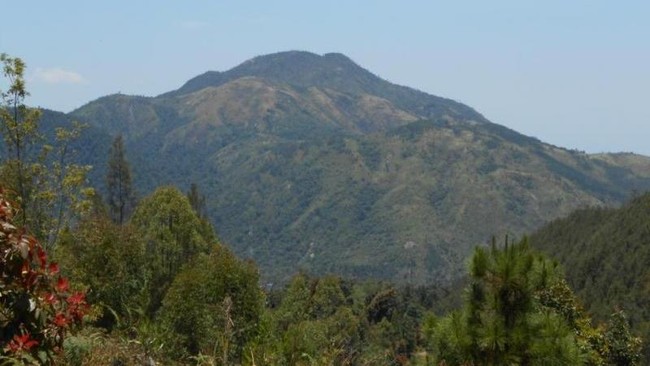
When discussing rituals to seek blessings or supernatural powers, many people might immediately think of Mount Kawi in East Java. However, Indonesia’s second president, Soeharto, is actually associated with other locations. Soeharto is said to have undertaken spiritual journeys several times in the Mount Selok area of Cilacap, as well as Mount Lawu, both long before and after he became president.
One account of this was written by historian George Quinn in his 2021 book ‘Wali Berandal Tanah Jawa’ (Pious Bandits of Java). Quinn, who visited Mount Selok directly, heard stories from local residents that Soeharto often visited the Mount Selok area, specifically the Jambe Lima Hermitage.
It is not known exactly when or how often these visits took place. However, according to the accounts Quinn received, the activity had been ongoing even before Soeharto became president. ‘According to the custodian, before becoming president, Soeharto often slept at this Jambe Lima Hermitage,’ Quinn wrote.
The story did not end after Soeharto became the country’s number one. Rumours circulating in the area suggest he still occasionally returned to visit, including to the Jambe Pitu Hermitage located not far from the previous site.
A similar story was also published by Tempo magazine in 2008 in an article titled ‘From Semar Cave, the Revelation Came’. In the report, a custodian named Rusmanto recounted that Soeharto’s spiritual journey in the Mount Selok area was carried out in several stages. Before heading to Semar Cave, Soeharto was said to have first meditated in Jambe Lima Cave, Jambe Pitu Cave, and Suci Rahayu Cave. ‘It was at Suci Rahayu that Soeharto underwent his initial purification,’ Rusmanto told Tempo.
Beyond Mount Selok, the name Mount Lawu also frequently appears in various stories about Soeharto’s spiritual practice. The mountain, located on the border of Central and East Java, has long been known as one of the locations considered sacred in Javanese tradition.
Citing the book ‘Hari-hari Terakhir Jejak Soeharto Setelah Lengser, 1998-2008’ (The Final Days of Soeharto’s Trail After Stepping Down, 1998-2008), a source claimed to have once accompanied Soeharto during a meditation session on Mount Lawu and even recounted an experience he considered unusual. He claimed to have escorted Soeharto on a climb to the peak of Lawu. ‘I once accompanied him to the peak of Lawu. While the young ones were gasping and exhausted, he, who was already quite old at the time, did not look tired at all until reaching the top,’ the source said.
Despite various stories of mystical rituals continuing to be attached to him, Soeharto once denied the notion that he practised superstition. In his autobiography, he asserted that what he practised was Javanese mysticism, not occult practices to seek invincibility or supernatural powers. ‘For me, the meaning of mysticism is kebatinan, not superstition. The goal of kebatinan is to bring our inner selves closer to our creator, God Almighty,’ Soeharto wrote in ‘Soeharto - Pikiran, Ucapan, dan Tindakan Saya’ (Soeharto - My Thoughts, Words, and Deeds) in 1989. According to Soeharto, many people mistakenly equate kebatinan with superstition. For him, kebatinan was a path to get closer to God, so his understanding of mysticism differed from the perception developing in society.