
Local Feed Innovation Key to Sustainable Catfish Farming in Tabanan, Bali
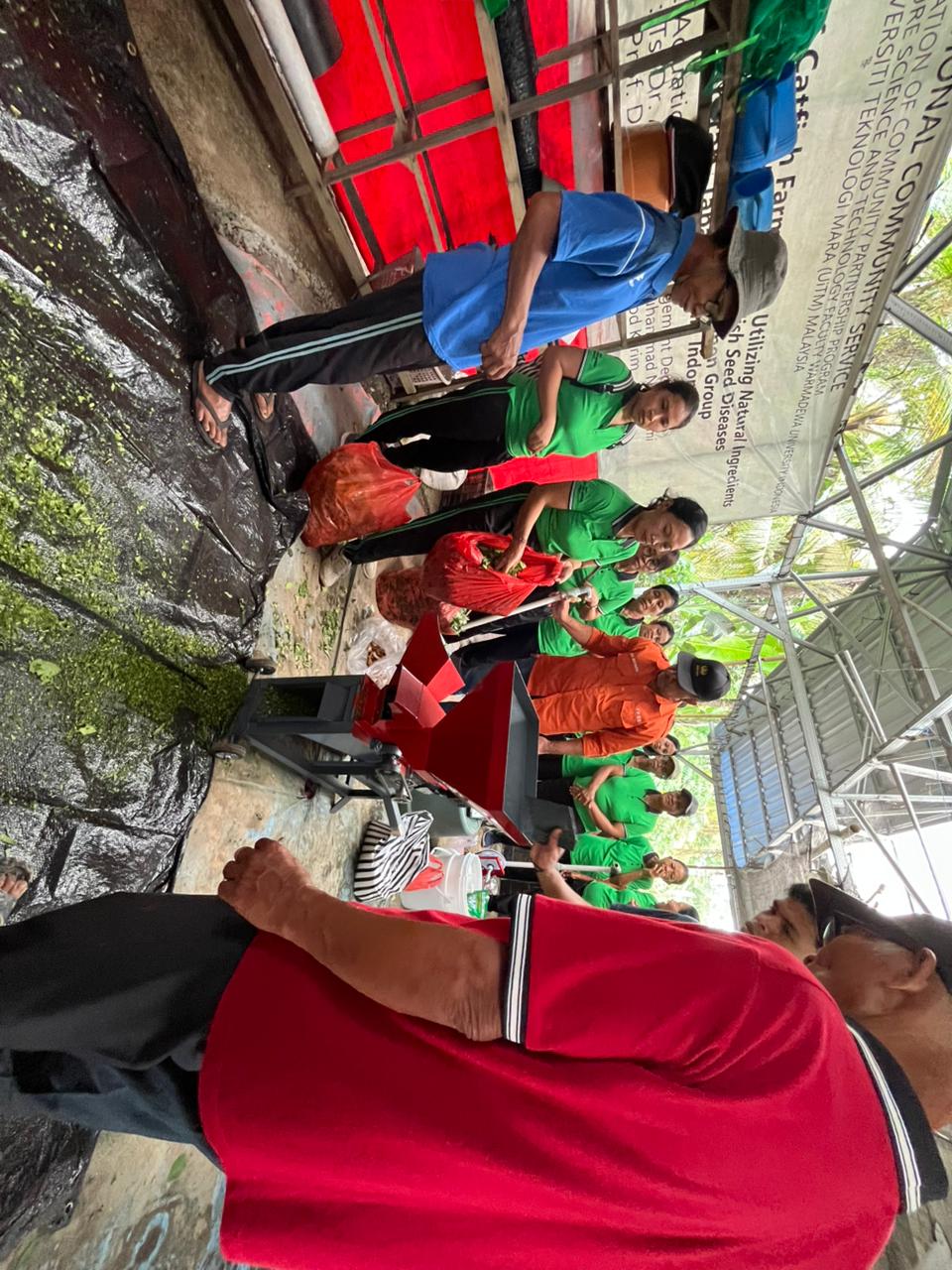
High manufacturing feed costs remain a major threat squeezing profit margins for rural catfish farmers. To address this, academics have taken concrete steps by training locals to utilise wild plants in their surroundings as a cheap and eco-friendly alternative feed formula.
This initiative was implemented during community empowerment and capacity-building activities in Kesiut Village, Tabanan, on Tuesday, 26 May. Residents of the Merta Sari Werdi group received intensive training on independently formulating catfish feed.
Training facilitator and lecturer from the Water Resources Management (MSP) Study Program at Warmadewa University (Unwar), Gede Agus Surya Pratama, stated that farmers’ dependence on commercial feed must be reduced immediately. He said the key to sustainability in freshwater aquaculture lies in creatively utilising local resources.
“The materials we used in this practice are abundant and easily found around the village, such as banana stems, taro leaves, papaya leaves, gamal leaves, and fine bran. This combination can serve as a much more economical feed alternative for the community,” said Gede Agus Surya Pratama during the training session.
Training Implementation
The training proceeded interactively with high enthusiasm from participants. Residents actively participated in processes from chopping green raw materials, mixing formulas, to fermentation techniques to ensure the local feed has optimal nutrient content for catfish growth.
Gede Agus Surya Pratama explained that the practical activity was designed not just to impart temporary skills. The main goal is to enhance the economic independence of fish farmers by minimising production costs while supporting village-based sustainable aquaculture concepts.
“Local feed innovation is key to ensuring local catfish farming survives amid market price uncertainties. When feed costs are reduced, the welfare of farmers will automatically improve,” he added.
International Agenda
The Kesiut Village activity is part of the International Community Service programme led by Warmadewa University. This international agenda reflects the MSP study program’s commitment to expanding global networks and directly implementing scientific knowledge within communities.
This knowledge commercialisation aligns with Sustainable Development Goals (SDGs). The tangible contribution targets quality education through knowledge transfer, cross-sector partnerships, and responsible natural resource management.
Through this international synergy, collaboration between universities, communities, local governments, and international partners is expected to continue. A consistent roadmap is believed to strengthen the freshwater aquaculture sector and bring widespread welfare impacts to communities based on local potential.
During the event, international materials were presented by Lorren Louis V. Vitalicio on Animal Husbandry and Fisheries. The scientific presentation from the Philippines specifically discussed sustainable development of livestock and fisheries sectors, community capacity building, and opportunities for international collaboration in aquatic resource development.