
Local Drone TKDN Reaches 66%, but Key Components Still Imported
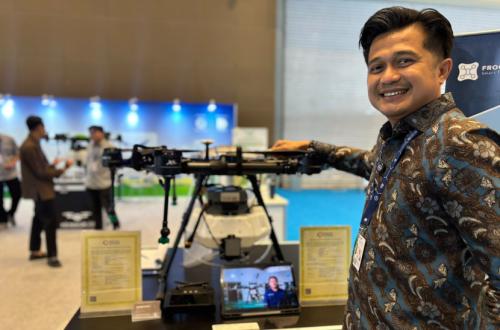
JAKARTA — The government is encouraging an increase in domestic component levels (TKDN) to strengthen the national manufacturing industry. However, local drone manufacturers still face challenges because several key components, such as batteries and electric motors, cannot yet be produced entirely in Indonesia.
Setia Diarta, Director General of Metal, Machinery, Transportation Equipment and Electronics Industries at the Ministry of Industry, said strengthening the component industry was an important part of developing the national electric vehicle sector. The government has set a target for battery electric four-wheel vehicles to reach a minimum TKDN of 40% by 2026, rising to 60% in 2027–2029 and 80% from 2030.
“These higher targets reflect the stages of deeper industrial development. We are moving from market development and attracting investment towards greater use of batteries and modules made domestically, and then strengthening the capacity to produce key components, including battery cells, in Indonesia,” Setia said at the opening of the Periklindo Electric Vehicle Show (PEVS) 2026 on Thursday (29 October 2026).
The Ministry of Industry recorded 541,000 electric vehicles in Indonesia as of August 2026. The total includes two- and three-wheelers, four-wheel vehicles, commercial vehicles and other specialised vehicles.
Setia said growth in the electric vehicle market needed to be matched by increased production capacity, a stronger component industry and workforce development. The government wants Indonesia to become not only a market but also a production base for electric vehicles.
The challenges of strengthening local components are also evident in the drone industry. Frogs Indonesia chief executive Adhitya Chandra said the company’s agricultural drones had a TKDN of about 66%. However, several important components, including batteries, brushless DC motors and propellers, were still imported.
Frogs Indonesia makes drones for a range of purposes, from land mapping and surveillance to agricultural spraying and goods transport. The company is also developing its own flight-control system.
Adhitya said market growth was needed to enable local manufacturers to increase production volumes and reduce costs. Domestic products, he said, still had to compete with imported drones sold at lower prices.
“An industry can run well if there is a market. If there is no market, we will not be able to produce large volumes,” Adhitya said.
He disclosed that Frogs Indonesia’s sales in 2026 had fallen by nearly 60% compared with the previous year. The company estimates that it will sell about 130 drones of various types this year.
Adhitya nevertheless sees opportunities to use drones in agriculture, including for land mapping and spraying fertiliser and pesticides. He said the need for drones for the government’s paddy-field development programme could exceed 7,000 units, although the figure still needs to be verified against the programme’s procurement requirements.
Increased demand could help manufacturers expand production and develop local component suppliers, Adhitya said. This would gradually reduce reliance on imported products.
Meanwhile, National Development Planning Minister and Bappenas head Rachmat Pambudy said the development of an electric vehicle ecosystem required certainty over medium-term incentives, the construction of public electric vehicle charging stations (SPKLU), a battery-recycling industry and financing involving a range of stakeholders.
Rachmat said funding for the energy transition could not depend entirely on the state budget. Businesses and investors therefore needed to be involved in supporting investment and industrial development.
Efforts to increase TKDN in electric vehicles and develop the drone industry underline the importance of component availability, sufficient market demand and investment. Higher local content is expected not only to increase domestic production, but also to foster supplier industries and improve the competitiveness of national products.