
Local Components Industry Poised to Grow Alongside Electric Vehicle Investment
Indonesia’s domestic components industry is gaining significant opportunities from rising electric vehicle investment, which supports not only car manufacturers but also the local components industry, as reported by Otomotif.
Rachmat Basuki, Secretary General of the Indonesian Automotive and Motor Vehicle Parts Industries Association (GIAMM), said the components with potential to be localised within the next one to two years are those that already have an industrial base in Indonesia, such as body panels, seats, tyres, rims and safety glass.
“The components with the most potential are actually those that already exist, such as body, seat, tyre, wheel rim, safety glass and so on,” Rachmat said. He added that core electric vehicle components such as batteries, electric motors and the Power Control Unit (PCU) remain difficult to produce locally.
The government has set a minimum Local Component Level (TKDN) target for electric vehicles of 60 per cent for the 2027-2029 period, rising to 80 per cent from 2030. Minister of Industry Agus Gumiwang Kartasasmita stated: “There are currently 14 companies recorded, with total investment of Rp 24.131 trillion and a production capacity of 409,860 units per year.”
The Ministry of Industry is also encouraging small and medium enterprises (IKM) to enter the electric vehicle supply chain in order to increase the uptake of local components.
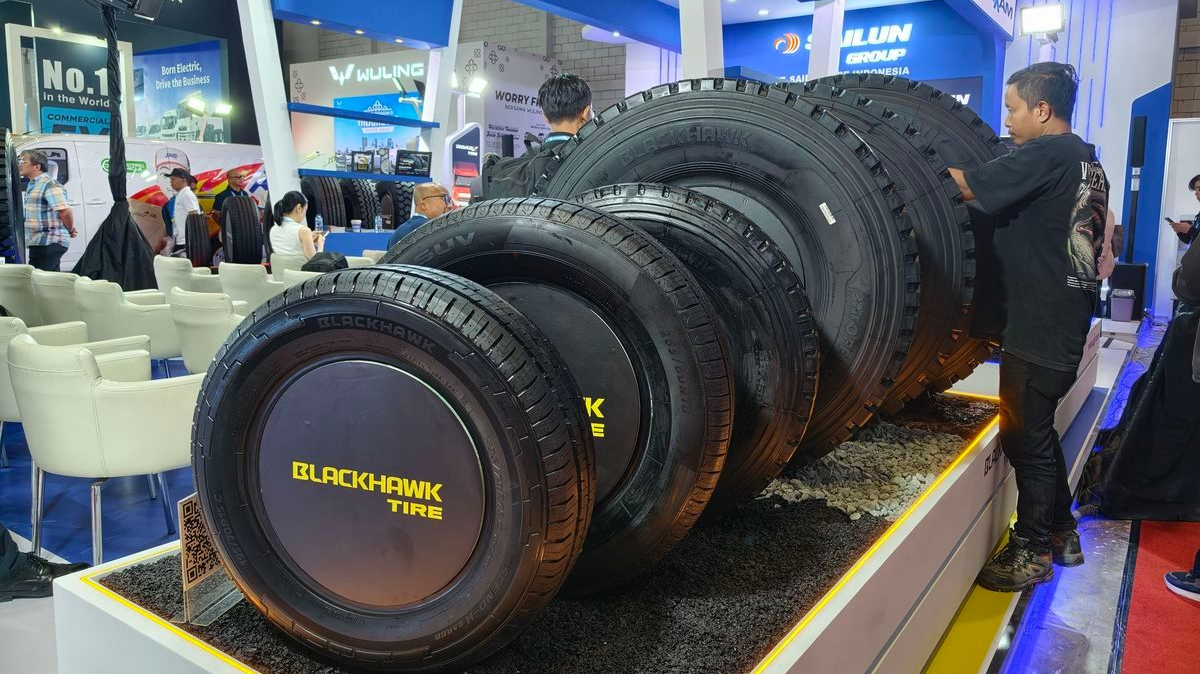
Indonesia’s automotive industry faces competition from foreign suppliers, particularly from China, which not only imports products but is also building production facilities in Indonesia. One example is the Sailun tyre factory in Demak, Central Java, with an investment of around Rp 3.9 trillion, which began operating in May 2025 and produces tyres for various types of vehicles.
Yannes Martinus Pasaribu, an automotive expert from Bandung Institute of Technology (ITB), assessed that the presence of Chinese component suppliers could be an opportunity to close Indonesia’s technological gap. “In my view, the entry of component suppliers from China could be a positive development for the national industry, because Indonesia still needs capabilities in several high-value core components such as power electronics, traction motors, batteries and their control systems,” he said.
Martin stressed that the success of foreign investment must be measured by the relationships formed with local suppliers, improvements in IKM capabilities, and the development of Indonesia’s engineering workforce. He also emphasised the importance of technology transfer so that investment does not merely relocate production to Indonesia, but also supports the independence of the domestic industry.
“If foreign supply chains simply relocate to Indonesia but continue to operate as closed ecosystems, then beyond adding employment volume, the added value for the ambition of building domestic industrial independence is naturally more limited,” Martin said.
According to him, Indonesia still needs foreign investment to close the technology gap, while also giving local companies room to move up the value chain. The success of the national electric vehicle industry should be measured not only by the number of vehicles assembled, but also by the development of high-value components based on domestic engineering, software, battery and production expertise.
Source: jawawa.id (https://jawawa.id/newsitem/local-components-industry-poised-to-grow-alongside-electric-vehicle-investment-1788799847)
Originally published by suaragarut.id (https://suaragarut.id/industri-komponen-lokal-kendaraan-listrik), translated from Indonesian