
Local Actors in Papua Need Capacity Building for Civilian Protection, Says Practitioner
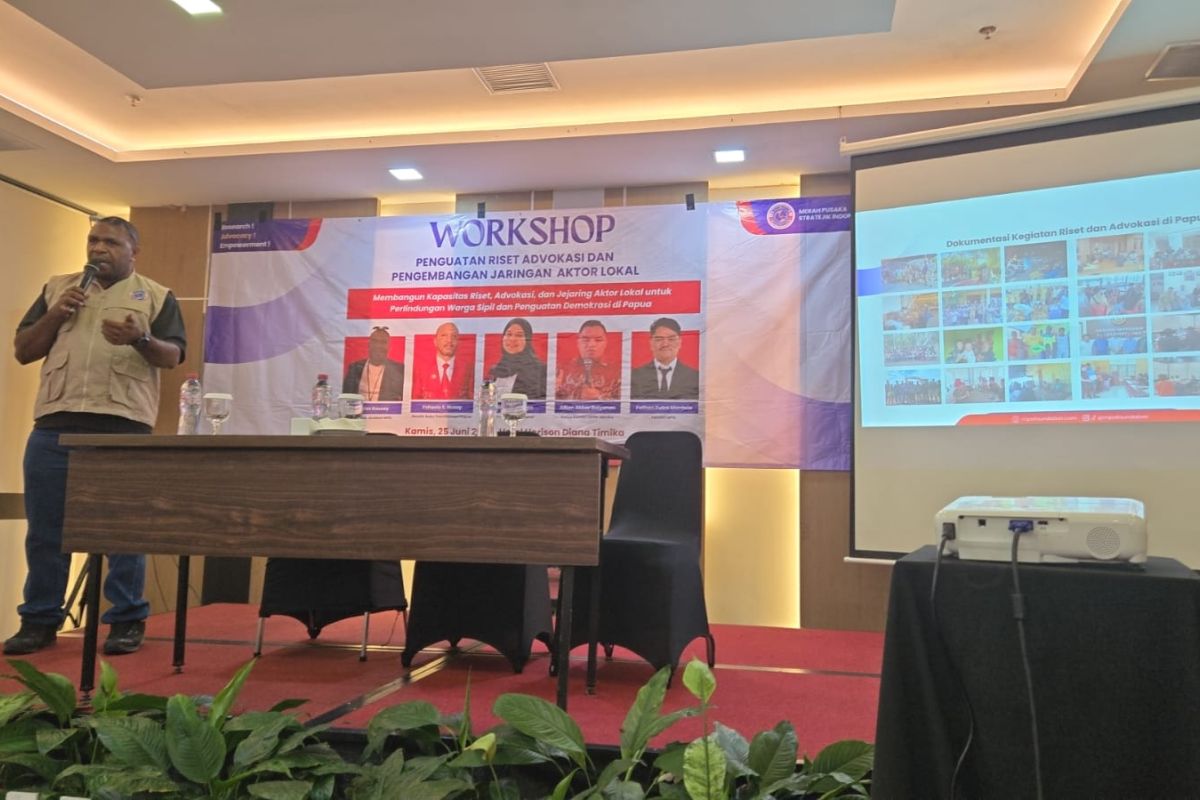
Jakarta (ANTARA) - Merah Pusaka Stratejik Indonesia (MPSI) practitioner Charles Kossay has stated that Papua needs more local actors capable of conducting research, documenting field facts, building public communication, and developing collaborative networks to strengthen civilian protection.
According to Charles, protecting civilians cannot rely solely on spontaneous responses whenever problems arise. Instead, it requires systematic research work so that issues can be fully understood and the resulting solutions truly meet the community’s needs.
“The protection of civilians cannot only rely on spontaneous responses every time a problem occurs. Systematic research work is needed so that each problem can be understood comprehensively, and the solutions offered genuinely answer the community’s needs,” Charles said in a statement in Jakarta on Thursday.
Charles noted that the social dynamics in Papua demand the presence of local actors who not only care about the community but also possess the ability to conduct research, document field facts, build public communication, and develop cross-sector collaborative networks. He identified students, youth leaders, academics, traditional leaders, journalists, and civil society communities as the parties who best understand the social conditions on the ground and thus serve as the front line in civilian protection efforts.
“Therefore, their capacity needs to be continuously strengthened so they can carry out data-based, objective, and responsible advocacy,” he said.
Charles assessed that advocacy research plays a strategic role because it can present credible facts and data as the basis for formulating policy recommendations and community protection measures. “In this way, the advocacy process does not stop at mere narratives or demands, but can produce measurable changes,” he said.
He added that the challenge of protecting civilians in Papua is becoming increasingly complex along with the development of information flows and social dynamics in various regions. Consequently, the ability to map issues, identify involved actors, read risks, and verify information has become an essential skill. He noted that many grassroots issues remain poorly documented, meaning the voices of the community are often not fully conveyed to policymakers.
Charles also stressed the importance of a strong network of local actors who can work collaboratively in responding to various humanitarian and social issues. “When local actors have a strong network, the response to community problems will be faster, more measured, and based on facts. This kind of collaboration is what is needed to strengthen civilian protection while preserving democratic space in Papua,” he said.
He also reminded stakeholders of the importance of prioritising a non-litigation advocacy approach through dialogue, public communication, and policy lobbying conducted peacefully and with respect for the socio-cultural context of the Papuan people.
The workshop was attended by around 40 participants, including students, youth leaders, democracy activists, teachers and lecturers, traditional leaders, local media journalists, and civil society communities. Charles expressed hope that the activity would give rise to a network of local actors capable of working professionally, based on data, and sustainably in addressing various societal issues and development challenges in Papua.