
LNG Price Hike Must Be Viewed Objectively, Government Urged to Find Middle Ground for Industry
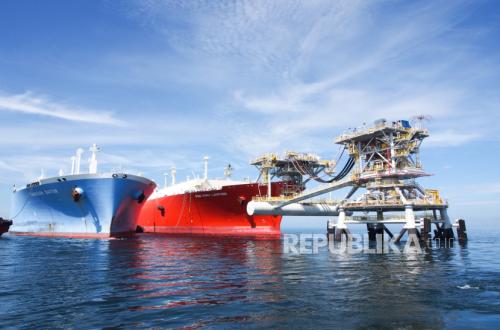
The Head of the INDEF Centre for Energy and Food, Abra Talattov, believes the increase in LNG prices felt by some industrial customers needs to be viewed proportionally and objectively. According to him, the price pressure cannot be separated from global geopolitical dynamics that have driven up energy prices, including domestic LNG, at the upstream and supplier levels as a consequence of applying a price formula referencing world energy prices. “The increase in LNG prices at the industrial consumer level does not occur in a vacuum. There is significant pressure from the global energy market due to the geopolitical crisis, so the cost of acquiring LNG upstream has also increased. Therefore, this issue needs to be viewed holistically from upstream to downstream, not just from the final price received by industry,” said Abra. Abra explained that in recent years, the supply of piped gas for industrial needs has continued to decline. In 2024, piped gas supply was recorded at around 479 BBTUD, then fell 16 percent to around 400 BBTUD in 2025. This decline continues into 2026 to around 327 BBTUD, or a drop of about 18 percent. Besides natural decline, the reduced availability of piped gas supply for industry can also be seen as a result of prioritisation policies in allocation setting, placing it lower in order than the electricity sector. This condition widens the gap between piped gas supply and industrial needs, making LNG an alternative supply to maintain energy supply continuity for industrial customers. “When piped gas supply decreases while industrial needs remain high, there must be an alternative source so that production activities are not disrupted. LNG becomes one option to cover the supply shortfall. However, it must be understood that LNG has a higher cost structure than piped gas because its supply chain is much longer and more complex, and the application of a price formula referencing the Indonesia Crude Price or other market price references,” explained Abra. According to Abra, the LNG supply chain goes through at least six stages, starting from upstream production, liquefaction, shipping, storage and regasification, transmission, to distribution. Meanwhile, conventional piped gas generally only goes through three main stages: upstream production, transmission, and distribution. This difference in supply chain structure makes LNG prices naturally higher than piped gas. “Piped gas and LNG cannot be compared on an apple-to-apple basis. Piped gas has a shorter supply chain, whereas LNG requires additional processes from liquefaction, ship transport, storage, regasification, to delivery to customers. So when LNG prices are higher than piped gas, it is a consequence of the cost structure and complexity of its supply chain,” Abra stressed. Nevertheless, Abra emphasised that the impact of rising LNG prices on industry still needs serious attention. Increased energy costs can pressure production cost structures, reduce factory utilisation, weaken industrial competitiveness, and potentially impact the workforce. Therefore, the government needs to step in immediately to formulate a solution that maintains supply reliability while preserving industrial resilience. “We must not close our eyes to the fact that rising gas prices, especially for industries using LNG or non-HGBT gas, can pressure production costs. In certain industries, this pressure can impact factory utilisation, cash flow, competitiveness, and even the risk of layoffs. So mitigation for industry and the workforce must be a priority, but the solution must not create new pressures for the national gas supply chain,” said Abra. Abra assessed that the position of gas distribution business entities also needs to be understood fairly. As midstream and gas trading players, their room for manoeuvre in setting prices is not entirely flexible because the components of gas prices, allocation, infrastructure costs, and trading margins are within the corridor of government regulation. Thus, the increase in LNG prices at the consumer level is heavily influenced by acquisition costs from suppliers, global energy price parameters such as ICP, JCC, and JKM, the rupiah exchange rate, and LNG supply chain costs. “In the downstream gas price structure, midstream players do not have unlimited flexibility. The downstream gas selling price has a formula, infrastructure costs are regulated, and trading margins are also capped. Therefore, if upstream LNG prices rise due to changes in ICP, JCC, JKM, or the rupiah exchange rate, that pressure will eventually enter the price structure. If all the pressure is forced to be absorbed downstream, what will be disrupted is the financial health of the business entities that maintain the reliability of national gas distribution,” said Abra. Abra added that LNG price adjustments are not a phenomenon occurring only in Indonesia but are part of regional and global pressures. In fact, industrial LNG prices in Indonesia after adjustment are still relatively competitive compared to several other countries in the region. Based on various developing market data, Indonesia’s LNG prices are in the range of US$21–25/MMBTU, while industrial LNG prices in some Southeast Asian countries are in a higher range. “This means we need to be careful in responding to this issue. Indonesia’s LNG prices have indeed risen and that is burdensome for industry, but regionally they are still relatively competitive. The issue is not simply whether prices go up or not, but how the government designs a transition and mitigation scheme so that industry is not shaken, without disrupting the continuity of national gas supply,” Abra explained. Therefore, Abra encouraged the government to find a fair solution for the entire gas value chain, from upstream producers, infrastructure providers, the national gas aggregator, midstream players, to end-user industries. According to him, the solution must not only be a short-term patch but must also consider the sustainability of the national gas ecosystem.
Source: jawawa.id (https://jawawa.id/newsitem/lng-price-hike-must-be-viewed-objectively-government-urged-to-find-middle-ground-for-industry-1782388427)
Originally published by Republika (https://ekonomi.republika.co.id/berita/th6o9l522/kenaikan-harga-lng-perlu-dilihat-objektif-pemerintah-harus-cari-jalan-tengah-bagi-industri), translated from Indonesian