
LMKN asserts royalty mechanisms must be built upon work usage
Jakarta (ANTARA) - The National Collective Management Agency (LMKN) maintains that royalty mechanisms must fundamentally be established based on the usage of creative works.
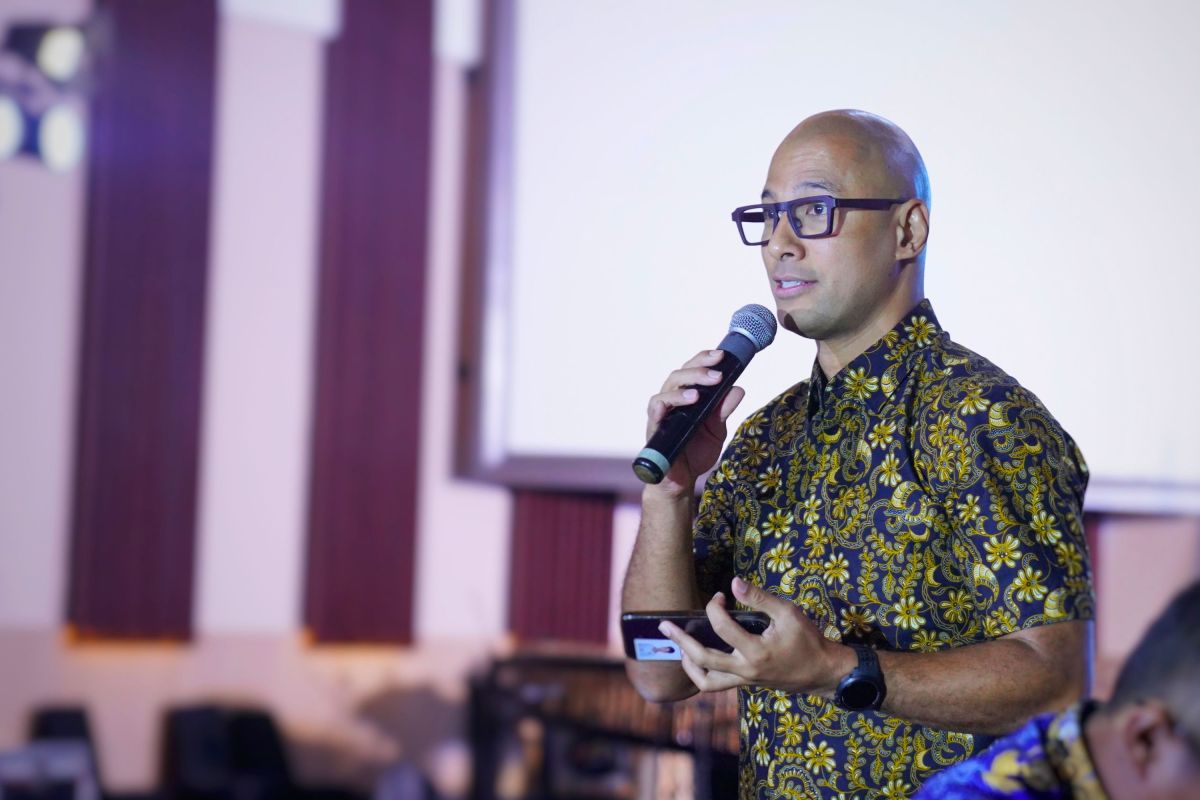
During a socialisation session in Soreang, Bandung Regency, West Java, on Thursday (1/10), the LMKN Commissioner for Related Rights, Marcell Siahaan, stated that royalties are collected and distributed based on usage. “Our task is to ensure registered creators and recorded usage,” said Marcell, as quoted from a statement confirmed in Jakarta on Friday.
However, he emphasised that compliance requires cross-sector trust, as an ecosystem must be built on the confidence of all elements, including creators, musicians, business actors, and the government. LMKN, he added, builds this cross-sector trust through both appreciation and the economic empowerment of the creative industry.
The socialisation regarding Copyright Law Compliance for Songs and Music for Business Actors was organised by the Directorate General of Intellectual Property (DJKI) of the Ministry of Law. Through this initiative, the DJKI encourages copyright compliance to become part of sustainable business practices, while raising awareness that behind every song used, there is a creative process and economic rights that deserve respect.
The event, attended by over 500 participants including members of Collective Management Organisations (LMK), the Indonesian Hotel and Restaurant Association (PHRI), songwriters, academics, Intellectual Property Centres, and other stakeholders, served as a forum to align the interests of creators, business actors, the government, and royalty management agencies.
From the business perspective, the PHRI West Java advocacy team, Nurdin Muhammad, noted that the implementation of the royalty system must also consider the specific characteristics of businesses and the economic conditions in various regions. He argued that royalty rates for hotel rooms need to be reviewed, as room values differ across various regions and hotels.
“Similarly, the royalty rates for restaurant operators, which are calculated based on the number of seats, need to be re-evaluated to ensure fairness,” said Nurdhin.
These various inputs form part of an ongoing dialogue between the government, creators, royalty managers, and business actors to build a royalty management system that is understandable and implementable by all parties. Through Government Regulation (PP) Number 56 of 2021, the government has positioned the management of song and/or music royalties as part of an effort to provide legal protection and certainty for creators, copyright holders, related rights owners, and parties using works commercially.