
LKPP Launches Anti-Corruption Training Blueprint to Strengthen Procurement Integrity
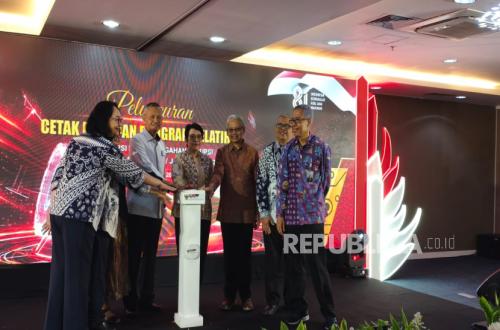
The Public Procurement Agency (LKPP) has launched a blueprint and anti-corruption training programme for the procurement of goods and services. The programme is directed at strengthening the integrity of human resources while building a procurement ecosystem capable of preventing corrupt practices.
LKPP Head Sarah Sadiqa said the programme is not merely intended to produce training modules or curricula. According to her, the main objective is to encourage behavioural transformation among procurement actors so that the anti-corruption understanding gained in training can be applied in the workplace.
“In essence, we are launching a blueprint as well as a training programme. The aim is certainly not just to launch or prepare a blueprint that serves as our guide so that our movements are more integrated,” Sarah said on Wednesday (26/8/2026).
She said the procurement of goods and services is one of the important sectors in corruption prevention efforts. Therefore, LKPP wants to ensure that the training produces real change, rather than stopping at classroom activities.
“Our big goal is to make procurement a place where we can truly push anti-corruption efforts. Because as was mentioned, corruption cases number two, after bribery, are in the procurement of goods and services,” she said.
“That is why we want to carry out a transformation, not just compile modules or curricula or attend training, but transform the people themselves,” she added.
Meanwhile, Deputy Chairman of the Corruption Eradication Commission (KPK) Ibnu Basuki Widodo assessed the programme as strategic to ensure that the procurement of goods and services can provide maximum benefits for the public.
“This programme is a very good one, so that the results of goods and services procurement can truly be enjoyed by the entire community. Because that is the goal,” Ibnu said.
According to him, corruption prevention efforts through education are important so that the procurement process runs in accordance with regulations and the results can be felt by the public.
“With this programme, it is hoped that the implementation of goods and services procurement can be properly utilised by the community. And the KPK strongly supports this AKPK as a corruption prevention programme from the education and prevention side,” he said.
Meanwhile, Secretary General of the Ministry of Health Kunto Wibowo Dasa Nugraha said the Ministry of Health has a large procurement value for goods and services. Therefore, according to him, strengthening the integrity of procurement implementers must go hand in hand with procurement governance reform.
“If we look at it, the Ministry of Health’s procurement of goods and services is very large, including for large ministries and institutions. And with this programme, I am confident that besides strengthening reform in goods and services procurement, we are also strengthening the integrity of the implementers of that procurement,” Kunto said.
He added that the Ministry of Health has carried out a number of reforms, including the consolidation of procurement of medical devices, medicines, and operational cooperation.
“Reforms have been carried out, especially through the consolidation of goods and services procurement, both in terms of medical devices, medicines, and operational cooperation. We have also achieved significant efficiency, around 30 to 50 percent. As Mr Waka said earlier, the important thing is how procurement can truly benefit the community, so that health services can be much better,” he said.
Deputy for ASN Learning Transformation at the National Institute of Public Administration (LAN RI), Erna Erawati, said integrity is the main foundation in building the professionalism of the apparatus. She assessed that the development of anti-corruption competence needs to be carried out continuously, especially for procurement actors.
“Because when we talk about professionalism, integrity is the foundation. So, how to ensure that if we have competent human resources who behave well, the real basis is integrity,” Erna said.
She emphasised that training is not enough if done once, but must be consistent with changes that occur.
“And it is carried out consistently and routinely, not one training and then stop, but also when there are changes, I am sure training is still needed,” she said.
Erna also highlighted the importance of leadership example and organisational culture in creating an environment that supports integrity.
“Then, we need commitment from leaders, because usually exemplary behaviour is important when we talk about corruption, supported by a strong organisational culture, creating safe spaces for integrity,” she said.
In the programme, participants will be required to prepare a corruption prevention action plan according to the conditions of their respective work environments. The action plan will then be monitored to see its impact on the organisation.
“So, later we will carry out an evaluation where we will see whether it has a positive impact on the work environment and also on the organisation,” she said.
LKPP is targeting the programme to reach ministries, institutions, and regional governments. Participants will not only come from procurement managers such as Commitment Making Officers (PPK), Selection Working Groups (Pokja Pemilihan), and Procurement Officers, but also those with authority such as Budget User Authorities (KPA) and heads of UKPBJ.
In addition, LKPP is also preparing pathways for other elements of the procurement ecosystem, including providers and community groups. Training will be carried out through various methods, including massive open online courses (MOOC) and blended methods that combine online and face-to-face learning.
Sarah said the success of the programme cannot depend solely on one party.