
Livestreaming transforms mountain village in southwest China
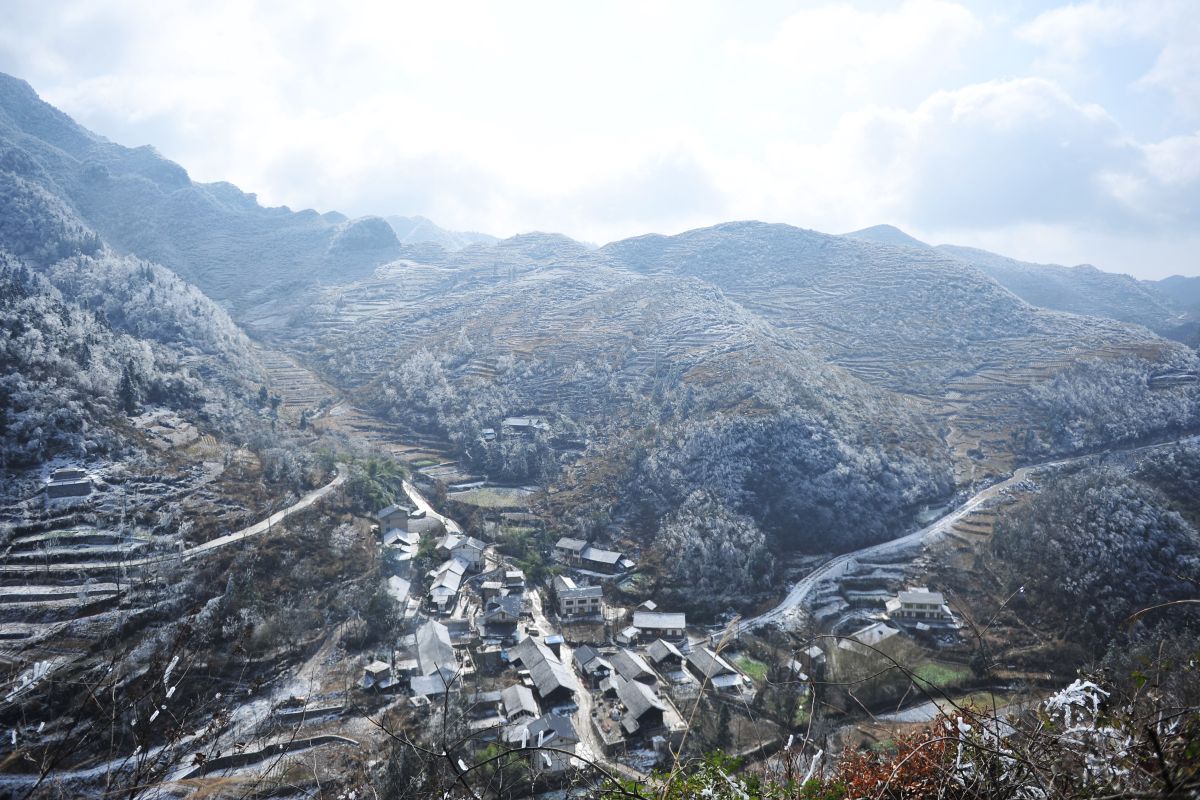
On a sunny June morning, 59-year-old farmer Wang Luzhang sat under a temporary canopy in the courtyard of the Qianjin Village committee office in Wuchuan County, Guizhou Province, southwest China. In front of him were 25 kilogrammes of home-milled rice and a basket of eggs. Nearby, dozens of villagers stood beside their wares, ranging from peanuts and dried chillies to jars of golden honey. However, this was no ordinary market day. Two young hosts pointed their smartphone cameras at the produce, showcasing the scene to buyers via a livestream on Douyin, the Chinese version of TikTok. “In the past, whether I could sell my goods or not depended entirely on luck,” Wang said with a smile. By 10 a.m., all his eggs had sold out at 1.2 yuan per egg, a higher price than the 1 yuan he struggled to get at physical markets. In the two months since his village began livestreaming, Wang has earned over 1,000 yuan, surpassing his total sales from many days at the market. Wang’s neighbour, beekeeper Lei Guangyang, fared even better. His wild mountain honey, priced at 120 yuan per jar, often went unsold at local markets as buyers considered it too expensive. Through the livestream, he sold 41 jars, totalling over 4,000 yuan, far exceeding his previous sales. This is the “Douyin Village Market,” a virtual marketplace launched by young local officials in the remote mountainous region. As the Communist Party of China marks the 105th anniversary of its founding this July, the initiative reflects a new generation of party members using digital tools to bridge the gap between urban and rural areas. The idea stemmed from a troubling reality. “Villagers would take their goods to the market, but sometimes they couldn’t sell anything,” said local official Deng Yufeng. Local markets were flooded with similar produce—vegetables, eggs, and processed foods—brought by farmers from surrounding villages, while demand was insufficient to absorb the supply. In June 2025, the young officials launched their first livestream to help farmers sell their goods, generating over 3,200 orders with sales exceeding 120,000 yuan in a single day. The success boosted their confidence. A typical livestream session involves at least six people: two hosts, a quality control officer, a backend operator managing orders and inventory, an order administrator, and a packaging officer. Qianjin Village has trained four hosts who work in rotation. “I stumbled over my words during my first sales livestream. Helping villagers sell their produce gives me immense satisfaction,” said 29-year-old Li Xue, a village official. Quality control remains a priority. For now, the team limits livestream sales to dry food products, with local market regulators conducting preliminary checks. To reduce logistics costs, the region has partnered with several courier companies, cutting the average shipping cost from 8 yuan to 3.5 yuan per package. This commitment to solving real problems for the community continues a proud local tradition. In the 1930s, Red Army troops led by the late Marshal He Long passed through the area, forging strong bonds with local farmers through discipline and respect. Wuchuan County is part of Zunyi, the site of the pivotal 1935 CPC conference that saved the Chinese revolution from a grave threat. Today, the young officials carry on that legacy not through slogans, but through concrete action. They have learned the algorithms of digital platforms and mastered the art of creating engaging videos. By the time the livestream ended at 2 p.m., the young officials were still busy uploading promotional links for peanuts, while Li made a final appeal to a visitor. “Buy a jar of wild forest honey. It tastes truly delicious!” Wang Luzhang packed up his empty egg basket, smiling with satisfaction at his sales. Next week he would return, no longer relying on luck for his income.