
Livestock Waste to Roasted Coffee: Technological Innovation Transforms Kalijaya Village Economy
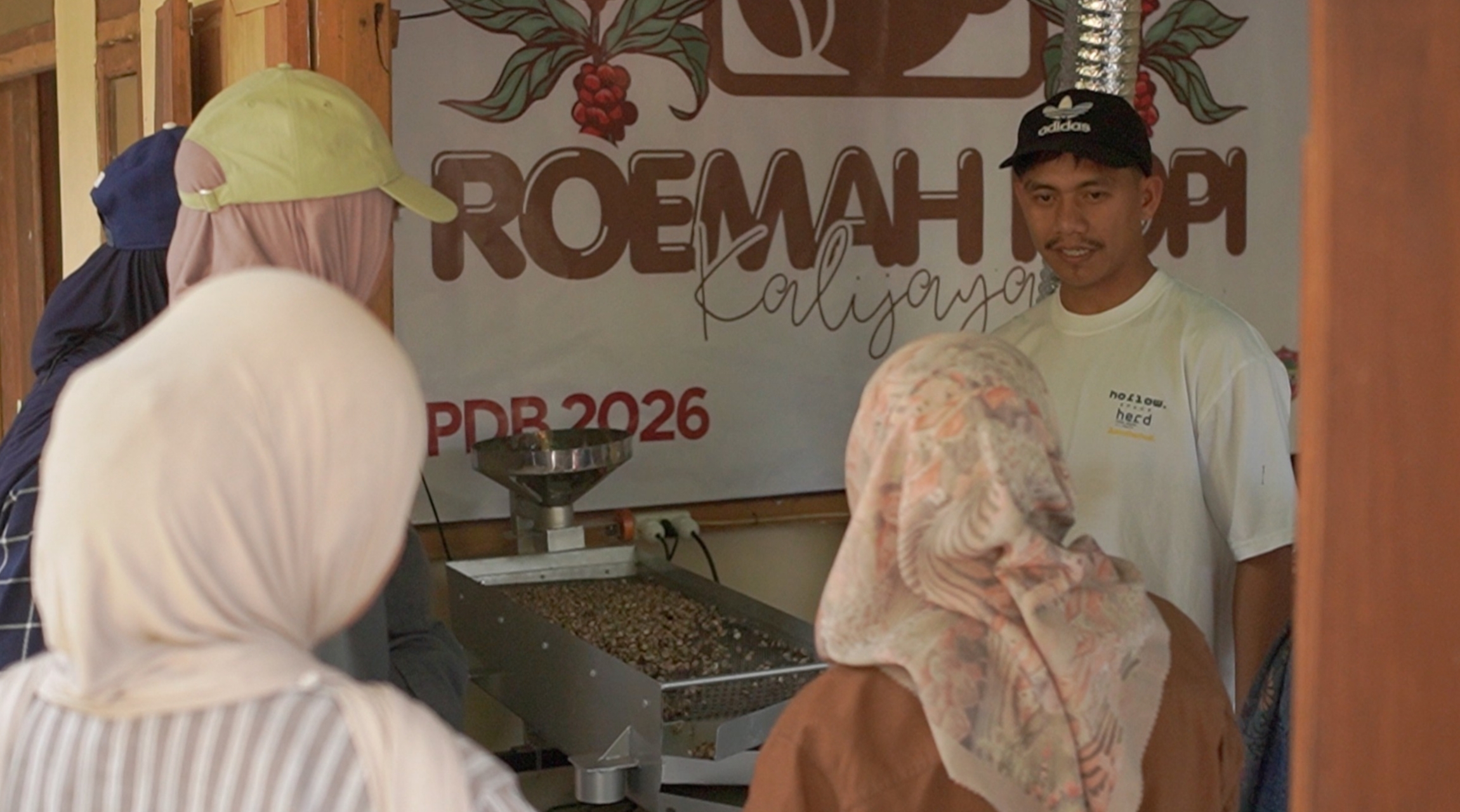
The Balebat Farm Dairy Goat Group has successfully processed livestock manure into high-quality organic fertiliser. Meanwhile, the Roemah Kopi Farmers Group has produced roasted coffee with consistent Grade A, medium roast quality standards, ready for sale. Both are located in Kalijaya Village, Banjaranyar District, Ciamis Regency. This initiative is part of an Appropriate Technology-Based Innovation Empowerment Programme, a community service collaboration between Universitas Perjuangan (Unper) Tasikmalaya and Universitas Jenderal Soedirman in Kalijaya Village. The collaboration between the two universities received grant support from the Ministry of Education, Science, and Technology (Kemendiktisaintek) 2026 through the Community Service for Fostered Village Empowerment grant scheme.
Balebat Farm Group Chairman Dendi Mulyana explained that goat manure waste had been abundantly available daily but was discarded without value. This occurred because last year Balebat Farm relied solely on one income source: selling fresh goat milk to local collectors at unstable prices. The group realised the waste had potential, but they did not understand three crucial aspects: the processing method, the appropriate selling price, and who the potential buyers were. “This waste is plentiful, but we didn’t know how to process it into a product, how much it should be sold for, or how to market it,” he said on Wednesday (5/8).
A nearly similar situation occurred at the Roemah Kopi Group. As its chairman Dana explained, farmers only sold dried coffee beans without separating Grade A and B standards. Everything was mixed and sold at the same price. Furthermore, the roasting process was still manual with uncontrolled maturity levels. Consequently, their products lost competitiveness in the coffee market due to a lack of added value. “We didn’t know which standard was the best, the correct roasting method, or the market price for products of different qualities,” Dana explained.
The conditions of both groups reflect the reality of rural enterprises. Local potential is vast but held back by technological limitations, technical knowledge gaps, and market information shortages. Now, with assistance from Universitas Perjuangan Tasikmalaya and Universitas Jenderal Soedirman, market expansion has become the focus for both groups with different strategies. Roemah Kopi targets coffee shops, local MSMEs, and online channels, while Balebat Farm focuses on supplying organic fertiliser to local farmers and plantations. “We just need the right channels, not just waiting for buyers to come,” said Dana. Roemah Kopi received three main devices: a standalone huller machine, a grading machine (to separate Grade A and B), and a controlled roasting machine. The most advanced innovation is a smartphone-based roasting level application using AI technology that automatically detects the degree of roast. Every production batch is recorded in a database, including date, level, and stock, for proper process documentation.
Meanwhile, IoT technology that monitors the fermentation process in real-time will ensure Balebat Farm can consistently maintain fertiliser quality for long-term customer satisfaction. Balebat Farm was equipped with a fermentation machine, a grinder, and a pellet moulding machine, plus IoT sensors (temperature, pH, humidity) that monitor the process in real-time via smartphone. Programme Chairperson Laras Pratiwi from UNPER emphasised that the programme in Kalijaya Village does not only provide equipment. They also continue to offer mentoring. “This technology is simple but changes everything. Farmers don’t need to become engineers; just follow the SOP and record data. Smartphones help them make informed pricing and marketing decisions,” she said. The programme also includes financial record-keeping assistance and digital marketing strategies. The target is for both groups to become independent and sustainable by the end of 2026.
Since the equipment became operational, real changes have been visible. Balebat Farm now produces two variants of fertiliser, powder and pellets, targeting one batch per month or approximately 400 kg. Significantly, there is new revenue from fertiliser where previously there was none. The product is neatly packaged and labelled “Balebat Farm Organic Fertiliser,” ready for market. Meanwhile, Roemah Kopi produces classified green beans (Grade A and B) and consistently roasted coffee at three levels: light, medium, and dark. The database has recorded over 30 fully documented batches.
Kalijaya Village Head Yosep Kurniawan welcomed this innovation. He said this assistance programme makes his village not just a place for producing raw materials but also for processing, standardising, and selling at higher prices. If the programme continues, he added, the socio-economic impact will be increasingly felt, from fertiliser and coffee processing to creating additional jobs for group members. Product diversification reduces the risk of fluctuations when milk or coffee bean prices fall. The income from processed products and this technology can be replicated by other groups. Both groups are no longer dependent on middlemen who can dictate prices. They can now conduct their own marketing strategies based on data, not just intuition. “The Kalijaya Village Government, Unper, and Unsoed are committed to providing assistance until 2027 in the advanced downstreaming phase, expanding products as tangible evidence of village empowerment, not just a slogan, but concrete action supported by investment in sustainable local economic change. The transformation in Kalijaya Village proves that appropriate technology, intensive mentoring, and management can bring about real change. The village is no longer just a supplier of raw materials but can become a producer of value-added goods, enriching the community while enhancing the dignity of rural areas,” Yosep asserted.
Source: jawawa.id (https://jawawa.id/newsitem/livestock-waste-to-roasted-coffee-technological-innovation-transforms-kalijaya-village-economy-1785901832)
Originally published by Media Indonesia (https://mediaindonesia.com/jabar/berita/918452/limbah-ternak-hingga-kopi-panggang-inovasi-teknologi-mengubah-ekonomi-desa-kalijaya), translated from Indonesian