
Livestock Traffic Monitored Strictly at Central Java Borders to Prevent Disease Outbreaks
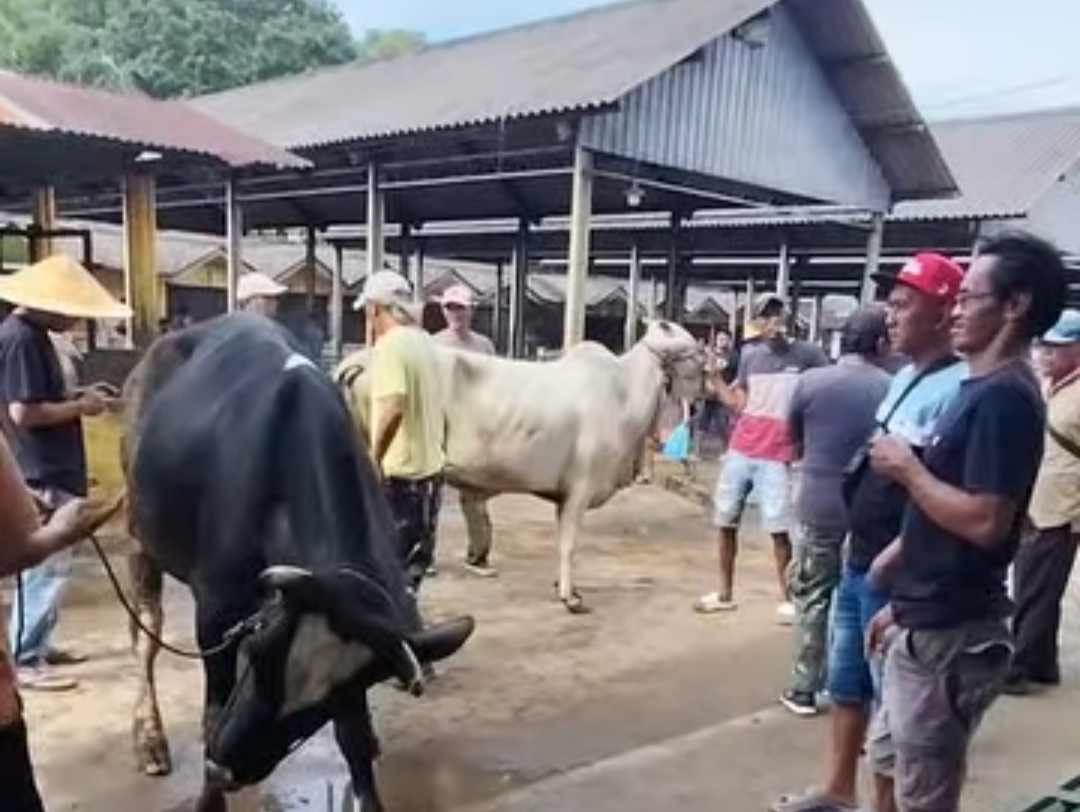
As the trade of sacrificial animals begins to surge in several regions of Central Java, strict monitoring of livestock traffic is being implemented at provincial border areas to anticipate potential disease outbreaks. Since early morning, joint officers from the Department of Transportation, the Department of Livestock, and related agencies have been conducting inspections on livestock entering and exiting various border regions in Central Java to ensure the health of the animals passing through.
Although no livestock have yet shown indications of diseases such as anthrax or Foot and Mouth Disease (FMD), rigorous surveillance continues. This monitoring extends to livestock stalls spread across various areas and to the breeders themselves. “It is true that we are conducting strict monitoring of livestock traffic as an anticipation of the emergence of animal diseases ahead of Eid al-Adha,” said the Head of the Central Java Agriculture and Livestock Office, Defransisco Dasilva Tavares, on Tuesday (19/5).
Defransisco Dasilva Tavares added that the intensive inspections are focused particularly on border areas such as the Regencies of Rembang, Blora, Karanganyar, Sragen, and Wonogiri to ensure that sacrificial animals are disease-free. Furthermore, he noted that for purposes beyond sacrificial needs, livestock intended for the MBG programme must also be accompanied by a health certificate. “Therefore, every movement of livestock must be accompanied by such a document and must have undergone a health examination,” he added.
Similarly, the Head of the Food and Agriculture Office of Pekalongan City, Lili Sulistyawati, stated that monitoring of sacrificial animals will be tightened to guarantee the health and suitability of animals traded to the public, as well as to prevent the entry of livestock suspected of carrying diseases. The Head of the Food and Agriculture Office of Batang Regency, Sutadi Ronodipuro, also emphasised that health monitoring begins at the source—from the farms and livestock stalls to the final buyers—as a preventive measure to ensure animals are safe and healthy for sacrifice.
In Salatiga, the Acting Head of the Agriculture and Food Office, Sulistya, stated that to guarantee the health of sacrificial animals, every animal traded in the area must be accompanied by an Animal Health Certificate (SKSH) and must have undergone rigorous inspection to anticipate any potential livestock diseases. “We are deploying teams to conduct examinations on every animal, particularly at stalls and animal markets,” said Sulistya.