
Livestock Movement Tightened as Hundreds of Veterinarians Guard East Java Borders
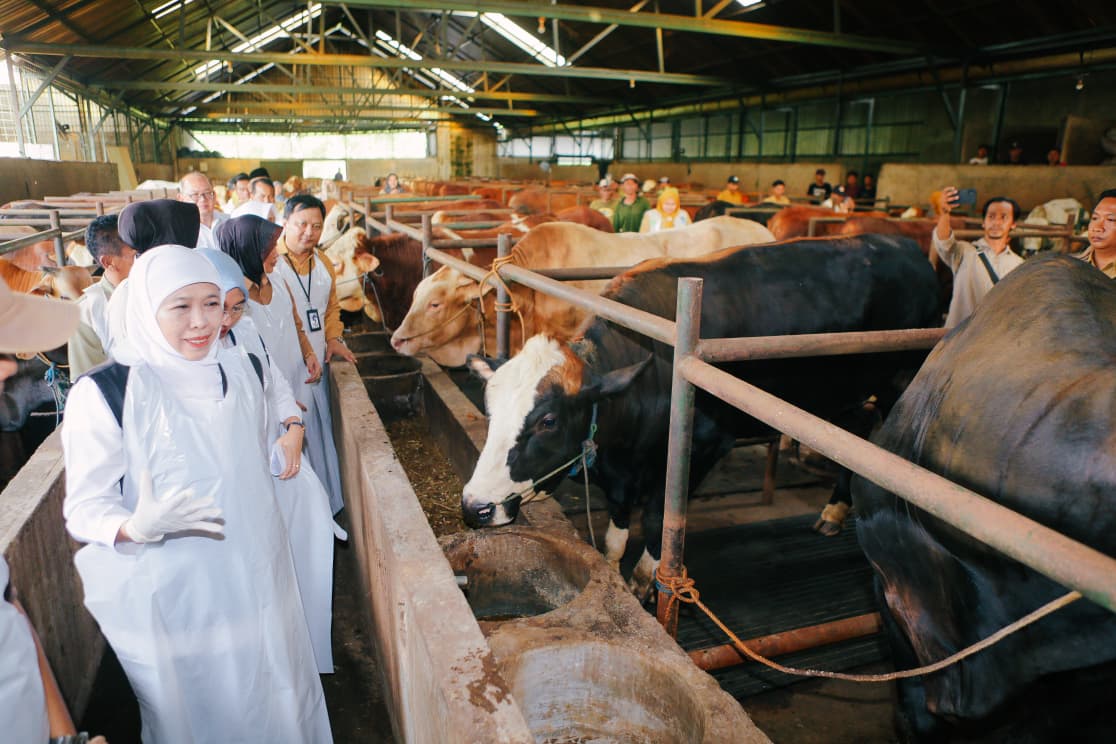
The East Java Provincial Government has tightened surveillance on livestock movement entering and exiting the province ahead of Eid al-Adha, with strict checks conducted at borders and ports. “Hundreds of veterinarians and officials have been deployed at the borders to monitor all livestock transport,” said East Java’s Animal Husbandry Agency Head Indyah Aryani in Surabaya on Tuesday (26 May). Livestock movement has surged in recent days following East Java’s success in controlling Foot-and-Mouth Disease (FMD), leading to high demand for sacrificial cattle. Consequently, stringent measures have been implemented to control livestock movement. All vehicles transporting sacrificial animals undergo rigorous health checks to detect any signs of disease. At the Surabaya and Central Java border, veterinarians will conduct inspections. Animals declared healthy receive health certificates issued by the East Java Animal Husbandry Agency. Additionally, all inter-regional sacrificial animals must carry a Health Certificate (SKKH) to ensure public safety and regulatory compliance. “We monitor livestock movement through health certificates issued by authorised veterinarians. Deliveries to mosques will commence tomorrow, Insha’Allah smoothly,” she added. Aryani expressed hope that this positive trend continues, allowing East Java to maintain its status as the nation’s livestock hub. “May farmers thrive and East Java retain its role as Indonesia’s livestock backbone. Currently, it has the highest livestock population in the country and remains a national cornerstone,” she said. During a visit to cattle farms in Bojonegoro, East Java Governor Khofifah Indar Parawansa stated that surveillance is increasingly critical as livestock traffic surges ahead of Eid al-Adha, both within districts, between regencies, and to other provinces. She explained that the provincial government continues efforts to control animal diseases, including free FMD vaccinations and veterinary health checks by authorised staff. “Thanks to free vaccinations, FMD in sacrificial animals has significantly decreased, with demand extending to Jabodetabek and Kalimantan. Veterinary oversight remains essential,” she said. Stock includes 1,234 cattle and 1,513 goats, compared to 1,191 cattle and 1,458 goats last year. Sacrificial animals are distributed to 47 recipients, including Islamic boarding schools, orphanages, mosques, community foundations, volunteers, parking attendants, and people with disabilities. This distribution forms part of corporate social responsibility initiatives aimed at positively impacting local communities. The sacrificial animals will be slaughtered at the Indonesian National Zakat Agency (Baznas) office, with meat distributed to thousands in need across West Java and Banten. PT Karya Citra Nusantara (KCN) is distributing seven cattle and 26 goats to coastal communities, fishermen, and agencies in North Jakarta.