
Live Streaming Phenomenon Surges, Indonesians Increasingly Tempted to Shop
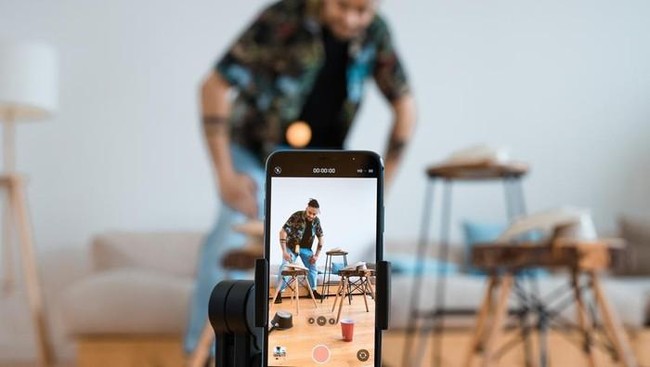
Jakarta - The shopping patterns of Indonesian consumers through digital channels continue to evolve. Video-based trading activity, or video commerce, is now growing and becoming part of the online shopping trend in the country.
Coordinating Minister for Economic Affairs Airlangga Hartarto revealed that the number of video commerce transactions in Indonesia has reached approximately 2.6 billion transactions. This development is one of the positive indicators amid changing consumer behaviour that increasingly combines online and offline channels.
“Yes, so the current trend remains good, there is a dual channel or what we often call omnichannel, where video conference trade is running and the trend has actually risen to 800,000, up nearly 75%. The number of transactions is around 2.6 billion. This is a positive trend in Indonesia,” Airlangga said during a press conference for the Kick Off Road to Harbolnas 2026 at the Ministry of Trade Auditorium in Jakarta on Thursday (27/8/2026).
According to Airlangga, the development of video commerce is also evident from the growing number of business actors utilising video and live streaming to offer products to consumers. He noted that the number of online sellers in Indonesia has reached around 800,000, while transactions through video commerce have reached 2.6 billion transactions.
“Indonesia, because active social media users have surpassed 180 million and this continues to grow at double digits or 26% per year. We also see that in e-commerce, AI optimisation is very important, especially in algorithm programmes to drive products based on consumer personalisation,” he said.
According to him, the development of digital technology opens opportunities for industry players and MSMEs to expand their markets. Changes in consumption patterns are also making the boundary between offline and online trade increasingly thin.
“This is certainly an extraordinary moment of technological adaptation and this is an opportunity for industry players and local MSMEs to carry out a more inclusive digital economic transformation,” he said.
Airlangga said that Indonesia’s trade sector is now moving towards an omnichannel pattern, where consumers use online and offline channels simultaneously according to their needs. He noted that offline trade still contributes around two-thirds of overall trade, while e-commerce accounts for about one-third.
“We see that the offline and online sectors are beginning to merge, although the offline sector still accounts for two-thirds of trade and the e-commerce sector is still around one-third,” Airlangga said.
He also said that Indonesia’s digital economy continues to grow. Its value is said to have reached around US$100 billion in 2025, with Indonesia being one of the main markets for video-based commerce.
This phenomenon has also drawn government attention ahead of the 2026 National Online Shopping Day (Harbolnas). The government is targeting Harbolnas transactions this year to reach around Rp40 trillion, up about 10% from the previous year’s realisation of Rp36.4 trillion.
“The target this year is Rp40 trillion. Of course, the government hopes this is important because we need to lift the economy in the fourth quarter,” he said.
Harbolnas 2026 will take place over seven days from 10-16 December 2026. In addition to marketplaces, the government is also expanding participation to various platforms in the digital ecosystem, including online travel agents, ride hailing, social commerce, and other digital trading and service platforms.
The government hopes that the development of these digital channels will not only increase consumption activity but also open greater space for MSMEs and local products to grow.
Airlangga also encouraged the use of digital technology to expand markets overseas. According to him, Indonesian e-commerce platforms are now beginning to be used to support MSME product exports, especially to Asian countries.
“In the ASEAN scope, we are preparing what is called the Digital Economic Framework Agreement (DEFA), and we hope that DEFA will be signed in November in Manila,” he said.
He assessed that ASEAN digital economic integration can enlarge market opportunities for Indonesian business actors, especially MSMEs that are beginning to enter the digital ecosystem and utilise technology to reach global consumers.
Source: jawawa.id (https://jawawa.id/newsitem/live-streaming-phenomenon-surges-indonesians-increasingly-tempted-to-shop-1787820709)
Originally published by CNBC Indonesia (https://www.cnbcindonesia.com/news/20260827140401-4-762763/marak-fenomena-live-streaming-warga-ri-jadi-mudah-tergoda-belanja), translated from Indonesian