
Little Aresha Daycare Boss Ordered to Pay Rp200m in Restitution, Victims’ Parents Disappointed
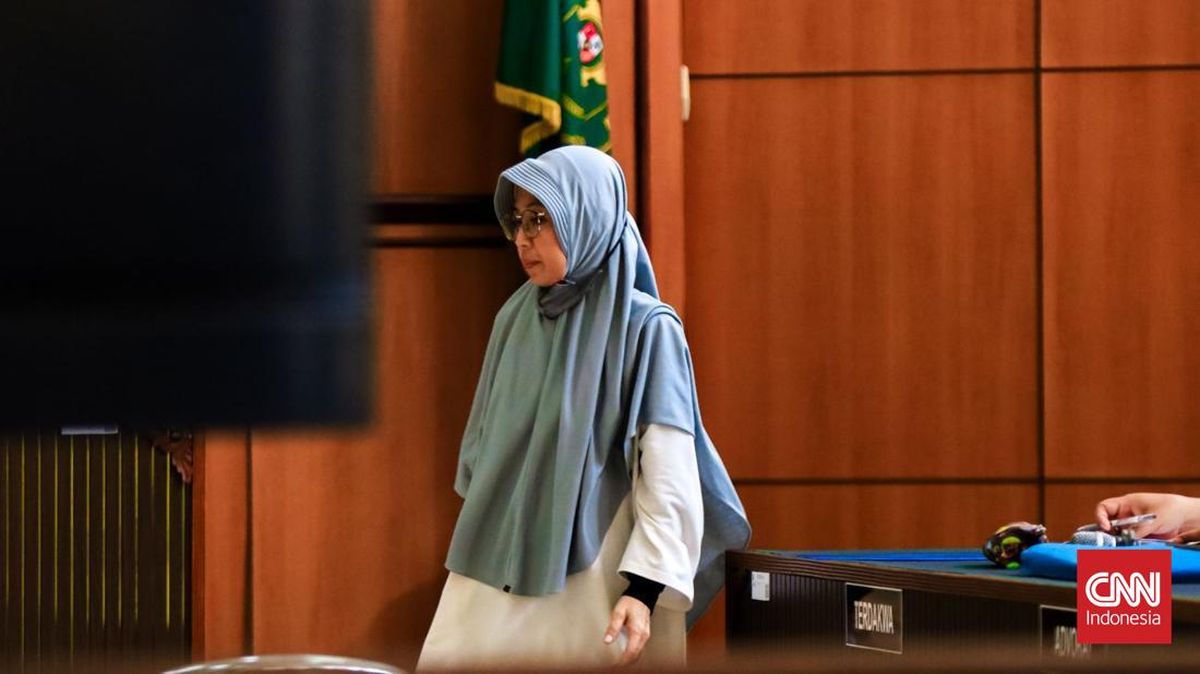
Parents of children who suffered abuse and neglect at Little Aresha daycare were disappointed by Yogyakarta District Court’s decision to set restitution for Diyah Kusumastuti, chairwoman of the Aresha Indonesia Center Foundation, at far less than the amount sought by prosecutors.
On Thursday (26 November), the panel of judges sentenced Diyah to nine years in prison and fined her Rp900 million. She was also ordered to pay Rp200,984,082 in compensation to the victims.
The figure is far below the Rp1,274,166,003.98 in restitution sought by prosecutors for 83 child victims, based on calculations by the Witness and Victim Protection Agency (LPSK).
Overall, prosecutors had sought a total of Rp2,125,277,183 in restitution from 32 defendants, with the amounts apportioned among them.
However, of the 13 defendants whose verdicts have been delivered, only Diyah was ordered to pay restitution as an additional penalty. The 11 caregivers and the school principal were not given a similar obligation.
“Clearly, we’re not satisfied, especially with the restitution. Out of Rp2 billion, it’s only a little over Rp200 million, even though our children have had intensive therapy for a long time,” said Imedia Dwi Anjani, one of the victims’ parents, after the hearing on Thursday (26 November).
Imedia said her family would receive only about Rp750,000 in restitution. Her child had undergone various treatments and had been hospitalised several times because of health problems suffered after attending the daycare.
As an example, one therapy session for her child cost Rp100,000, with four sessions a week. This meant the family had to spend about Rp1.6 million a month on therapy alone.
“My child was ill with vomiting and diarrhoea, was hospitalised repeatedly, had impetigo and other problems, yet we only get Rp750,000. Someone else gets only Rp300,000. That’s why this restitution is unfair,” she said.
She questioned whether the verdicts had taken into account the long-term effects on the children. She noted that the restitution calculations were made by the LPSK, rather than being based on calculations independently submitted by the parents.
Aside from compensation, Imedia said Diyah’s nine-year prison sentence did not deliver justice for the victims. The sentence is one year shorter than the term sought by prosecutors.
She said the judges should have imposed a heavier sentence, given that Diyah had reportedly served a previous criminal sentence.
“She was the mastermind; she gave the orders and took the money. So, if that’s the sentence and that’s the restitution, are we satisfied? Clearly not,” Imedia said.
Imedia was also unhappy with the verdicts against the 11 caregivers and the school principal. She said their sentences did not reflect the impact of their actions on the children and their families.
In her view, the judges had focused more on the defendants’ circumstances, while failing to fully account for the effects of abuse and neglect on the children and the burden borne by their parents.
“Our children are victims. We, as parents, are victims too. We entrusted our children to them and paid them. We are also the family breadwinners, not just the defendants,” she said.
Despite her disappointment, Imedia acknowledged that the parents could not appeal the verdict directly. Further legal action is up to the prosecutors, who said they were still considering Diyah’s sentence when the hearing ended.
Another parent, 40-year-old Norman Windarto, also criticised the amount of restitution, saying it did not cover all the children’s recovery needs. He said the calculation focused more on physical medical expenses, while psychological recovery had not been adequately accounted for.
Norman said parents still had to support their children through lengthy trauma recovery, and that psychological effects could resurface later.
“Psychological impacts take many forms. Some can be resolved, while others may emerge towards the end of the year,” Norman said.
“Our hope is still for a lot more, especially additional penalties through restitution. The judge said the restitution was calculated only from medical treatment costs. Daycare fees could not be included either,” he added.
Norman said a complaint letter sent to President Prabowo Subianto had received a response. The complaint was followed up through an online discussion with the Deputy Assistant for Complaints.
He hoped the case chronology could eventually be presented directly to the President during an online meeting.
The judges’ reasoning
Under LPSK Decision No. R-6405/R-6487/KEP/SMP-LPSK/09/2026, dated 9 September 2026, the total restitution calculated for 83 victims was Rp2,125,277,183. This covered several components, including loss of property, transport and meal costs during the legal process, physical and psychological harm, and recovery expenses.
However, the judges said not all of these items could be granted. Some claims lacked supporting evidence, while others were considered losses that had not yet actually occurred.
“For transport and meal costs calculated by the LPSK, although supporting evidence was not provided, those expenses are actual losses incurred after the crime or during the legal process, and are among the items that may be claimed,” the judge said.
“However, the panel has still considered whether the amounts calculated are reasonable. For example, transport costs dating back to when the children first joined the daycare will not be granted,” the judge added.
Transport costs were calculated proportionately, taking into account the number of vehicles used by each family. Expenses not submitted by applicants could not be considered.
In addition, where applicants had two or more children, transport costs could not be multiplied, as the calculation was based on one vehicle.
“Accordingly, the panel has calculated transport and meal expenses proportionately, based on the LPSK’s calculations, with some adjustments. However, where applicants did not claim transport or meal expenses, the panel could not include them,” the judge said.
The panel also rejected claims for daycare fees paid while the children attended Little Aresha, as well as enrolment fees for a new daycare or school. The judge said daycare fees were the parents’ responsibility and therefore did not constitute losses eligible for restitution.
The judges also rejected the LPSK’s claims for psychological and physical recovery costs, saying these amounts were projections for expenses not yet incurred. They also cited parents’ testimony that the children’s condition had improved after they were moved to another daycare.
“The component the panel considers more relevant is reimbursement for medical treatment costs, as these losses have occurred and are supported by evidence,” the judge said.
“Accordingly, the panel has granted reasonable medical treatment costs. Claims for medical expenses with implausible supporting evidence have not been granted. For example, treatment for an illness caused by a child’s pre-existing condition cannot be charged as part of a restitution claim,” the judge added.
Of the 83 child victims, the court approved restitution claims for 74 applicants. After recalculating the items it considered relevant, the total payable was set at Rp200,984,082.
The panel ordered Diyah to pay all the restitution, finding that she had benefited from the foundation’s proceeds. The judges took into account her role as the foundation’s chairwoman and founder, and the fact that she managed income and operating expenses through her personal bank account.
“The evidence shows that the defendant was both chairwoman and founder of the foundation, and managed all financial receipts and operating expenditure through her personal account. As the business operator who enjoyed the profits, the defendant should, in the panel’s view, be ordered to pay all the restitution,” the judge said.
If the restitution is not paid by the deadline, prosecutors may seize and auction Diyah’s assets or income to settle the obligation. If seizure is not possible or the proceeds are insufficient, the unpaid amount will be replaced by a custodial sentence.
“If seizure and auction do not cover the amount or cannot be carried out, restitution will be replaced by a substitute prison sentence of 80 days, calculated proportionately to take account of any restitution already paid,” the judge said.
Source: jawawa.id (https://jawawa.id/newsitem/little-aresha-daycare-boss-ordered-to-pay-rp200m-in-restitution-victims-parents-disappointed-1795701098)
Originally published by CNN Indonesia (https://www.cnnindonesia.com/nasional/20261126191047-12-1432029/bos-daycare-diy-dihukum-restitusi-rp200-juta-orang-tua-korban-kecewa), translated from Indonesian