
Litigation path cuts off economic gains from corruption
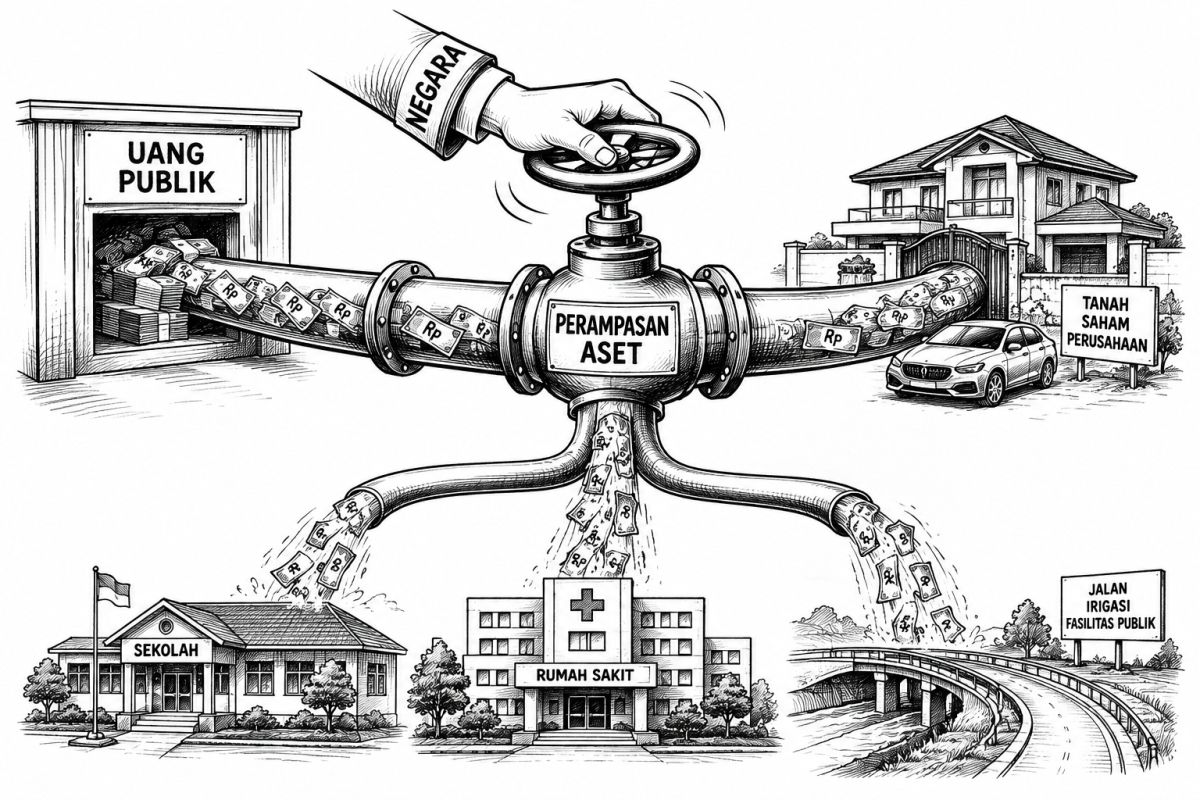
Corruption is fundamentally not merely a legal issue, but also an economic one. Behind every criminal act of corruption lies a motive to obtain profit, control assets, and convert public wealth into private wealth.
Therefore, eradicating corruption cannot be solely oriented towards punishing perpetrators. Equally important is ensuring that the proceeds of crime are not still enjoyed by the perpetrator, their family, network, or other parties who benefit from the criminal act.
It is this awareness that has brought discussion of the Draft Law on Asset Forfeiture back into focus in recent years. The Government and the House of Representatives view that Indonesia needs a more effective legal instrument to strengthen the recovery of assets derived from criminal acts, particularly corruption.
Amid the increasing complexity of financial crime, corruption no longer only conceals the proceeds of crime in the form of cash, but also in the form of land, buildings, shares, companies, vehicles, and even assets placed through other parties or across jurisdictions.
This urgency is growing stronger because, so far, the success of law enforcement has been measured more by the number of perpetrators processed and convicted, while the recovery of state losses has not yet become the primary measure. In fact, in many cases, corruption perpetrators can still retain part of the proceeds of their crimes even after serving criminal sentences.
Attention to asset recovery has actually developed in various international forums. The United Nations, through the United Nations Convention against Corruption, which Indonesia has ratified through Law Number 7 of 2006, places asset recovery as a fundamental principle in eradicating corruption. The paradigm built is not only follow the suspect, but also follow the money.
Discussion of the Asset Forfeiture Bill is essentially part of efforts to complete this legal framework. The House of Representatives has placed this bill as one of the important instruments to strengthen the return of state assets and close various legal loopholes that have so far made the proceeds of crime difficult to recover. The Government has also shown support for strengthening asset recovery mechanisms as part of the legal reform and governance agenda.
This need is not without reason. Data from Indonesia Corruption Watch in its ‘2024 Corruption Trend Monitoring Report’ recorded 364 corruption cases with 884 suspects and potential state losses reaching Rp279.9 trillion. This figure increased sharply compared to the previous year and became one of the highest figures in recent years. ICW also noted that the use of money laundering instruments and replacement payment mechanisms is still relatively limited, so asset recovery has not been optimal.