
List of the World's Largest Fertiliser Exporters: Where Does Indonesia Stand?
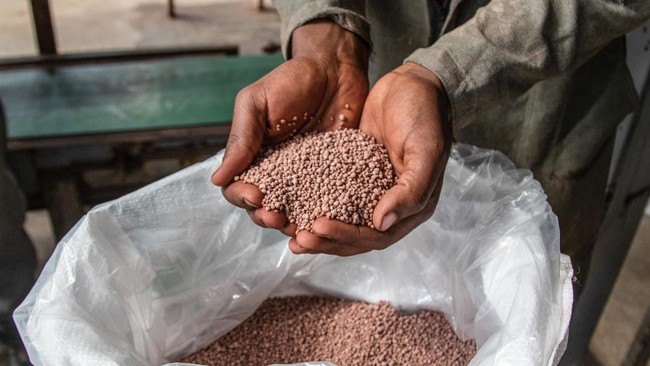
Fertiliser is a strategic commodity essential for global food production. However, global fertiliser trade is highly concentrated and dominated by only a handful of countries.
Latest data from the Food and Agriculture Organization (FAO) shows that global fertiliser exports reached approximately 113.3 million tonnes in 202lar. The four largest exporters—Russia, Canada, Morocco, and China—control more than half of the global fertiliser trade. Russia holds the top position with exports reaching 23.2 million tonnes, followed by Canada with 14.4 million tonnes, Morocco with 12.2 million tonnes, and China with 10.1 million tonnes. The United States ranks fifth with 6.4 million tonnes.
This data combines the exports of the three main fertiliser elements: nitrogen, phosphorus, and potassium (potash). Export figures are calculated based on nutrient content rather than the total weight of the fertiliser product. Consequently, these figures cannot be directly equated to the tonnage of fertiliser products found in corporate reports.
Why is Russia Number One?
Russia’s dominance is inseparable from its combination of energy and mineral resources. Nitrogen fertiliser production is highly dependent on ammonia, which requires large amounts of energy and hydrogen, typically derived from natural gas. Russia possesses vast natural gas reserves, providing a cost advantage in large-scale nitrogen-based fertiliser production.
However, Russia’s strength is not limited to gas. US Geological Survey (USGS) data shows that in 2024, Russia was the world’s second-largest producer of potash, accounting for approximately 21% of global production. Russia is also the second-largest nitrogen producer with a 9.6% share, and the fourth-largest phosphate rock producer with a 6% share. This means Russia has a production base spanning almost the entire main value chain of the fertiliser industry, from nitrogen and potassium to phosphate.
This massive capacity is reflected in Russia’s export policies. The Russian government has even set a mineral fertiliser export quota of approximately 19.2 million tonnes for the period of December 2024 to May 2025, consisting of about 11.2 million tonnes of nitrogen fertiliser and nearly 8 million tonnes of compound fertilisers. This policy aims to ensure domestic needs are met amidst such large export capacities.
Canada and Morocco Have Their Own ‘Treasures’
Unlike Russia, Canada’s position is primarily supported by its vast potash reserves, particularly in Saskatchewan. In 2024, Canada’s potassium-based fertiliser exports reached approximately 22.9 million tonnes of product, with the United States being the largest destination. Indonesia is also an important market, receiving approximately 1.25 million tonnes of Canadian potash fertiliser that year.
Morocco possesses a different advantage. The country is one of the world’s primary hubs for phosphate rock production. In 2024, Morocco became the largest exporter of phosphate fertiliser, with shipments of approximately 5.14 million tonnes of product, significantly ahead of China, which follows in the rankings.
These conditions demonstrate that strength in the fertiliser trade is largely determined by access to raw materials. Countries with large mineral reserves or cheap energy possess advantages that are difficult for other nations to replicate.
Indonesia: An Agricultural Nation, But Ranked Only 23rd
Despite the scale of its national agricultural sector, Indonesia’s position in global fertiliser trade remains relatively far from the top tier. According to FAO data, Indonesia ranked 21st among the world’s fertiliser exporters in 2024, with exports of approximately 748,316 tonnes based on nutrient content.
This position is noteworthy given that agriculture still plays a major role in the national economy. Data from the Indonesian Central Statistics Agency (BPS) shows that the agriculture, forestry, and fisheries sector contributed approximately 12.61% to Indonesia’s Gross Domestic Product (GDP) in 2024. Specifically, the contribution from agriculture, livestock, hunting, and agricultural services reached about 9.52%.
Indonesia does, in fact, possess a large fertiliser industry. The Pupuk Indonesia Group has a production capacity of approximately 14.65 million tonnes per year, consisting of 9.36 million tonnes of urea, 4.52 million tonnes of NPK, 750,000 tonnes of ZA, and 20,000 tonnes of ZK.
However, such large-scale production does not automatically make Indonesia a major exporter. One reason is the priority given to meeting domestic needs, particularly to support national food security programmes.
Indonesia Still Depends on Imported Raw Materials
While Indonesia has strong capacity for nitrogen fertilisers such as urea, it still relies on imports for several raw materials, particularly potash. In 2024, Indonesia imported potash fertiliser worth approximately US$1.02 billion, primarily from Canada and Russia.
This situation indicates that a large agricultural sector does not automatically transform Indonesia into a leading fertiliser exporter. Global trade position is also determined by the availability of raw materials, energy, production capacity, and the scale of domestic demand.
Consequently, the price and availability of domestic fertiliser remain sensitive to global market dynamics. Changes in energy prices, logistics costs, and supply disruptions from major producing nations can all impact domestic agricultural production costs.
Source: jawawa.id (https://jawawa.id/newsitem/list-of-the-worlds-largest-fertiliser-exporters-where-does-indonesia-stand-1790491897)
Originally published by CNBC Indonesia (https://www.cnbcindonesia.com/research/20260927055632-128-771179/daftar-negara-eksportir-pupuk-terbesar-di-dunia-ada-indonesia), translated from Indonesian