
List of Demands from Student Protest in Bandung
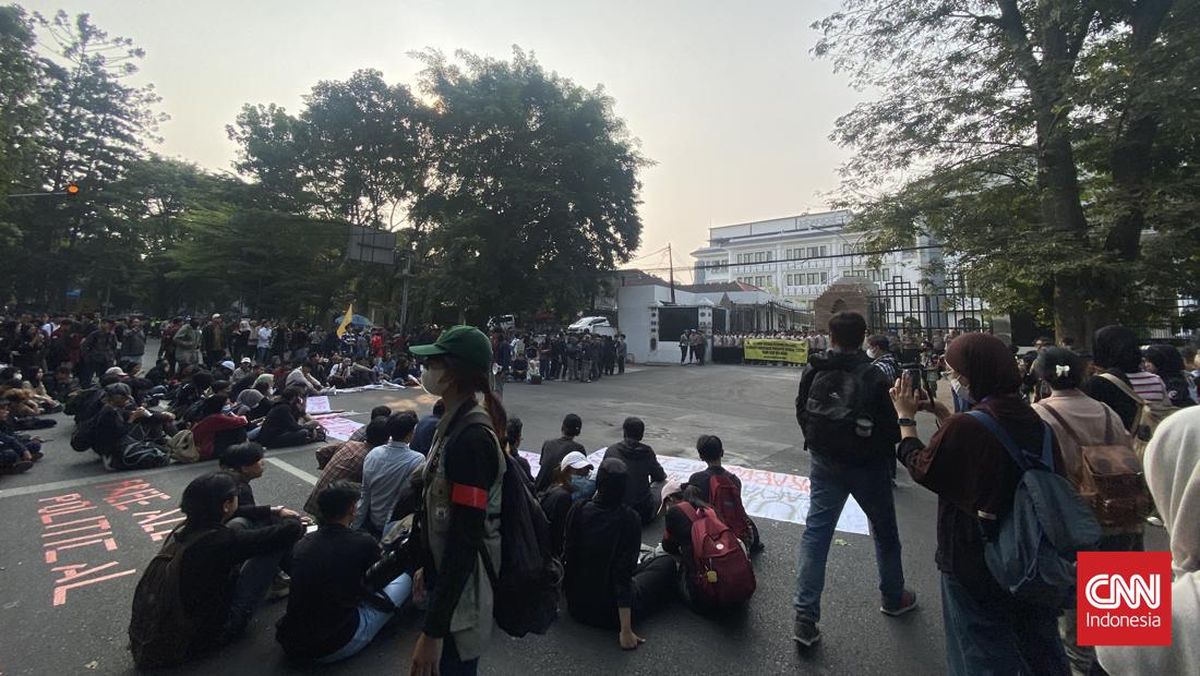
Students in Greater Bandung held a demonstration in front of the West Java Regional House of Representatives (DPRD) building on Monday afternoon (15/6). The protesters conveyed a series of demands related to current social conditions and government policies. One representative of the crowd, Abdurrahman Muhammad Abdul Malik Albarakati from UIN Sunan Gunung Djati Bandung, stated their presence at the DPRD was a means of channelling public aspirations that have so far lacked attention. “This action is not merely a student movement, but a manifestation of public anxiety over injustice and actions we deem as arbitrary by the current government,” he told journalists. The students highlighted several issues, ranging from the Free Nutritious Meals (MBG) programme and the Red and White Cooperatives to the use of state funds. They also touched on spending for official overseas travel, which they believe needs evaluation. “Stop wasting the budget on overseas visits,” he said. Abdurrahman explained that the demands brought by the crowd stem from a desire to push for more fundamental changes in governance. According to him, similar actions will continue if the demands presented do not receive a response. “If these demands are not responded to by the government, we will continue to voice our aspirations. We are not only presenting demands, but have also compiled studies and offered solutions to the various issues we are highlighting,” he stated. He added that previous waves of student protests in various regions have not yielded what is considered an adequate response. Therefore, taking to the streets is seen as a step that still needs to be taken after various communication efforts have been made. “We see that various student actions carried out previously, both in Jakarta and Bandung, have not received an adequate response from the government. Hence, we consider street protests to be one of the last steps students can take after various dialogue and audience efforts have not produced concrete action,” said Abdurrahman.