
Liquidity Squeeze Eases After Bank Indonesia Injects Nearly IDR 1,000 Trillion
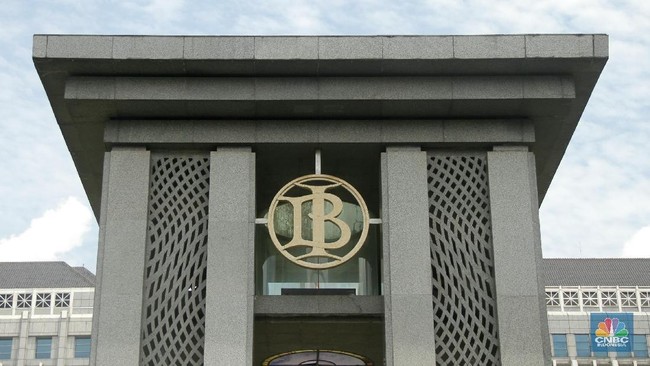
Bank Indonesia (BI) has disclosed that liquidity pressures in the money market and banking sector, which occurred at the end of June 2026, are now easing. The improvement is supported by aggressive monetary operations by BI and synergy with the government through the management of the Excess Budget Balance (SAL).
BI Senior Deputy Governor Destry Damayanti explained that liquidity conditions had tightened in the last week of June. This was reflected in the rise of the Indonesia Overnight Index Average (IndONIA), the overnight money market benchmark interest rate managed by BI, which had approached the 6.5% level.
‘From the market side, we usually look at IndONIA, the overnight money market interest rate, to see whether liquidity is tight or not. In the last week of June 2026, IndONIA had indeed increased to nearly 6.5%,’ Destry said during a press conference on the results of the BI Board of Governors Meeting on Wednesday (22/7/2026).
In response, BI immediately injected liquidity into the market through various monetary operation instruments, including repurchase agreements (repo) and foreign exchange swaps. This move gradually reduced the liquidity pressure.
‘At that time, we injected liquidity, both through repo policy and swap effects, so there was an additional fund of almost IDR 1,000 trillion around 25 June 2026, or the fourth week of June 2026,’ Destry continued.
In addition to BI’s intervention, the management of the SAL by the Ministry of Finance also helped maintain sufficient liquidity in the financial system.
‘With the increase in market liquidity, and also the SAL policy which is continuously maintained by the government and the government even added liquidity, we now see that conditions have begun to ease,’ Destry explained.
The synergy between monetary and fiscal policies is beginning to show results. The banking sector’s need for BI’s repo facility has decreased as interbank liquidity conditions have improved.
‘So we see that conditions are now easing, where our repo has also finally decreased because liquidity is sufficient, so interbank repo transactions are also starting to decrease. The repo position has now reached around IDR 800 trillion, and we also see that IndONIA has fallen to around 6.15%,’ Destry clarified.
Destry emphasised that overall banking liquidity conditions remain healthy, as reflected in several key indicators that remain strong.
‘This indicates our liquidity is improving. We see several indicators such as AL/DPK which is still above 24%, then bank capital is still strong at more than 23%, and also if we look at several other indicators related to liquidity, overall it is still quite good with NPLs maintained,’ Destry stated.
Domestic liquidity also received additional support from significant foreign capital inflows into Indonesian financial instruments, particularly Government Securities (SBN) and Bank Indonesia Rupiah Securities (SRBI).
‘In addition, there has been a quite significant inflow of foreign funds. Throughout this year, we have seen inflows into SBN and SRBI reaching IDR 192 trillion,’ Destry concluded.
The improvement in liquidity serves as a positive signal for the stability of the national financial system, especially after the market faced pressures from global uncertainty and increased liquidity needs in the middle of the year.
Source: jawawa.id (https://jawawa.id/newsitem/liquidity-squeeze-eases-after-bank-indonesia-injects-nearly-idr-1-000-trillion-1784767879)
Originally published by CNBC Indonesia (https://www.cnbcindonesia.com/market/20260723062100-17-753092/likuiditas-sempat-seret-bi-gelontorkan-dana-hampir-rp1000-t), translated from Indonesian