
Liquidity Eased: Which Banks Stand to Benefit Most?
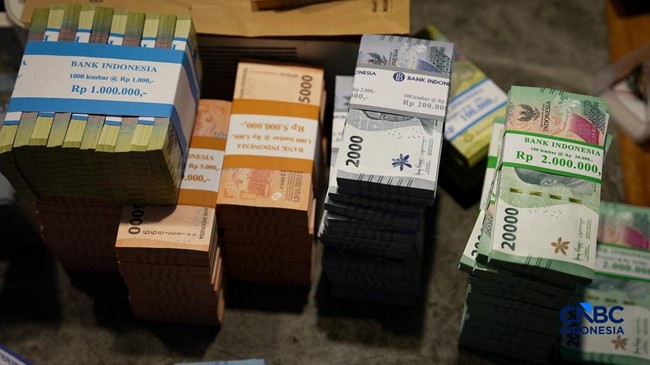
Bank Indonesia has kept its BI Rate at 5.75%, raised the Deposit Facility rate to 5% and announced an easing of banks’ reserve requirements. The measures are intended to add liquidity to the national banking system.
The central bank is also easing the statutory reserve requirement (Giro Wajib Minimum, or GWM) for conventional banks, lowering it to 7% from 9% in stages from 1 November 2026.
For Islamic banks and Islamic banking units, the requirement will fall to 5.5% from 7.5%. It will first be reduced to 6.5% on 1 November 2026 and then to 5.5% on 1 December 2026.
The policy mix reflects an effort to support the rupiah while making more room for economic financing. Exchange-rate pressures and September inflation of 3.28% mean that any interest-rate cuts require caution.
Is industry liquidity still adequate?
Bank Indonesia data show that credit grew by 13.26% year on year in September 2026, outpacing third-party funds (DPK), which rose by 8.22%. However, the ratio of liquid assets to DPK increased to 24.08%, from 23.04% in August.
This indicates that funding needs are rising, but there is no sign of an industry-wide liquidity shortage. Credit and DPK growth do not have to match exactly, as banks also hold liquid assets and have other funding sources.
Nevertheless, if lending continues to grow faster than banks’ ability to secure funding, they may be prompted to raise deposit rates or become more selective in extending credit.
The issue is that deposit growth can come at a higher cost of obtaining funds.
Himbara deposits grow, with time deposits supporting Mandiri and BNI
Fundraising at several Himbara state-owned banks continued to grow in August 2026. BNI recorded the highest DPK growth in the sample, at 29.40% year on year, followed by Mandiri at 17.56% and BRI at 13.65%.
However, overall deposit growth needs to be considered alongside its composition. At BRI, Mandiri and BNI, time deposits grew faster than total DPK, increasing their share of funding.
The sharpest increase was at BNI, where time deposits rose from Rp238.14 trillion to Rp389.95 trillion. Mandiri’s time deposits increased from Rp339.34 trillion to Rp501.44 trillion.
The additional time deposits accounted for about 64.3% of Mandiri’s DPK growth and 59.4% of BNI’s. As time deposits generally offer higher returns than current and savings accounts, this shift could increase funding costs. The actual effect needs to be verified against each bank’s deposit rates and interest expenses.
BSI showed a different pattern: time deposits grew more slowly than total DPK, increasing the share of its current and savings accounts. In BTN’s case, the decline in DPK needs to be considered alongside the separation of BTN Syariah in December 2025 and whether the reporting coverage is comparable before it is interpreted as customers moving their funds.
Smaller banks pay more
Data from the Indonesia Deposit Insurance Corporation (LPS), cited by Bisnis Indonesia, show that deposit rates at small and medium-sized banks rose in August 2026.
Large banks have transaction networks and customer ecosystems that help them attract current and savings deposits. Some smaller banks rely more heavily on time deposits and competitive rates.
As a result, deposits may still grow, but at a higher cost. This can put pressure on profit margins, although banks may still be able to maintain liquidity.
High interest rates do not, however, automatically indicate difficulty meeting customer withdrawals. Nor does the data prove that funds have moved directly from smaller banks to Himbara banks.
BI makes room for funding while continuing to support the rupiah
The Deposit Facility is where banks place funds at Bank Indonesia; it is distinct from customer deposits. Raising its rate helps support the short-term interest-rate structure and does not automatically increase all retail deposit rates.
Meanwhile, the scheduled reduction in the GWM for conventional banks means the additional liquidity available to each bank may vary.
Liquidity support also needs to be accompanied by the distribution of funds between banks. Deposit growth at large banks does not necessarily improve access to funding immediately for other lenders that need it.
From an analytical perspective, BI is seeking to support credit funding while preserving the rupiah’s appeal. If currency and inflation pressures ease, there may be room for further easing. If they intensify, maintaining or raising rates remains possible.
For banks, the next question is whether the additional liquidity can ease competition for funding and support productive lending. Lending rates may not fall immediately, as banks still have to consider funding costs—which remain relatively high—borrower risk and the need to protect profitability.
GWM easing welcomed
The chief executives of state-owned Himbara banks have welcomed Bank Indonesia’s decision to ease the statutory reserve requirement, announced at its October 2026 Board of Governors Meeting.
Anggoro Eko Cahyo, President Director of PT Bank Syariah Indonesia (Persero) Tbk (BRIS), welcomed the central bank’s policy, saying the GWM easing would give the bank greater room to grow.
“I certainly welcome it, because it gives us more flexibility. We have needed that flexibility to keep growing,” Anggoro said after the fourth CEO Lecture at Perbanas Institute in South Jakarta on Wednesday (28 October 2026).
PT Bank Tabungan Negara (Persero) Tbk (BBTN) also welcomed the reduction. BTN President Director Nixon L.P. Napitupulu said the additional room under the GWM could be used to extend credit.
“Of course we’re happy — that money can be used for lending,” Nixon said after a focus group discussion entitled “BTN Transformation: Building Synergies for Sustainable Business Growth” in Bandung, West Java, on Friday (23 October 2026).
He estimated that a 2% reduction in the GWM could provide BTN with an additional Rp6 trillion to Rp8 trillion in liquidity.
“My estimate is that each 1% of GWM represents a maximum of around Rp4 trillion for BTN. So if we can benefit from 2%, it could be between Rp6 trillion and Rp8 trillion. But I’ve asked the treasury team to calculate the precise impact,” Nixon said.
Another state-owned lender, PT Bank Negara Indonesia (Persero) Tbk (BBNI), said the additional liquidity from the GWM easing could support banks’ capacity to provide financing, provided it is accompanied by prudent lending and adequate risk management.
BNI Corporate Secretary Okki Rushartomo said the bank plays a role in supporting economic activity by financing businesses and productive sectors.
“Through quality lending and cooperation with the government, regulators and Himbara members, BNI will continue to support financing for productive sectors and the national development agenda,” Okki said in a statement on Friday (23 October 2026).
Hery Gunardi, chairman of the Association of National Banks (Perbanas), also said the GWM reduction could boost market liquidity. “First, we welcome Bank Indonesia’s policy to reduce the GWM,” he told CNBC Indonesia on Wednesday (21 October 2026).
Hery, who is also President Director of PT Bank Rakyat Indonesia (Persero) Tbk (BBRI), said the reduction would affect banks’ intermediation function and improve liquidity conditions, as reflected in the loan-to-deposit ratio (LDR). “The impact will be an increase in bank lending and an improvement in the LDR,” he said.