
Linking the Rails to Get Greater Surabaya Moving
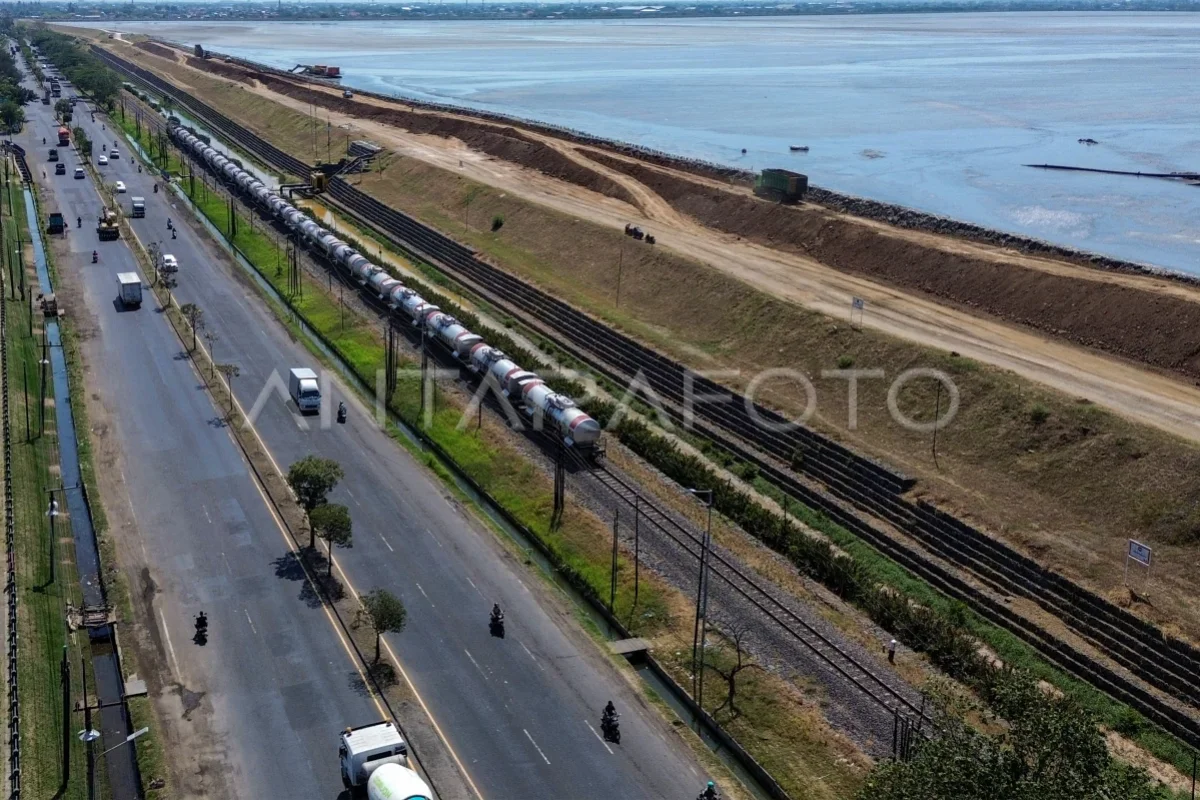
Surabaya (ANTARA) – Daily journeys between Surabaya and Sidoarjo point to a problem that is becoming increasingly difficult to ignore. Thousands of people travel to centres of economic activity, education and commerce, while roads must accommodate private vehicles, freight transport and public transport.
As mobility continues to grow, the need for mass transit that is fast, affordable and integrated is becoming more urgent.
Plans for the Surabaya Regional Railway Line (SRRL) offer new hope for mobility across Greater Surabaya. The rail-based transport project is not simply an addition to infrastructure; it creates an opportunity to change how people travel while strengthening economic ties between regions.
The German and Indonesian governments signed a financing agreement for SRRL Phase I on 30 June 2025. The first stage covers the construction of a double track and electrification along 20 kilometres of the Surabaya Gubeng–Sidoarjo corridor. Once operational, the project is expected to serve more than 200,000 passengers a day.
The project is also expected to cut greenhouse gas emissions by up to 150,000 tonnes a year by 2045. This target makes the SRRL not only a transport project, but also part of the sustainable urban development agenda.
The first line
The SRRL is important because Surabaya’s mobility problems cannot be solved simply by widening roads or adding more vehicles.
The growth of residential areas and economic centres in Sidoarjo, Surabaya and surrounding areas requires a transport system capable of moving large numbers of people efficiently.
Double-tracking and electrifying the Gubeng–Sidoarjo line is a strategic step towards increasing the capacity of commuter rail services. The use of electricity also creates the prospect of more environmentally friendly transport, reducing dependence on fossil-fuel vehicles.
However, building a new rail line is not straightforward. The corridor to be developed is already part of a railway network serving various journeys. The Directorate General of Railways (DJKA) records about 240 train journeys a day on the SRRL Phase I-A section between Surabaya Gubeng and Sidoarjo.
Technical challenges also arise at Wonokromo Station, where the SRRL project overlaps with construction of the Wonokromo–Sepanjang double-track line. The two projects require coordination on design, track arrangements, signalling and construction phases to avoid disrupting existing train services.
Technical studies have also identified the need for an additional safety system, including an interlocking block between Gedangan and Sidoarjo, as well as the need to resolve land issues on the eastern side of Wonokromo Station’s track yard.
This means the project’s success will depend not only on securing financing, but also on resolving technical issues and coordinating across institutions.
Construction schedule updates also need to be communicated consistently. In July 2026, DJKA said detailed engineering design (DED) work was under way with a Japanese consultant.
In November 2026, the Surabaya City Government said the DED was projected to be drawn up in 2027 and completed by the end of that year, before construction was tendered in late 2027 or early 2028.
These differing statements need clarification, particularly regarding the scope of design work already under way and the stages still to be completed. A transparent schedule is important so the public can follow the project’s progress rather than simply receiving repeatedly updated target dates.
Real integration
Rail does not automatically solve transport problems if passengers struggle to reach stations or continue their journeys after getting off. This is often the challenge that determines whether mass transit succeeds in a metropolitan area.
The SRRL must connect with Suroboyo Bus, WiraWiri, Trans Semanggi, feeder services and other modes of transport. This integration needs to be planned from the construction stage, rather than left until the railway is complete and ready to operate.
The Surabaya City Government already has a foundation to build on. In 2025, public transport use in the city was recorded at about seven million. As of October 2026, the Transport Agency reported a fleet of 107 feeder vehicles and 80 buses, before the addition of new minibuses. The city government also plans to develop 11 main transport routes and 30 feeder routes.
These figures show that expanding bus and feeder services could provide a foundation for SRRL operations. However, route expansion must take into account station locations, the distribution of residential areas, employment centres, schools, hospitals and commercial districts.
Integration also requires more than simply providing connecting vehicles. Bus and train arrival times must be coordinated, payment systems made simpler, and travel information provided through a single, easily accessible service.
Source: jawawa.id (https://jawawa.id/newsitem/linking-the-rails-to-get-greater-surabaya-moving-1795830715)
Originally published by Antara (Indonesian) (https://www.antaranews.com/berita/5884323/menautkan-rel-menggerakkan-surabaya-raya), translated from Indonesian