
Link to Check 2026 Social Assistance Desil Without an App, Accessible via Google on Your Phone
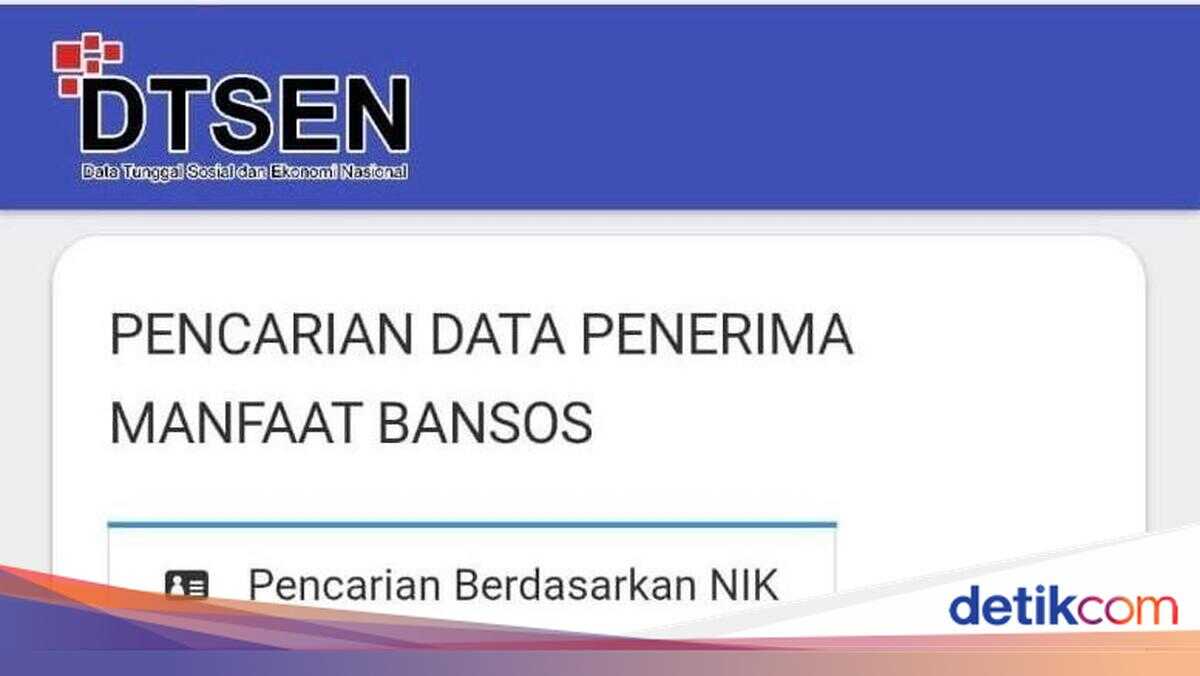
Government social assistance is provided to communities belonging to certain categories based on welfare levels. To determine eligibility, the government uses a grouping system called desil. Through this system, the socio-economic conditions of households are analysed so that aid disbursement can be better targeted.
Now the public can also check their desil status online themselves without needing to download additional apps. Simply using a mobile phone and accessing the official site via the Google browser, information related to the household welfare position can be accessed easily using the National Identity Number (NIK).
This checking feature is important because household economic conditions are dynamic. If someone feels their welfare data does not reflect actual conditions, data updates can be performed through the village or urban administrative unit government, local social services, or through official government services so that data can be re-verified.
What is Desil? According to the National Social and Economic Single Data (DTSEN) page of the Ministry of Social Affairs, desil is a group of household welfare measured based on a range of socio-economic variables. Those variables include individual details such as occupation and education; housing conditions such as house quality and electricity supply; and asset ownership.
There are 10 desil groups, each containing about 10 percent of households in Indonesia. Desil 1 is the group with the lowest welfare level or the bottom 10 percent, while desil 10 is the group with the highest welfare level.
Referring to the explanation by the Gunungkidul Regency Government, the division of desil groups in society can be generally explained as follows:
Desil 1: Very Poor (bottom 10%)
Desil 2: Poor (bottom 10-20%)
Desil 3: Almost Poor (bottom 20-30%)
Desil 4: Vulnerable to Poverty (bottom 30-40%)
Desil 5: Lower middle or subsistence economy
Desil 6: Lower middle
Desil 7-10: Middle to prosperous (around the top 30%)
A description on the Instagram account @kemensosri also notes that, simply, desil is the division of data into 10 equal groups based on a given order, in this case expenditure or welfare levels.
Desil determination is based on measured socio-economic data, not just assessments from the appearance of a house or ownership of certain goods. The data also has a time of recording, so changes in the economy after data collection can cause results to appear different from current conditions.
Link to Check Desil Bansos 2026 Without an App
The public can check desil status as well as recipients’ information via the official Ministry of Social Affairs site. Checks can be done directly via the following link:
The site is connected to the National Social and Economic Single Data (DTSEN) system, which forms the government’s data backbone for targeting social assistance programs.
In the system it is explained that desil data is used to determine priority recipients for social assistance. Families in desil 1 through desil 4 or the bottom 40 percent are the main priority recipients for social assistance programs such as the Family Hope Program (PKH) and the Basic Food Program (Sembako). Meanwhile, desil 5 groups can still receive some assistance, for example Health Insurance Contribution Assistance (PBI-JK), although it is more limited and selective.
How to Check Desil Bansos 2026 Without an App
The process of checking desil via the official Kemensos site is straightforward and can be done in just a few steps:
Open the site https://cekbansos.kemensos.go.id in a mobile browser.
Enter the 16-digit NIK (National Identification Number) as on the ID card.
Type the verification code shown in the box.
If the code is not clear, click the refresh icon to obtain a new code.
Click the SEARCH DATA button to view the results.
After the search, the system will display information related to socio-economic data status recorded in DTSEN, including the family desil position within the welfare category.
Desil data is also dynamic. If the public feels the data shown does not reflect actual conditions, updates can be made through the village/urban ward or local social services, or via the bansos check app by reporting the actual conditions. The data will then be verified and recalculated periodically by the Central Statistics Agency (BPS).
This is a brief explanation of the link to check desil bansos 2026 without an app, accessible via the official site with a Google browser. Hope it helps!