
Limited Authority and Funding Hinder Regional Energy Transition
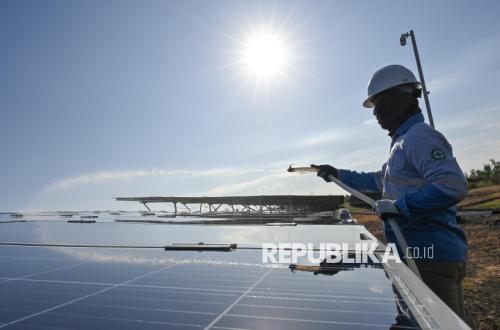
Limited authority of regional governments, minimal funding support, and weak policy synchronisation remain the main challenges in implementing Indonesia’s energy transition. These conditions make it difficult for many regions to translate their commitment to clean energy into effectively executable programmes.
Senior Researcher at The SMERU Research Institute, Nila Warda, stated that findings from studies in several provinces show the core issue lies not in the regional governments’ commitment, but in their capacity to execute that commitment. “The problem is not just commitment. In terms of commitment, everything is quite good. But the ability to execute that commitment is the challenge,” Nila said during an online research dissemination event titled “Realising an Emission-Free Future by Strengthening Regional Participation in the Energy Transition” on Tuesday (23/6/2026).
According to Nila, the characteristics of the energy transition differ in each region. Some areas have high emission levels but limited renewable energy sources. Conversely, there are regions with large renewable energy potential but limited fiscal and technical capacity. “The role of regions in implementing the national energy transition must be viewed differentially because each region has a different combination of potential and limitations,” she said.
SMERU assesses that one of the biggest obstacles stems from the limited authority of regional governments in the energy sector. Many energy targets and indicators are set nationally, while the instruments for implementation lie beyond the control of provincial governments. Nila cited North Sulawesi as an example, which is targeted to increase its new and renewable energy mix to 38 percent by 2025. However, at the same time, the construction of three coal-fired steam power plants continues because they are already included in the Electricity Supply Business Plan (RUPTL) of PT PLN. As a result, the renewable energy mix target is difficult to achieve, with recorded realisation at only around 23 percent. “The region is let go but still held by the tail. So it’s quite difficult,” Nila said.
Beyond authority, access to energy data also remains a problem. Many regional governments struggle to obtain the data needed to monitor energy target developments in their areas. Another obstacle arises in the investment sector. According to Nila, some regions have issued incentive regulations to encourage clean energy investment. However, several projects remain stalled due to lengthy environmental permit processes. “There is investment coming in, but the environmental impact assessment (Amdal) permit hasn’t been issued for three years,” she said.
SMERU also found challenges in managing rooftop solar power plants (PLTS) at several regional government buildings. Although the facilities were built with support from international donors, their utilisation is not yet optimal due to limited human resources and maintenance mechanisms. “The training exists, but it hasn’t been connected to the needs on the ground,” Nila said.
Amid these various obstacles, SMERU sees room for regional governments to strengthen the energy transition agenda. One way is by incorporating clean energy issues into the regional development mission and the Regional Medium-Term Development Plan (RPJMD), providing a stronger basis for securing programme and funding support. Nila cited the experience of East Java. When an assessment was conducted at the end of 2025, the regional government admitted it did not yet have many concrete programmes related to the energy transition. However, the inclusion of the issue in the RPJMD opened opportunities for collaboration with non-governmental organisations and donor agencies. “At least when it’s already in the RPJMD, there is a platform to enter. That is an initial step that can be taken,” she said.
SMERU also recommends strengthening policy synchronisation between central and regional governments, including across ministries and agencies. Additionally, fiscal support through instruments such as the Special Allocation Fund (DAK) for Clean Energy is considered important to help regions finance energy transition programmes. According to Nila, guidance and assistance to regional governments is the most urgent need. Strengthening the capacity of regional planners must be carried out according to the characteristics and needs of each area. “The energy transition requires more than just a vision. Strengthening the role and capacity of provincial governments is crucial for this agenda to truly progress,” she said. She emphasised that the success of the national energy transition depends heavily on the government’s ability to optimise regional potential while overcoming the various structural obstacles currently faced.