
Lighting the Future Through Equal Access to Higher Education
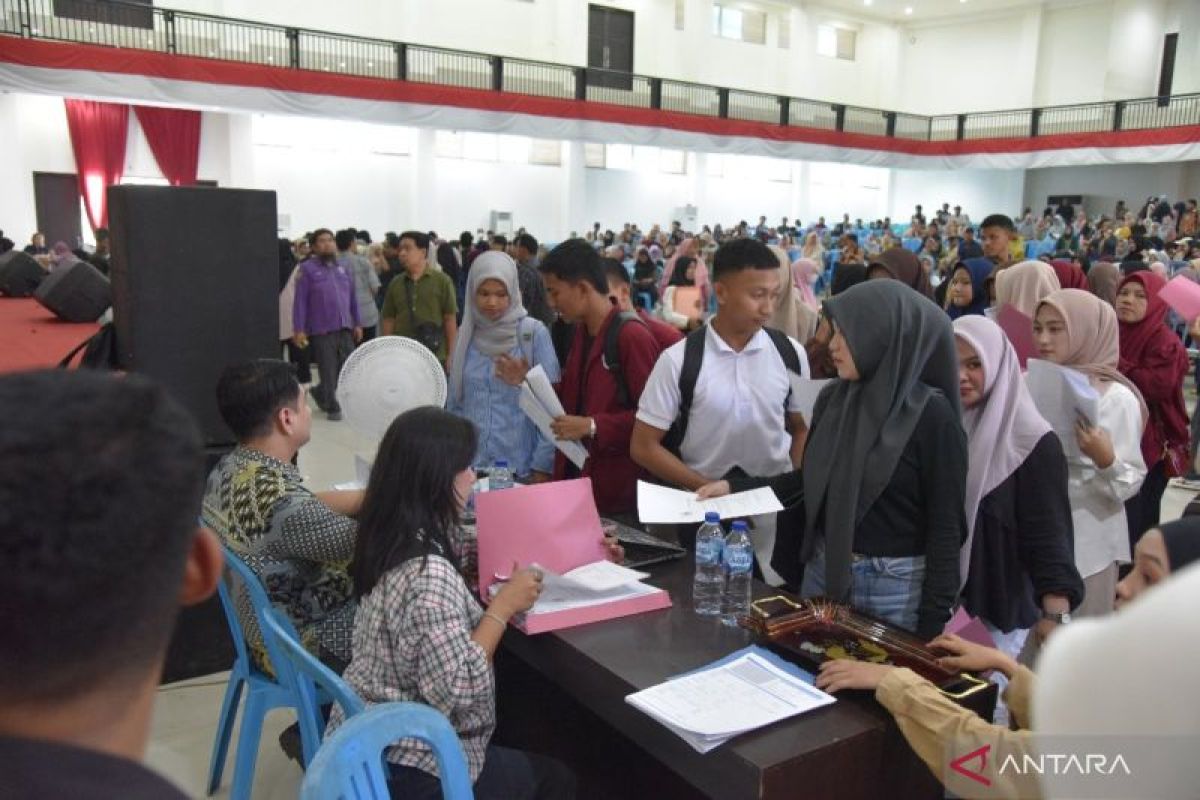
KIP Kuliah, and other government efforts to ensure equal access to higher education, are important tools for breaking the cycle of poverty.
Jakarta (ANTARA) — “I once thought I would have to leave ITB and get a job to pay the rent, buy food and cover other expenses,” Alif recalled of his time as a student at the Bandung Institute of Technology (ITB), more than a decade ago.
For some people, continuing their education at university may be straightforward. But for others facing financial hardship, including Alif, it can be a long struggle.
Alif even considered abandoning his studies to meet daily expenses and help his mother earn a living, after his father died not long after Alif had passed the university entrance selection.
Alif did not give up. He kept going until he received a Kartu Indonesia Pintar (KIP) Kuliah scholarship, then known as the Bidikmisi Scholarship. He made the most of the opportunity by studying hard and continuing to develop himself.
Alif is now a commissioner at Cerebrum, an education technology start-up platform he developed with a friend during their final year at university. The platform offers 15 tutoring applications, covering preparation for entry to state universities and government-run colleges.
“Our vision is to build learning applications for every stage of life, from the womb — including guidance on a healthy pregnancy — all the way to the grave. We want to build learning apps for every stage of a person’s life,” Alif said.
Alif also regularly shares content analysing everyday phenomena through the use of science and mathematical formulas. As a mathematics graduate, he aims to make the subject more accessible and change the perception that it has little relevance to daily life.
That content eventually led to Alif being appointed an expert staff member at the Coordinating Ministry for Food Affairs.
“Over the years, I’ve already spent the scholarship money — it has become part of me, part of my flesh and blood — so I can’t return it to society. My aim, then, is to find a way for it to benefit Indonesia. I hope I can be of even greater service,” Alif said, his eyes brightening as he spoke about his future ambitions.
Alif is not alone. Dinda, a final-year student in the Management programme at the Faculty of Economics and Business at UIN Syarif Hidayatullah Jakarta, has a similar story of how a KIP Kuliah scholarship enabled her to pursue her ambitions despite financial constraints.
Dinda’s parents earn a living selling rice and lontong sayur, and their income is only enough to cover day-to-day needs. Her parents initially opposed her plans to attend university, fearing they would not be able to afford the fees. But Dinda, who is from Serang, remained determined.
“My motivation for applying for KIP Kuliah was to make the most of every opportunity I had. Thankfully, the scholarship has helped me achieve things I once thought were impossible,” Dinda said.
During her studies, Dinda has been an active participant in competitions, particularly in literature. In 2026, she won a silver medal for poetry at the SeIBA International Festival. She has also written eight novels.
Dinda’s achievements at university had never occurred to her mother, despite Dinda being a bright child. Seeing what her daughter has accomplished, her mother, Anah, wept with pride.
Anah said the KIP Kuliah scholarship had played a major part in her daughter’s achievements.
“I hope many more students will receive scholarships like Dinda’s in the future,” Anah said.
The stories of Dinda and Alif show that economic background should not prevent Indonesian children from pursuing higher education and developing their potential.