
Life Is Getting More Expensive, and It Is Getting Harder to Get By
At the entrance to a supermarket in Beauvais, a town in the Oise department of France, Fanny imagines the shopping she would like to take home. She would put a piece of entrecôte, a choice cut of beef, in her basket, pick up a bottle of red wine and buy a bunch of roses to brighten the living-room table. Her nine-year-old daughter, Yaël, laughs along as she listens to her mother’s daydream.
But on 16 September 2026, reality was different. Fanny had only €150—around Rp3 million at the current exchange rate—to provide for her family until the end of the month. For the 43-year-old mother of five, beef, wine and flowers had to come off the shopping list.
Fanny works part-time as a cook and cleaner at a care home ten minutes from her house. Her husband is a forklift operator at a local company. Even with two incomes, they struggle to think through almost every expense.
“I feel poor. Our life is about finding ways to get by,” Fanny said, as quoted in Le Parisien’s article “Notre vie, c’est système D”, published on 21 September 2026.
Fanny and her husband rely on various strategies to save money. When shopping, for example, she chooses crisps costing €1.89 instead of a similar product priced at €2.50. Outside the shops, her husband swaps trout he has caught for vegetables from a neighbour. They also look for household goods at flea markets so they do not have to buy new ones.
Behind these various tactics is a simple wish. “I want to stop counting every [expense],” Fanny said.
Fanny’s difficulties are not simply a matter of managing the household shopping budget. Household purchasing power in France is under pressure after the cost of necessities rose over several years, while incomes have not always increased as quickly as expenses.
According to France’s national statistics agency, INSEE, inflation reached 5.2 per cent in 2022 and 4.9 per cent in 2023. After slowing to 0.9 per cent in 2025, it rose again in 2026. In September, consumer prices were up 3.1 per cent year on year, driven mainly by a 21.3 per cent surge in energy prices. The increase is once again squeezing household budgets that have yet to recover from the high cost of essentials in recent years.
The French government has acknowledged the cost-of-living pressures. Government spokeswoman Maud Bregeon said she understood the concerns of people facing difficult circumstances amid rising energy prices. “I understand the concerns of our citizens who, for many of them, are facing a very difficult situation,” Bregeon said at a government press conference on 10 September 2026.
Bregeon said fuel and gas prices had continued to rise in the preceding days. The government, she said, would adjust its assistance in response to developments. One measure is the chèque énergie, an energy-cost subsidy for millions of people. However, any support must also take the country’s public finances into account.
But cost-of-living pressures are not the only source of discontent in France. In Besançon, a city in the east of the country, Stéphanie Vuillaume has seen how economic difficulties can become intertwined with years of frustration towards the government.
Stéphanie took part in the Yellow Vests movement in 2018, which began as opposition to an increase in fuel taxes before expanding into broader protests over the cost of living and government policy. Eight years later, she feels the demands that brought her onto the streets have still not been met.
When Le Monde interviewed her in October 2026, Stéphanie’s anger was apparent from the T-shirt she was wearing. It read “Macron nous prend pour des cons”—a crude expression roughly meaning that President Emmanuel Macron thinks we are idiots.
Stéphanie used to work as a hairdresser before becoming a maintenance worker at a secondary school. Her husband, Frédéric, known as Fred, works in a similar field. They each earn around €1,700 a month, excluding overtime, and live with their family in a social-housing flat in the Planoise district. Although both are employed, Stéphanie feels her family’s purchasing power continues to shrink.
For Stéphanie, Macron has become a symbol of everything she opposes. “He represents everything we are fighting against: unbridled capitalism and contempt for ordinary people,” she told Le Monde.
She feels the demands that led her to wear a yellow vest in 2018 have gone unanswered. “In 2018, €100 could still fill a shopping basket. Not any more,” she said.
The discontent also concerns public services. Fred said: “Our living conditions are getting worse day by day, and it is not the bosses of multinational companies who bear the consequences of the destruction of our public services.”
Since Emmanuel Macron took office in 2017, prices in France have risen by 23.4 per cent, almost matching the 22.8 per cent increase in median wages. The economic pressure is also reflected in poverty figures. In 2024, about 9.8 million people in metropolitan France were living below the poverty line, equivalent to 15.4 per cent of the population and the highest rate since records began in 1996. The figures show that rising incomes have not been enough to shield every group from the cost-of-living squeeze.
Like a volcano erupting, their discontent spilled onto the streets of France on Saturday, 17 October 2026. According to the Interior Ministry, around 550,000 people took part in 110 demonstrations across the country. Organisers estimated the turnout at 800,000.
They came with a range of demands. Students protested against poor conditions in schools, while trade unions called for higher wages and the protection of public services. Yellow Vests activists returned to the streets, raising the cost of living and inequality—issues they have been highlighting since 2018.
Sonia Mabrouk, 40, travelled from the western outskirts of Paris with her daughter, who is at secondary school. She told the Associated Press that she had joined the protest against everything that was not working properly, particularly the neglect of public services. She also criticised policies which, in her view, benefit the wealthy and burden poorer people.
The demonstrations initially took the form of mass marches. In Paris, participants carried flags and sang the national anthem. But around Place de la République, one of the main protest sites, the situation changed when groups of demonstrators began attacking street infrastructure and trying to break into a barracks belonging to the Republican Guard. Riot police then moved in to disperse the crowd. Clashes broke out amid the crush, and several fires were set.
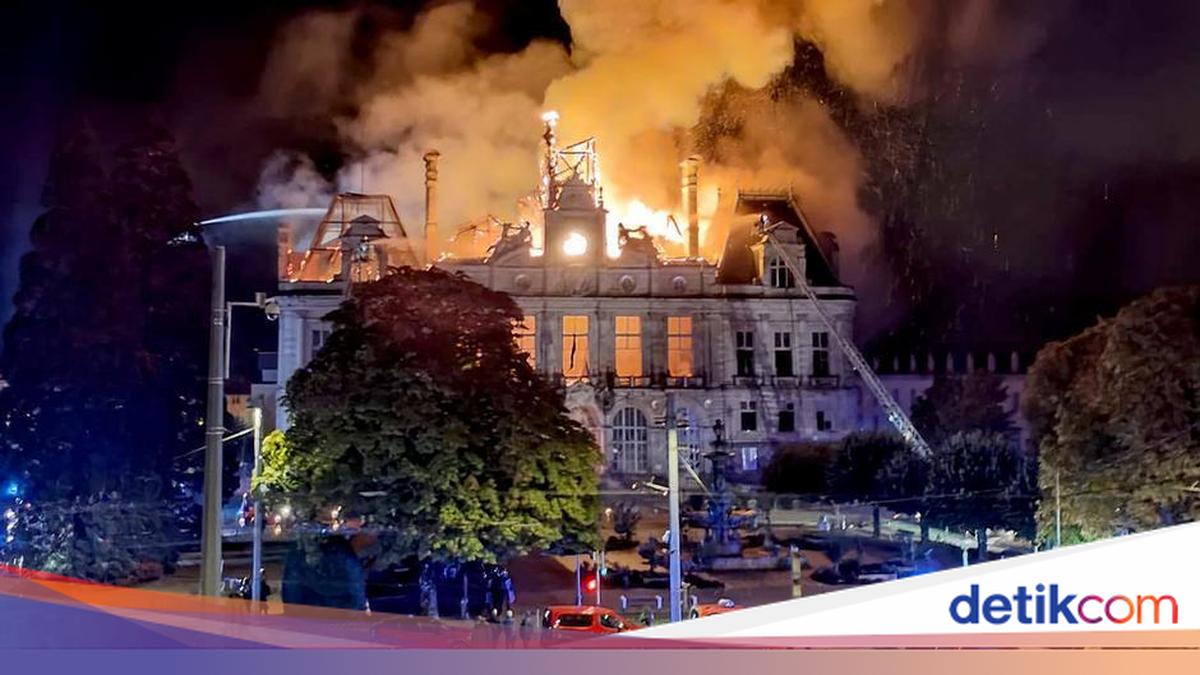
The unrest was not confined to the capital. In Lyon, the tourist office at Place Bellecour was set on fire. In Marseille, several shops and a police station were damaged, while a group of masked people broke into the town hall. In Limoges, the town hall was also engulfed in flames. Shop windows were smashed and goods looted in various locations.
In Paris, looting targeted a range of businesses, from supermarkets and cafés to clothing and mobile-phone shops. Some perpetrators wore black clothing and face coverings, and used hammers or crowbars to smash shop windows and doors. The looting took place amid larger demonstrations, but not all marchers were involved in violence.
For business owners, the damage meant losing their livelihoods. On Boulevard Magenta, a salon owner who had run his business for 12 years found it had been looted. “They took everything,” he told Le Monde. His wife, who manages the salon, stood among trampled magazines, overturned chairs and shattered mirrors. The government responded to the unrest by stressing the need to restore order. President Emmanuel Macron promised firm action against those responsible for violence, while Prime Minister Sébastien Lecornu announced measures to crack down on looting and help affected businesses.
Concerns about the cost of living and decent living conditions have also emerged elsewhere. In Spain, a housing crisis fuelled public anger after an 87-year-old woman, María del Carmen Abascal, known as Maricarmen, was evicted from her home in Madrid on 23 September 2026.
Maricarmen had lived in the house for around seven decades. But after the property was bought by an investment company, she faced difficulties keeping her home as rents rose. With a pension of around €1,400 a month, she could not afford the much higher rent demanded. On the day of the eviction, she was carried out of the house on a stretcher, watched by her supporters and police officers.
The incident provoked widespread anger. Thousands took to the streets in Madrid, while some demonstrators set up tents in Puerta del Sol, demanding stronger protections for tenants and an end to evictions without alternative accommodation. Maricarmen was briefly treated in hospital and died on 7 October. News of her death prompted further demonstrations. Although an agreement had opened the possibility of her returning home, it came when her health had already deteriorated.
Similar discontent has been seen in several other European countries. In Portugal, thousands took to the streets to demand higher wages and pensions amid the high cost of living and rents. In Italy, students and workers protested over education conditions, government policy and economic pressures. Demonstrations in Belgium were also driven by education costs and cuts to public spending. In Greece, students even pitched tents in central Athens to protest against high rents and a shortage of student accommodation.
The wave of protests sweeping across Europe shows that the crisis has roots far beyond inflation. When incomes can no longer keep pace with prices, even keeping food on the table and a roof over one’s head can feel like a struggle. What people are fighting for in the streets is simple: not luxury, but the certainty of being able to live with dignity.