
Libraries: The Engine of Civilisation in the Digital Age
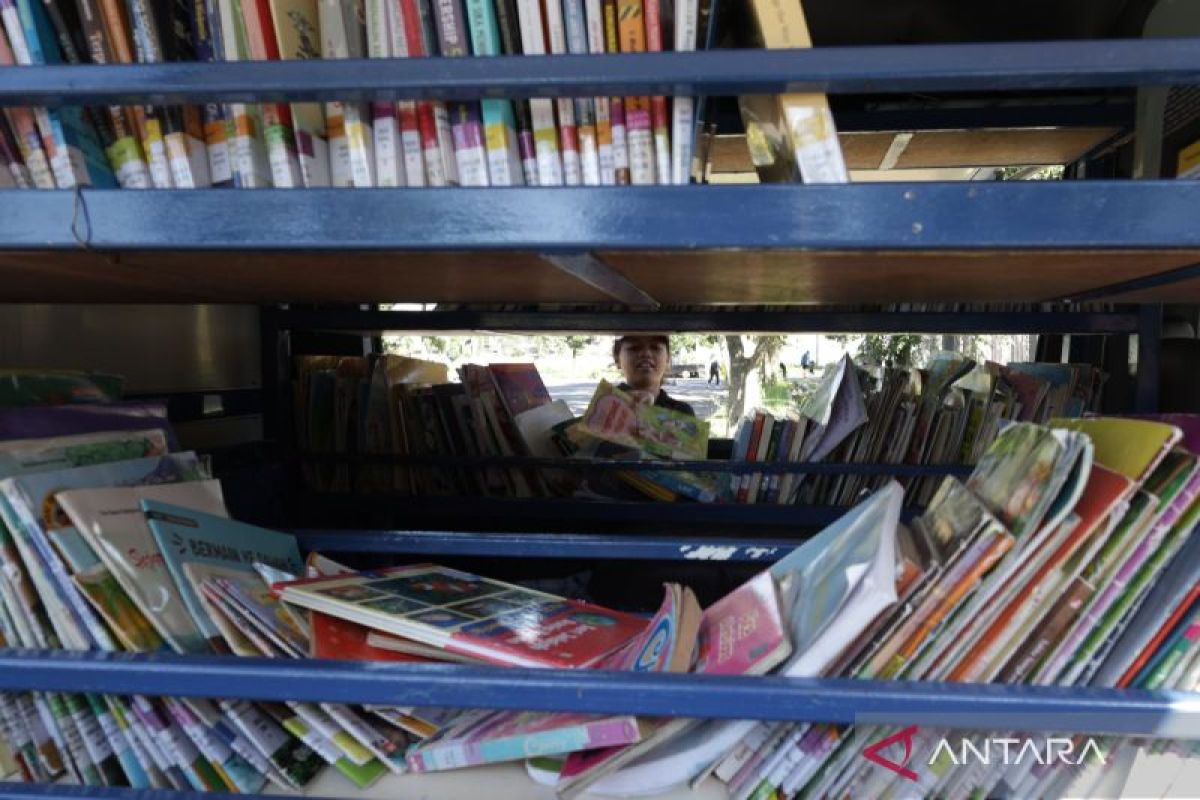
Jakarta (ANTARA) - Every 17 May, the Indonesian nation commemorates National Book Day. This celebration is usually marked with book bazaars, literacy seminars, and reading campaigns.
However, its impact often ends as an annual ceremony. After the event, books return to the shelves, and the enthusiasm for reading gradually fades. This situation reminds us that the issue of literacy cannot be solved with momentary euphoria but requires a living and sustainable ecosystem.
National data shows that the percentage of Indonesians who visit libraries or community reading parks is still very low, at around 3.99 per cent.
This means that out of every 25 people, only one consciously comes to the library. This figure is often understood as a sign of weak reading culture. However, an analysis of this data needs to be done more proportionally.
In the digital age, people do not always come to library buildings to gain knowledge. Reading activities have shifted to mobile devices, computers and other digital devices. In other words, what has changed is not the need to read, but the medium used.
This shift in reading media also changes the way the world understands literacy. Literacy is no longer just the ability to recognise letters and understand printed text, but also the ability to navigate, evaluate and verify information circulating in digital spaces.
This change is reflected in the development of the Progress in International Reading Literacy Study (PIRLS) framework conducted by the International Association for the Evaluation of Educational Achievement (IEA).
In PIRLS 2001, reading literacy was only measured based on the ability to understand printed text. In 2011, the assessment began to emphasise higher-order thinking skills (HOTS). A major leap occurred in PIRLS 2016 when ePIRLS was introduced, which is an instrument from the framework that assesses the ability to read information online and navigate digitally.
Meanwhile, PIRLS 2026 is projected to focus on future-oriented literacy, which includes multiliteracy, artificial intelligence literacy, digital citizenship, and the ability to think critically in assessing the validity of information. Reading in this era is not just about absorbing words, but also filtering facts amidst a flood of data and algorithms.
These global changes require libraries to transform. Libraries are no longer sufficient as places to store collections, but must become centres for learning, knowledge curation and the development of critical literacy skills.
Unfortunately, the condition of libraries in Indonesia still faces serious challenges. The availability of librarians in schools and madrasas is very limited. It is estimated that the fulfilment of school librarian needs is only around 0.1 per cent, while in public libraries it is around 1.7 per cent. Without competent, adaptive and proactive librarians, it is difficult for libraries to carry out their strategic role.
Another challenge