
LGBT Targeting Operations in Turkey Spark Wave of Criticism
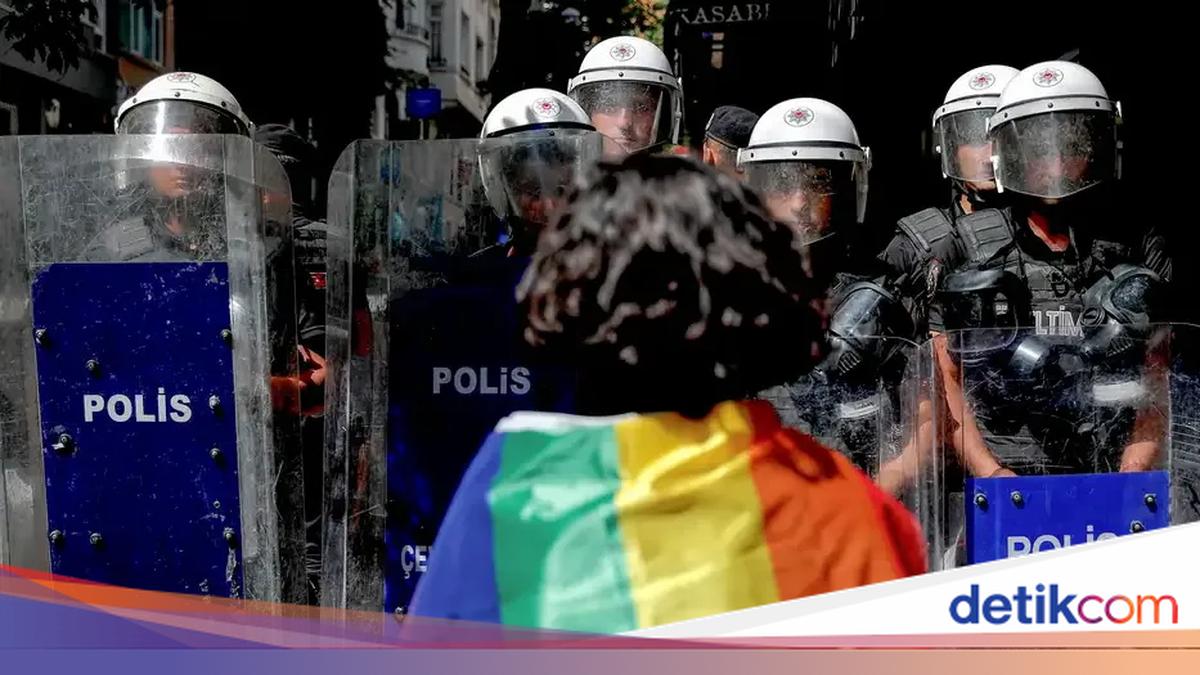
Raids targeting LGBTQ+ activists and organisations took place in Turkey last weekend. The Turkish government’s move has drawn sharp criticism from various domestic groups and the European Union.
According to human rights groups and opposition figures, these arrests represent the latest escalation in an expanding campaign against the LGBTQ+ community. In the past week, Turkish authorities have raided the offices of several organisations, blocked websites, and imprisoned suspects across various provinces.
Turkish Justice Minister Akin Gurlek stated that investigations coordinated by prosecutors in Istanbul, Ankara, Izmir, Aydin, and Mersin involve 162 suspects, nine associations, and 13 businesses across 15 provinces. Turkish President Recep Tayyip Erdogan previously announced the operation as part of the ‘Decade of Family and Population’ programme, a national strategy launched in May 2025 to address declining birth rates and strengthen conservative views on the traditional family.
On Tuesday (15/09), demonstrations resumed in Istanbul. Turkish authorities detained at least 31 people awaiting trial as part of the government’s efforts targeting LGBTQ+ groups. On the same day, police also detained at least 126 people during protests in Ankara and Istanbul opposing the raids and arrests, according to lawyers. Those detained included five transgender women in Ankara and 26 others in Mersin Province. Legal proceedings against several other detainees are ongoing.
Police also prevented a group of activists from delivering a press statement outside the Istanbul courthouse and dispersed LGBTQ+ supporters attempting to gather in Ankara. LGBTQ+ associations in Turkey asserted in a joint statement that establishing organisations and fighting for rights is not a criminal offence. “Freedom of assembly, freedom of expression, protection of privacy, and the presumption of innocence also apply to LGBTQ+ individuals,” the statement read.
The LGBTQ+ community has also received support from women’s movements. A total of 120 women’s rights organisations signed a joint statement criticising authoritarianism in Turkey. “As women, we oppose operations carried out in the name of ‘protecting the family’. We know that the oppression of our bodies, lives, identities, and our right to organise is part of the same authoritarian politics. Being LGBTQ+ is not a crime. Organising as LGBTQ+ is also not a crime,” they stated.
Human rights activists argue the goal is criminalisation. Yildiz Taghizade from the organisation Women for Women’s Human Rights (WWHR), one of the signatories, stated that the government is attempting to criminalise the LGBTQ+ community. According to Taghizade, this effort did not begin in recent days but has been ongoing for several years.
“The goal is not only to target LGBTQ+ people, but to effectively prohibit them from participating in politics, organising, demanding rights, and asserting their existence in the public sphere,” said Tagswizade. She noted it was no coincidence that the operation uses the slogan ‘My Family is Safe’. “The government is trying to justify its actions under the guise of protecting families and children. However, this narrative is failing. Many factors create uncertainty for families in Turkey today, such as poverty, the housing crisis, unemployment, the burden of care work placed on women, and violence against women.”
Various other organisations have also criticised the government’s steps. The Turkish Medical Association (TTB) described the operation as a violation of human rights and demanded an end to discriminatory politics. The TTB assessed that the state has criminalised gender identity and sexual orientation. The organisation also criticised the nighttime arrests and the blocking of digital platforms carried out under the pretext of protecting families and security.
The Chair of the Turkish Labour Party (TIP), Erkan Bas, called for the immediate release of those detained, asserting that the existence of LGBTQ+ individuals is not a criminal offence. Bas also stated that anyone who does not align with the government’s views will be forced into submission through “judiciary, truncheons, and censorship.”
Under the guise of “national security,” several websites and social media accounts belonging to LGBTQ+ groups, civil society organisations, and activists were blocked over the weekend. On the day of the raids, 32 accounts were suspended. A day later, the number of blocked accounts exceeded 100. Affected parties include Amnesty International Turkey, the newspaper Evrensel, the Academics for Peace initiative, the Lawyers for Justice association, the women’s rights organisation Mor Dayanisma, the LGBTQ+ group Kaos GL, and the Media and Law Studies Association (MLSA).
The legal basis is a decision by the Istanbul court announced on 13 September. The Bakirkoy Prosecutor’s Office stated the blocking was conducted as part of an investigation into accounts allegedly spreading “obscene content and LGBTQ+ propaganda.” According to several media outlets, the blocking was also carried out on the grounds of “national security.” Critics have called the move a form of digital censorship.
Homosexuality is not fundamentally a crime in Turkey. However, the Turkish government has repeatedly labelled the LGBTQ+ community as a “deviant” group. Justice Minister Akin Gurlek previously accused LGBTQ+ organisations of “promoting immorality.” In a social media post, he stated that “no criminal organisations, harassment networks, or illegal activities targeting children, adolescents, or families will be tolerated.”