
LGBT in the Perspective of the Pancasila State
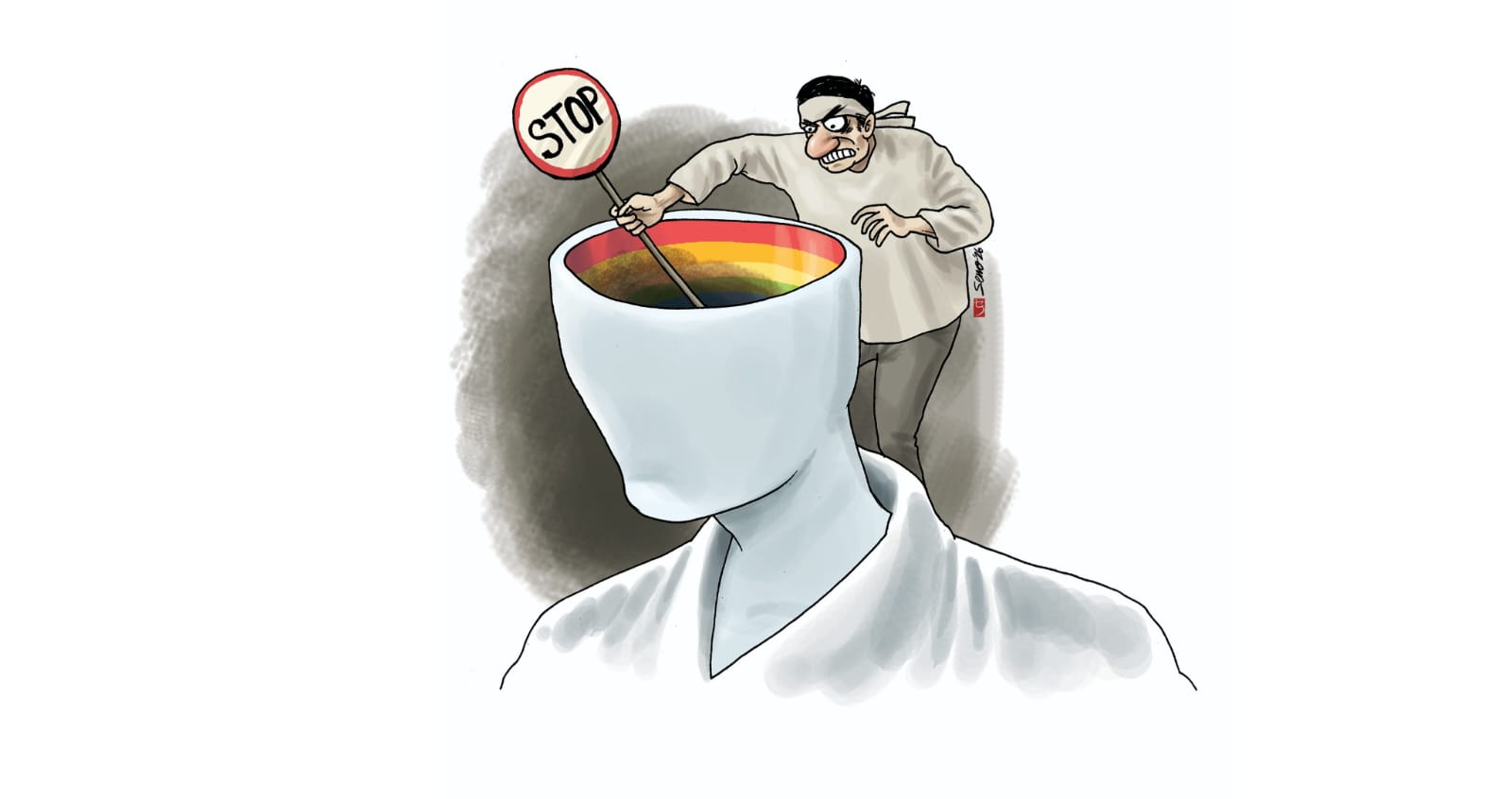
In recent years, the issue of lesbian, gay, bisexual, and transgender (LGBT) has resurfaced in Indonesian public discourse with increasingly alarming intensity. It is no longer merely moral gossip at a coffee shop; the issue has entered the realms of law, state policy, and even international geopolitical pressure. By mid-2026, at least 36 countries had legalised same-sex marriage. Thailand became the first Southeast Asian nation to formalise it in June 2024. Domestically, the Indonesian Ulema Council (MUI) in June 2026 urged the government and the House of Representatives (DPR) to immediately issue specific criminal regulations regarding LGBT, with sanctions that must be heavier than those for adultery. On the other hand, no fewer than 37 civil society organisations rejected the discourse of criminalisation. Indonesia stands at a crossroads that demands clarity of thought, not a reckless drift with global currents or a purely emotional reaction. This is where Pancasila finds its most concrete relevance. Not as a ceremonial slogan, but as a national philosophical system that has an answer to this difficult question. The Pancasila state’s view on the LGBT issue is not a black-and-white view, nor is it one that neglects human dignity. It is a layered, just, yet firm view regarding non-negotiable boundaries. The first principle of Pancasila, Belief in the One and Only God, is not merely an acknowledgment of God’s existence. It is an affirmation that divine values serve as the ethical foundation of national life. All religions and beliefs living in Indonesia, from Islam, Christianity, Catholicism, Hinduism, Buddhism, to Confucianism, uniformly teach that marriage is a bond between a man and a woman. Muhammadiyah declares same-sex marriage as forbidden. The Executive Board of Nahdlatul Ulama (PBNU) firmly rejects LGBT. Churches under the Communion of Churches in Indonesia (PGI) state they do not condone same-sex marriage. Parisada Hindu Dharma Indonesia prohibits same-sex relationships. The Supreme Council for Confucian Religion in Indonesia also agrees to reject it, and Walubi states that LGBT is not justified in Buddhist teachings. This is not a coincidence. It is a moral consensus that transcends theological boundaries and represents a noble value that has long been part of Indonesia’s identity. However, the first principle cannot be read in isolation from the second: Just and Civilised Humanity. The Pancasila state does not deny the existence of individuals who, in their life journey, experience conditions that lead them to a different sexual orientation. That existence is part of a complex human reality. Therefore, every citizen, without exception, retains the same rights and obligations before the law and the state. They are entitled to protection, healthcare, education, and dignified treatment in social life. This is what distinguishes the Pancasila state from oppressive systems: we reject behaviour that contradicts the nation’s religious and cultural values, but we do not destroy the human dignity of the individual. A Social Network Analysis (SNA) shows a sharp spike in conversations related to LGBT issues throughout 2024 to 2025. The public massively united to show absolute rejection in the digital space, with the dominance of negative sentiment reaching 82%. The main trigger was the public movement to stem the infiltration of foreign culture, such as the proliferation of boys’ love (BL) content, and the commitment of netizens to closely guard the revision of national legal regulations. The network map for the 2024–2025 period shows an extreme polarisation of two clusters. The main, giant-scale cluster was driven by religious accounts, public figures, and family communities. They were very aggressive in echoing the narrative of saving the nation’s morals to protect the younger generation from the threat of social deviance. Conversely, the LGBT-supporting cluster appeared very small, isolated, and received no public sympathy whatsoever. The firmness of netizens in safeguarding Pancasila values and religious norms was also clearly visible through organic waves of criticism. This confirms that throughout 2024–2025, Indonesian society remained solid in fortifying the digital space from all forms of campaigning and normalisation of the movement. Indonesia’s new Criminal Code, Law Number 1 of 2023, has accommodated this national spirit into positive legal norms. Article 414 explicitly regulates obscene acts against another person of a different or the same sex: if committed in public, the penalty is a maximum imprisonment of 1 year and 6 months or a fine; if committed forcibly with violence or the threat of violence, the penalty increases to 9 years; and if published as pornographic content, the penalty is similarly 9 years in prison. Meanwhile, Article 411 on adultery and Article 412 on cohabitation complete a broader criminal framework in the realm of decency. Thus, the argument that Indonesia does not yet have legal instruments to face the expansion of the LGBT movement is a weak one. The instruments already exist; what is needed is political will and consistency in law enforcement. The MUI even urged for specific sanctions heavier than the adultery article, a demand reflecting how seriously civil religious society views this threat. The fundamental question that must be answered is: must Indonesia follow international human rights standards that position LGBT legalisation as a civilisational progress? That firm answer was given by Bung Karno long ago.