
Leveraging Indonesia's Strategic Advantages in the OECD and BRICS
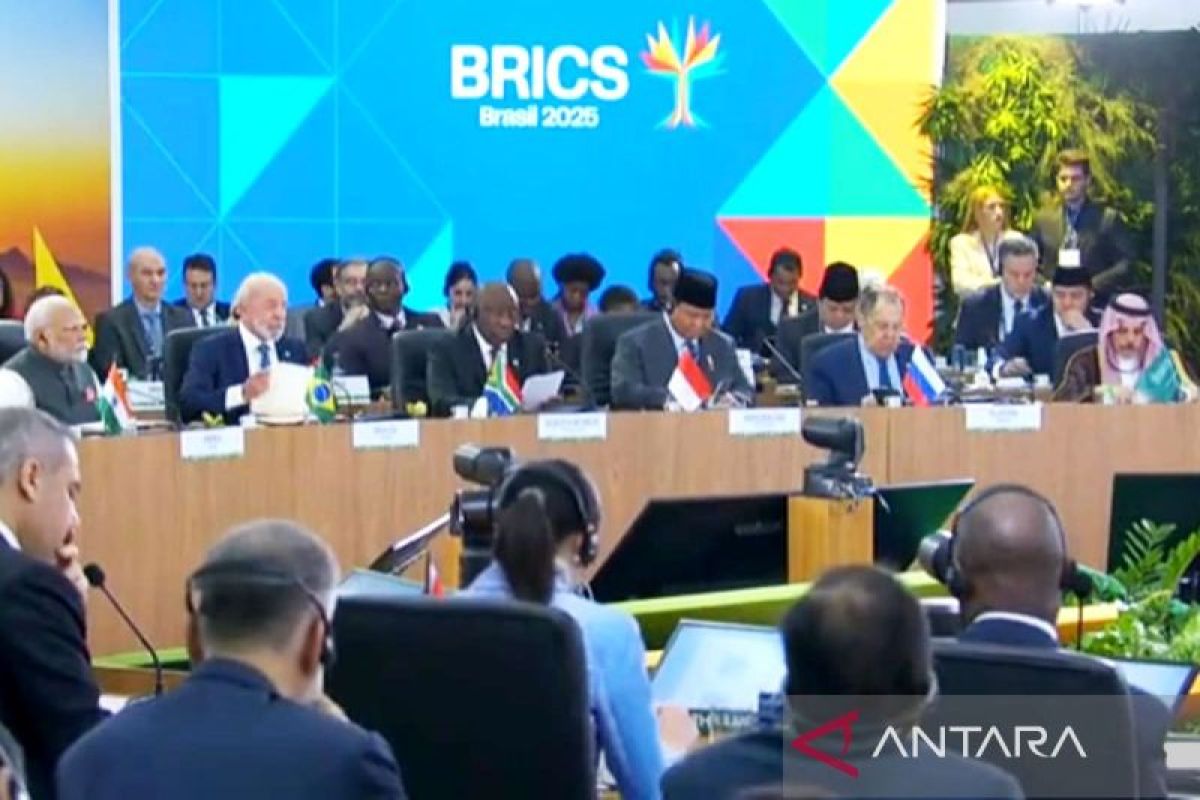
The real challenge for Indonesia lies not in its membership status within these forums, but in its domestic capacity to absorb two different normative systems.
Jakarta (ANTARA) - Amidst a global economic landscape that no longer operates under a single architecture, Indonesia is positioning itself within two major orbits simultaneously: BRICS (Brazil, Russia, India, China, and South Africa) and the OECD (Organisation for Economic Co-operation and Development).
Simply put, the OECD represents a rule-based economic system born from the experience of advanced Western nations in establishing market stability, governance, and policy standards. Meanwhile, BRICS reflects the spirit of the Global South—a group of nations across Asia, Africa, Latin America, and parts of Oceania that are generally middle-to-low income, possess histories of colonialism, and hold relatively less dominant positions in the global economic system—seeking to expand their influence in international finance, trade, and monetary systems.
Currently, BRICS contributes more than a quarter of the world’s economic output and continues to grow through the expansion of new members, while simultaneously broadening its influence in alternative trade and financing.
On the other hand, the OECD still controls the majority of global policy standards, particularly regarding investment regulation, fiscal governance, and international financial systems.
As the largest economy in Southeast Asia and one of the few developing nations within the G20, Indonesia holds a position that is structurally not peripheral to the global economy. This means that every choice in Indonesia’s economic diplomacy is not merely a symbolic gesture, but has a direct impact on capital flows, risk perception, and integration into global supply chains.
On one hand, BRICS offers expansion channels in the form of new markets, development financing, and alternative global financial architectures. Several studies indicate that involvement in BRICS opens opportunities for market access and infrastructure funding that are more flexible than traditional Western schemes. This is crucial for Indonesia, which still requires significant investment in the energy, industrial, and digital sectors.
On the other hand, the OECD offers something different: institutional credibility. The process of OECD accession is not merely a technical administrative task, but a fundamental reform that touches upon fiscal transparency, investment regulation, and the governance of the financial sector.
Source: jawawa.id (https://jawawa.id/newsitem/leveraging-indonesias-strategic-advantages-in-the-oecd-and-brics-1788329459)
Originally published by Antara (Indonesian) (https://www.antaranews.com/berita/5722040/memanfaatkan-keunggulan-strategis-indonesia-di-oecd-dan-brics), translated from Indonesian