
Lestari Urges Indonesia's Shared Space Initiative Not to Remain Merely Ceremonial
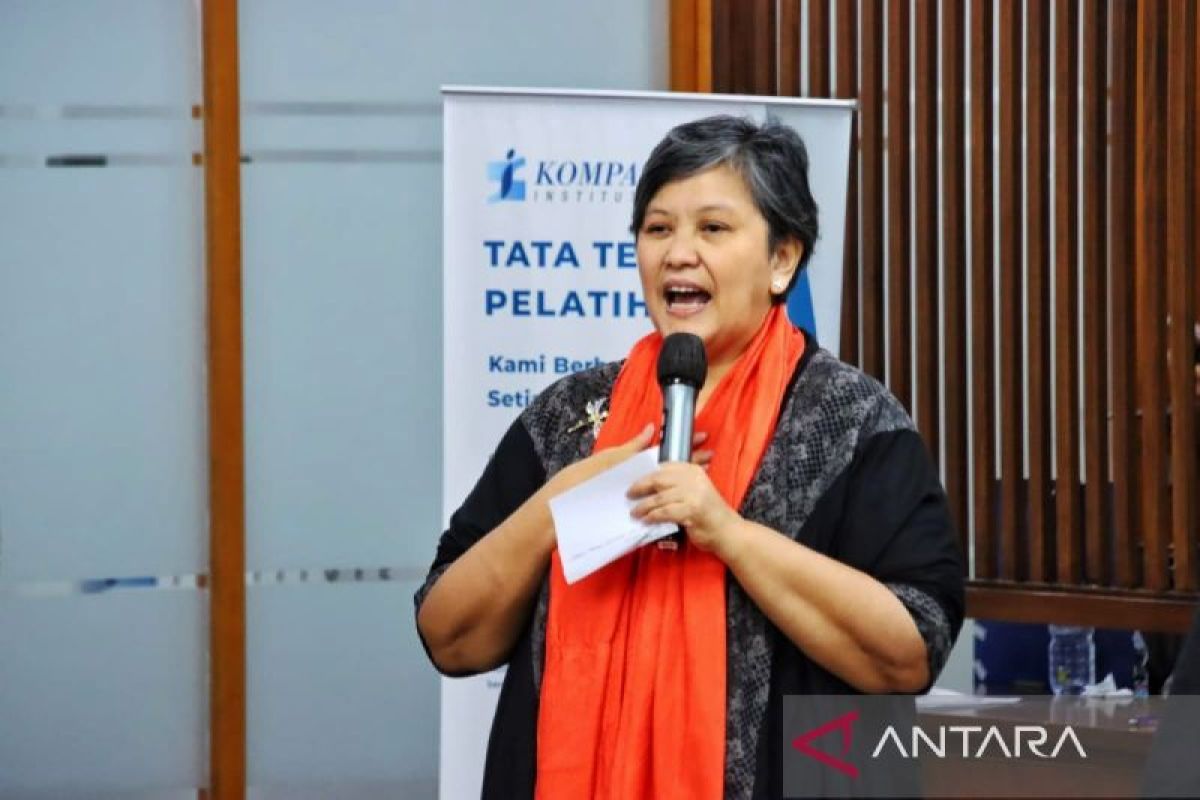
Jakarta (ANTARA) - The Deputy Speaker of the MPR, Lestari Moerdijat, has requested that the implementation of the Joint Ministerial Decree (SKB) regarding Indonesia’s Shared Space (RBI) does not stop as a ceremonial document at the central government level, but is instead applied down to the village and sub-district levels.
“Comprehensive protection for women and children is achieved not solely through the existence of applicable laws, but also through how those laws are understood and implemented,” Lestari stated in Jakarta on Wednesday.
The Joint Ministerial Decree regarding RBI for Women’s Empowerment and Child Protection was signed by the Minister of Home Affairs, Tito Karnavian; the Minister of Women’s Empowerment and Child Protection, Arifah Fauzi; and the Minister of Villages and Regional Development, Yandri Susanto, in Jakarta on 14 September 2026.
RBI is positioned as a collaborative platform that integrates various programmes, resources, and services for the empowerment of women and the protection of children.
According to Lestari, the success of RBI depends on the ability of local governments to translate the policy into programmes that can be felt by the community.
“National interests must serve as the compass, and this can only be realised if there is good orchestration between the central and regional governments,” she said.
Lestary, who is also a member of Commission X of the DPR, reminded that the protection of women and children is becoming increasingly complex with the emergence of new forms of violence in digital spaces.
“The development of the digital world does not only bring technology that facilitates human activities. On the other hand, digitalisation also presents threats to women and children, necessitating an appropriate protection system,” she said.
Officials at the village and sub-district levels need to possess adequate capacity to execute the RBI. Therefore, she encouraged technical assistance and measurable success indicators.
“A good policy is one that reaches those who most need protection. We must ensure that RBI does not merely become a report on paper, while women and children in villages continue to struggle alone,” Lestari said.
She also urged that budget allocations in villages and sub-districts be directed towards programmes for the protection of women and children, accompanied by the capacity building of officials through continuous training and assistance.
Furthermore, she assessed that the government needs to build reporting and monitoring mechanisms involving the community to support the early detection of vulnerabilities among women and children.