
Lestari: Scientific Publications Should Not Become Commodities
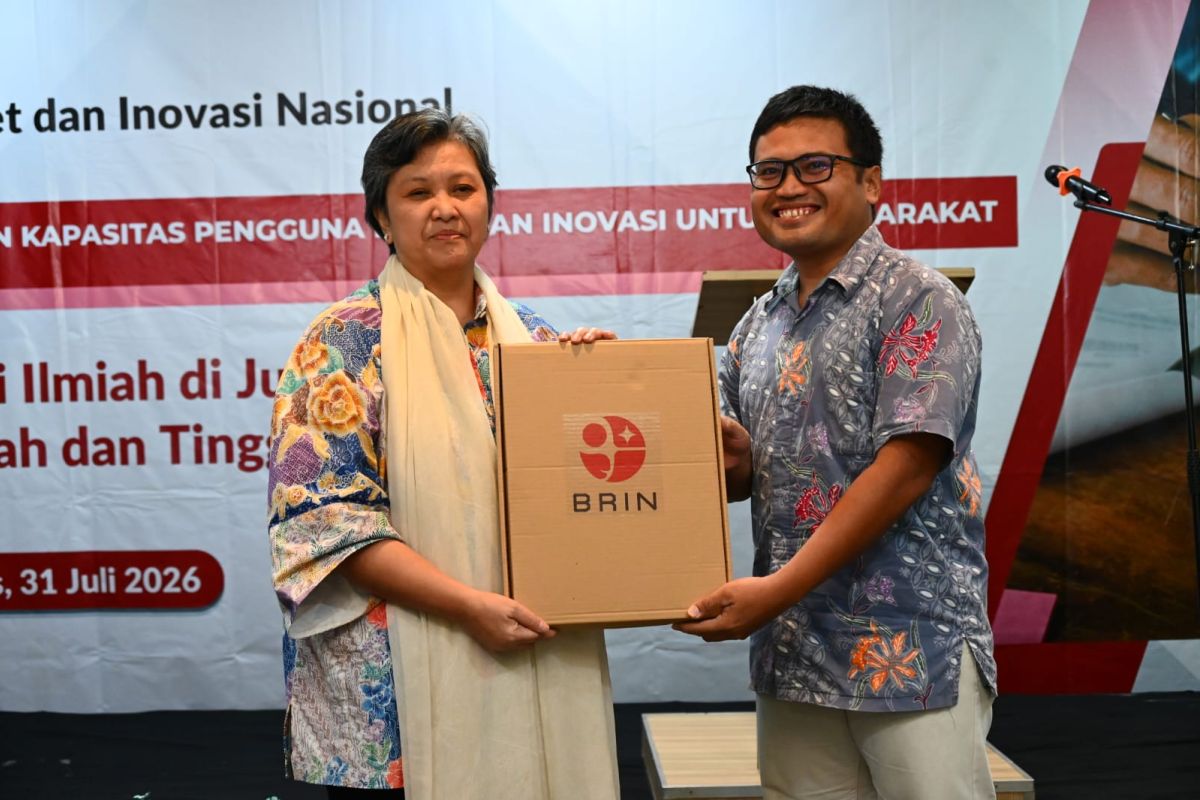
Jakarta (ANTARA) - The Deputy Speaker of the MPR RI, Lestari Moerdijat, has reminded academics not to turn scientific publications into commodities and to maintain integrity and ethics throughout the research and writing process.
Lestari made these remarks while opening a Technical Guidance session for International Journal Publication Writing, organised by the National Research and Innovation Agency (BRIN) in collaboration with Commission X of the DPR RI in Kudus Regency, Central Java, on Friday.
“Scientific publication has currently become like a commodity. We cannot turn a blind eye to the fact that submitting research results to international journals has become an administrative necessity. However, we must ensure that the published journals are not merely chasing deadlines or being submitted haphazardly. This is what we must fix together,” she said.
According to Lestari, the capacity of researchers must be continuously improved so that Indonesian scientific publications can compete with dignity on the international stage. She noted that the global scientific publication ecosystem still faces various challenges, ranging from access to reputable journals and publication costs to strengthening Indonesia’s position in global scientific discourse.
Lestari also warned of the potential misuse of generative artificial intelligence in the writing and peer-review processes, emphasising that academic integrity must be upheld. She argued that an increase in the number of publications does not always reflect an increase in the quality of science if the focus is solely on fulfilling administrative requirements.
Therefore, she emphasised that ethics must be an integral part of the entire research and writing process to ensure that the resulting publications are truly high-quality and accountable. “The application of ethics must be present from the beginning, not after problems have occurred,” she stated.
She expressed hope that the technical guidance session would serve as an effort to strengthen a culture of high-quality and high-integrity scientific publication. Lestari added that good publications are born through a process that is nurtured sustainably, rather than being completed simply to meet requirements for career advancement.
“BRIN’s technical guidance is a form of the state’s presence to assist, not to regulate. Let us work together to expand our capacity, rather than surrendering our scientific publications to instant interests,” Lestari concluded.