
Lestari Moerdijat: The Presence of AI Must Strengthen Critical Thinking Processes for Students
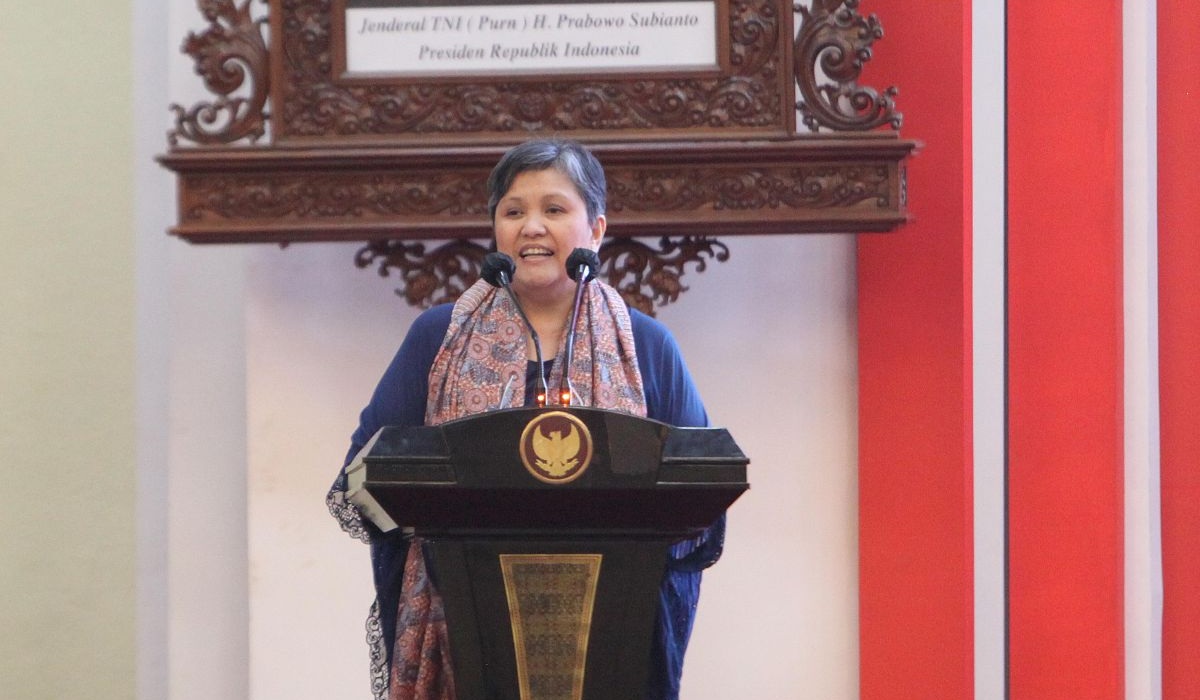
The issuance of the Joint Ministerial Decree (SKB) by seven ministers regarding the utilisation of artificial intelligence (AI) is an important step in addressing the challenges of technological development in the world of education.
“The utilisation of AI in the world of education cannot be avoided. However, its presence must be managed well so that it does not replace the critical thinking process of students, but rather strengthens it,” said Deputy Speaker of the People’s Consultative Assembly (MPR) RI Lestari Moerdijat in her written statement on Monday (30/3).
The government has officially issued the Joint Ministerial Decree (SKB) of seven ministers on Guidelines for the Utilisation of Digital Technology and Artificial Intelligence (AI) in Education.
The establishment of the SKB was carried out in a meeting led by the Coordinating Minister for Human Development and Culture (Menko PMK) Pratikno on Thursday (12/3) and signed by seven ministers, namely the Minister of Home Affairs, Minister of Communication and Digital, Minister of Basic and Secondary Education, Minister of Higher Education, Science, and Technology, Minister of Religious Affairs, Minister of Women’s Empowerment and Child Protection, and Minister of Population and Family Planning.
The guidelines regulate the utilisation of AI across all education pathways, from early childhood education to higher education, including formal and informal education.
The policy is seen as a strategic step to ensure that the use of AI in the education environment runs wisely, directed, and protects students from various digital risks.
According to Lestari, this cross-ministerial regulation shows the government’s seriousness in building a safe and sustainable digital education ecosystem.
Nevertheless, Rerie, Lestari’s familiar name, reminded that the implementation of the policy must be accompanied by strengthening digital literacy at all levels.
“Digital literacy and ethics in technology use must be a priority. Without that, the utilisation of AI could potentially cause dependency and reduce the quality of learning,” emphasised Rerie, who is also a member of Commission X of the House of Representatives (DPR) RI.
Rerie also encouraged the enhancement of the capacity of educators so that they are able to utilise AI appropriately in the learning process.
She assessed that the role of teachers is the main key in maintaining the quality of education amid the strong current of digitalisation.
“Teachers must become facilitators who are able to direct the use of AI as a learning aid, not as a replacement for the learning process itself,” said Rerie.
Furthermore, the senior member of the NasDem Party emphasised the importance of regular supervision and evaluation of the implementation of the SKB.
So that, added Rerie, the main goal of the policy to create a tech-savvy generation that also thinks critically can be achieved.
“Digital transformation in the education sector must run in balance between the utilisation of technology and the strengthening of character, as well as the reasoning of students,” she concluded.