
Lestari Moerdijat: Strong Collaboration Key to Protecting Vulnerable Groups from Climate Crisis
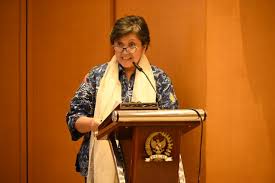
A protection system built on community preparedness and appropriate disaster mitigation must be realised in the effort to protect every citizen from the threats of the climate crisis.
“The challenge of protecting vulnerable groups, including Indonesian women and children, which is becoming increasingly complex heading into 2026, must be addressed through strong collaboration between all relevant parties to provide a safe environment for every citizen,” said the Deputy Speaker of the MPR RI, Lestari Moerdijat, in a written statement on Thursday (18/6).
Research from the Collaboration for Knowledge, Innovation, and Partnership (KONEKSI) programme reveals that climate change has imposed increasing economic pressure on vulnerable groups, particularly women, persons with disabilities, and the elderly.
Climate change does not only damage the environment but also threatens the economic resilience of coastal communities and the agricultural sector.
Findings presented during a workshop and panel discussion in Makassar, South Sulawesi, on Wednesday (1le/6), serve as a serious alarm for the government to immediately provide tangible protection for those most affected.
The National Development Planning Agency (Bappenas) also estimates that women and children in several regions of Indonesia are vulnerable groups exposed to the impacts of the climate crisis, which triggers an increased risk of human trafficking, child marriage, and school dropouts due to the loss of livelihoods.
“Climate anomalies that can trigger droughts or heavy rain have a significant impact not only on the nation’s environment but also on the economic and social sectors of vulnerable communities. These conditions must be anticipated with appropriate policies,” said Rerie, the affectionate nickname for Lestari.
Rerie, who is also a member of Commission X of the DPR RI, urged the strengthening of protection systems for vulnerable groups by prioritising the equitable distribution of protection services and a preventive approach.
The member of the NasDem Party’s High Council emphasised that collaboration between the government, private sector, communities, and the public is no longer an option, but a necessity in the effort to strengthen the community protection system against the threats of the climate crisis.
Furthermore, Rerie encouraged existing legal systems and frameworks to be able to adapt to the threats posed by environmental crises across economic, social, and even digital spaces, which have the potential to present new vulnerabilities for the nation’s youth.
“A protection system for vulnerable groups against the threats of the climate crisis is no longer merely a discourse, but an urgent need that demands real action,” concluded Rerie.
Source: jawawa.id (https://jawawa.id/newsitem/lestari-moerdijat-strong-collaboration-key-to-protecting-vulnerable-groups-from-climate-crisis-1781855463)
Originally published by Media Indonesia (https://mediaindonesia.com/humaniora/902177/lestari-moerdijat-kolaborasi-yang-kuat-kunci-lindungi-kelompok-rentan-dari-krisis-iklim), translated from Indonesian