
Lestari Moerdijat: Strengthen National Education System Based on Ki Hajar Dewantara's Tri Pusat Pendidikan
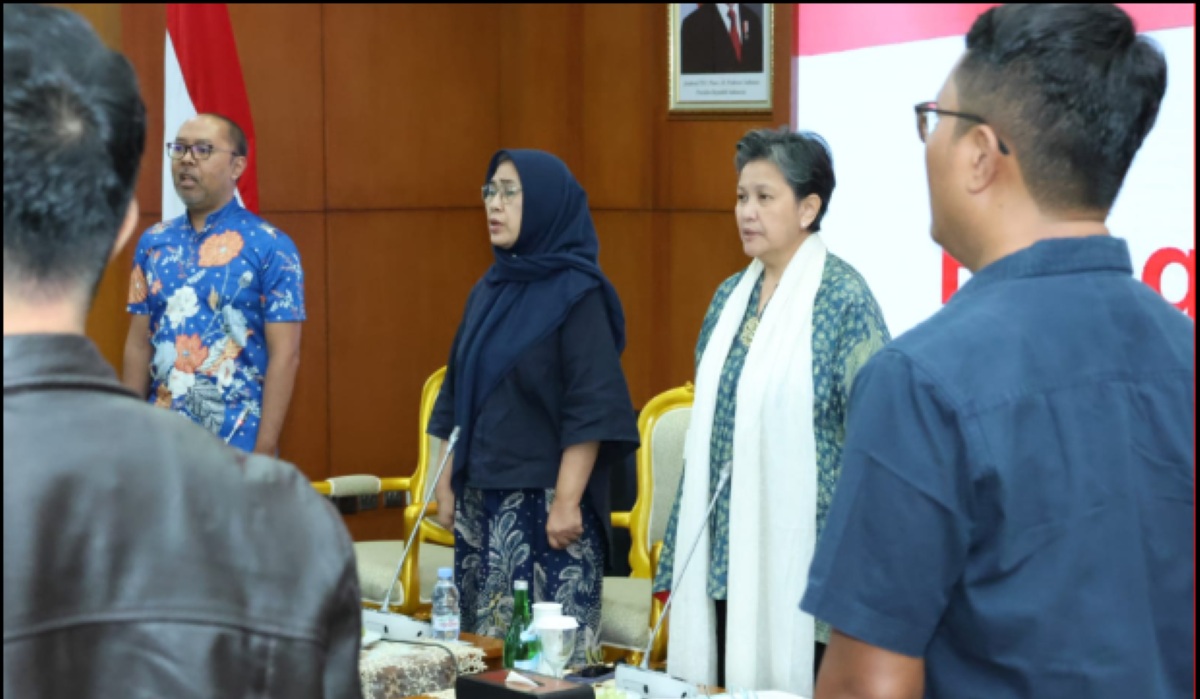
Deputy Speaker of the People’s Consultative Assembly (MPR) Lestari Moerdijat has highlighted the importance of applying Ki Hajar Dewantara’s Tri Pusat Pendidikan (Three Centres of Education) teachings to strengthen the national education system. The statement was made during the MPR’s Forum Diskusi Aktual Berbangsa dan Bernegara, themed ‘Reviving the Tri Pusat Pendidikan’, held jointly with the Sarinah Institute at the Nusantara IV Building, Senayan Parliament Complex, Jakarta, on Thursday (25/6). On that occasion, Lestari stressed that the ongoing discussion on the National Education System Bill (RUU Sisdiknas) must return to the great national philosophies, especially those conceived by the Father of Indonesian Education. In her remarks, Rerie, as Lestari is affectionately known, noted that discussions on education often get trapped in nomenclature and administrative aspects, thereby losing their philosophical essence. Rerie emphasised the importance of bringing the issue of education to a deeper level, namely the very soul of education itself. This aligns with the Tri Pusat Pendidikan concept coined by Ki Hajar Dewantara, which emphasises the synergy of three main environments in educating a child: family, school, and community. According to Rerie, who is also a member of House Commission X, Ki Hajar Dewantara’s thinking is becoming increasingly relevant amidst the current dynamics of education. Rerie highlighted that the education model cannot solely focus on teaching methods, but must also consider how to create a supportive ecosystem. The Tri Pusat Pendidikan teachings remind us that the responsibility for education does not rest solely on the shoulders of teachers and schools, but is a shared responsibility among family, school, and community. Rerie criticised several practices that have persisted in the education system, one of which is the mistaken interpretation of parental involvement. She cautioned that parental involvement is not merely physical presence at every school activity, but a deep understanding of the substance of a child’s education. ‘This deep understanding is one of the important aspects within the family environment as the first and foremost centre of education,’ said Rerie. Furthermore, Rerie noted the lack of profound thinking regarding culture in the process of discussing the education system. In her view, culture, as a product of intellectual work from the teaching and learning process, must become an integral part of the education system. This is in line with Ki Hajar Dewantara’s concept, which places culture as one of the important principles in education through Pancadharma. The senior board member of the NasDem Party reminded that the proper implementation of the national education system is key to welcoming the Indonesia Emas 2045 vision. In the context of the ongoing revision of the Sisdiknas Law, Rerie stressed the importance of critical inputs that touch on philosophical aspects, not just administrative technicalities. Sarinah Institute Director Eva Kusuma Sundari assessed that currently no one is managing the parenting aspect in the education process. Eva also affirmed the importance of instilling Pancasila values in efforts to build the character of the nation’s children. Education within the family to instil prevailing norms and values is crucial in fortifying children against the threat of violence in society. According to Eva, the internalisation of Pancasila values must be applicable within the family. Education activist Indra Charismiadji opined that managing national education should practically learn from the operations of online motorcycle taxis, where the pick-up and drop-off points, as well as the required costs, must be clear from the start. According to Indra, with relatively low PISA scores and the 2045 Long-Term Development Plan (RPJP) targeting a per capita income of US$30,000 per year, this is impossible to achieve if the education sector is not immediately reformed. Quoting Ki Hajar Dewantara, Indra asserted that education is a life guide within an ecosystem centred on three realms: family, community, and school. ‘Unfortunately, our education has so far only been centred on schools,’ said Indra. Sukma Foundation Executive Director Ahmad Baedowi argued that a good school must properly manage its School Budget Plan (APBS). ‘If the APBS plan is wrong, the education process fails, and that is what often happens in schools today,’ said Baedowi. A number of issues emerged during the discussion, which was attended by Doni Koesoema Albertus (UMN Serpong), Dudung Abdul Qodir (PB PGRI), Sulaiman (Buddhist Education Coordination Board/BKPB), Ki Darmaningtyas (Taman Siswa College), and Ubaid from the Indonesian Education Monitoring Network, including matters related to the new student admission system, education budgets, and invalid education data in the national education development process.