
Lestari Moerdijat: Out-of-School Children Figures Must Be Addressed with Precise Intervention Measures
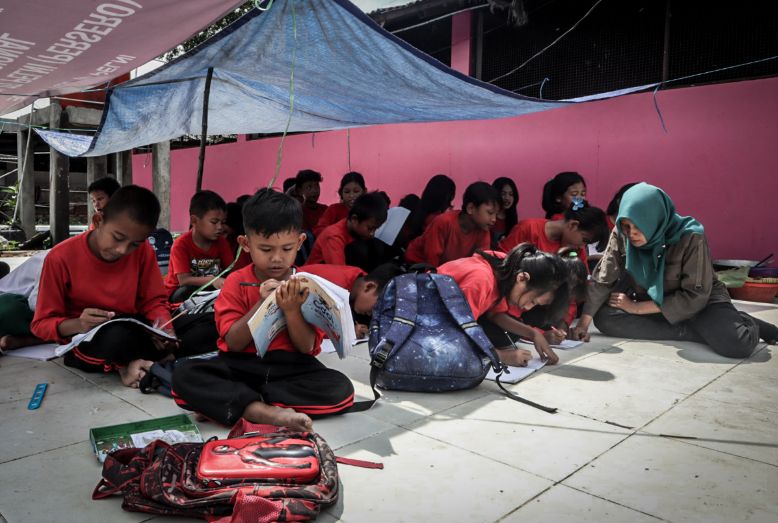
The number of out-of-school children in Indonesia remains a significant challenge that must be addressed immediately through appropriate intervention measures.
“Concrete steps and collaboration between relevant parties must be taken urgently to tackle the out-of-school children rate, in addition to appropriate intervention measures,” stated the Deputy Speaker of the MPR RI, Lestari Moerdijat, in a written statement on Thursday (2/7).
Data from the Ministry of Primary and Secondary Education as of 1 April 2026 records that 3,966,858 school-aged children have not accessed education. This figure consists of 1,913,633 children who have never attended school, 986,755 dropouts, and 1,066,470 graduates who did not proceed to a higher level of education.
“This figure is a serious alarm. We cannot simply stop at the data. Concrete steps are needed by utilising the latest data so that interventions are precisely targeted,” said Rerie, the affectionate nickname for Lestari.
According to Rerie, efforts to address the out-of-school rate must tackle the root causes of the problem.
Rerie, who is also a member of Commission X of the Indonesian House of Representatives (DPR RI), encouraged the optimisation of out-of-school children data down to the village level, alongside the political will of stakeholders to resolve the issue promptly.
“With accurate data, assistance such as remote learning equipment, the Indonesia Pintar Program, and scholarships can be precisely targeted,” Rerie asserted.
Furthermore, Rerie stated that non-formal equivalency education programmes, such as Paket A, B, and C, as well as skill-based vocational education, must become priorities. Graduates of these programmes, explained the legislator from Central Java’s Constituency II, must be equipped with competencies relevant to industrial needs and entrepreneurship.
This is because, added the NasDem Party member, data from the National Socio-Economic Survey (Susenas) by the Central Bureau of Statistics (BKS) shows that of the total 86.34% of children receiving upper secondary education, 33.21% were forced to drop out due to economic and access issues.
“All stakeholders at both central and regional levels must move together. It is time to ensure that no child of the nation is left behind from educational services,” concluded Rerie.
Moving forward, local governments must implement affirmative policies to ensure that education for school-aged children is easily accessible.