
Lestari Moerdijat: Early Integrity Education is Key to Corruption Prevention
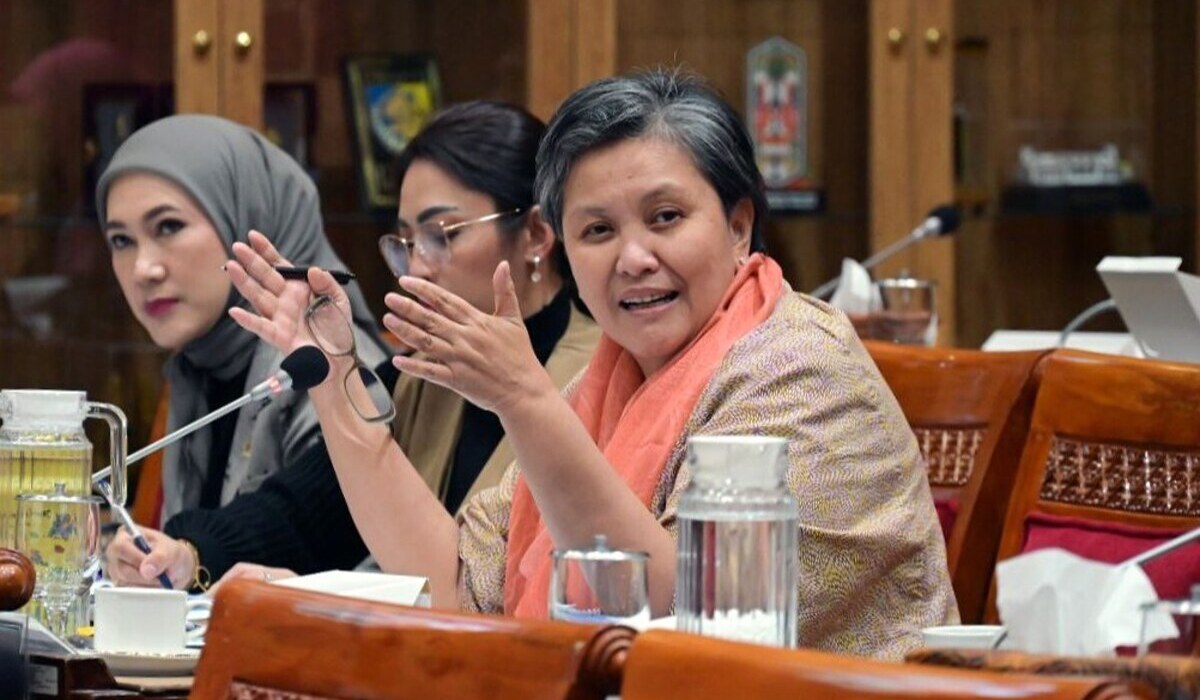
Efforts to prevent corruption within the education sector must be carried out comprehensively through the cultivation of integrity values from an early age. Character education based on honesty and responsibility is considered a vital step in forming a generation that rejects all forms of fraud and corrupt practices.
Lestari Moerdijat, a member of Commission X of the Indonesian House of Representatives (DPR RI), emphasised that eradicating corruption cannot rely solely on regulations, supervision, or circular letters. According to her, the formation of an upright character must begin from the family environment through to formal education.
“Instilling integrity values from an early age is the primary foundation for building the character of the nation’s children, which is a crucial part of anti-corruption prevention efforts,” said Lestari, affectionately known as Rerie, in her statement on Monday.
Rerie also expressed appreciation for the Corruption Eradication Commission’s (KPK) issuance of Circular Letter Number 7 of 2026 regarding Corruption Prevention and Gratification Control in the New Student Admission System (SPMB). The regulation prohibits practices such as illegal levies, student ‘insertions’, manipulation of residency data, and gratification during the student admission process.
According to Rerie, this policy is a vital component in strengthening clean and transparent educational governance. However, she noted that the strengthening of systems must be accompanied by continuous anti-corruption education.
She warned that various forms of misconduct in the education sector could damage the fundamental values that should be instilled in students. Therefore, a culture of integrity must grow within the daily life of the educational environment and not merely remain as an administrative rule.
Rerie also highlighted the results of the 2024 Education Integrity Assessment Survey (SPI), which showed the integrity index of the education sector at 69.50 out of 100 points. This achievement suggests that an integrity system is beginning to form, but has not yet become a consistent culture.
Furthermore, KPK data still reveals instances of illegal levies in several schools, as well as tolerance towards various forms of fraud in certification and accreditation processes. In some cases, members of the public and educators still consider the provision of gifts or gratification to be acceptable.
This condition, Rerie continued, serves as a reminder that anti-corruption education must be applied substantively rather than just ceremonially. She believes that families and educational institutions play a major role in instilling values of honesty, responsibility, and integrity in children from an early age.
“Without integrity, parenting and the education system will only produce graduates who are academically intelligent but morally fragile,” she asserted.
Rerie hopes that the strengthening of character education can be carried out consistently to produce a generation that is academically superior while possessing the moral resilience and courage to reject all forms of corruption and fraud.