
Lestari Moerdijat: Domestic Workers Protection Law Becomes Foundation for Strengthening Indonesia's Care Economy
The ratification of the Domestic Workers Protection Law (UU PPRT) in February 2026 is considered a crucial milestone in the development of the care economy in Indonesia. The regulation not only grants legal recognition to millions of domestic workers but also serves as a foundation for strengthening the social protection system and building a more inclusive economy.
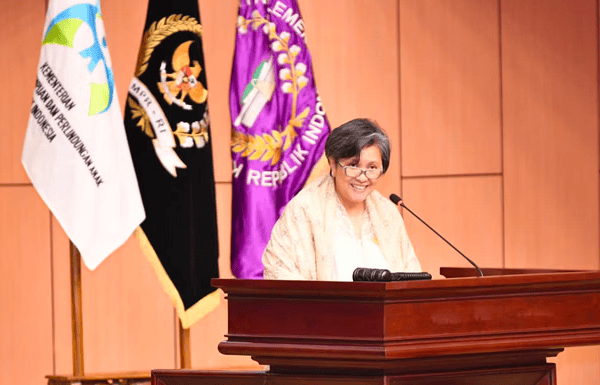
This was conveyed by Deputy Speaker of the People’s Consultative Assembly (MPR) Lestari Moerdijat during the Denpasar 12 Discussion Forum themed ‘UU PPRT as the Foundation for Indonesia’s Care Economy Development’, held online on Wednesday (17/6).
According to Lestari, the ratification of the UU PPRT marks the end of a long struggle spanning more than two decades to provide legal protection for domestic workers. The next challenge, she said, is ensuring that the derivative rules and their implementation run effectively. ‘The ratification of the UU PPRT signifies the end of a long process of more than two decades. Legal recognition and protection for millions of domestic workers now exist. Our collective homework is to oversee the implementation and its derivative regulations,’ Lestari stated.
She explained that the existence of the UU PPRT aligns with the government’s move to include the care economy sector in the national development roadmap. Through this approach, care work such as childcare and elderly care is no longer viewed as informal domestic activity, but rather as a strategic investment to maintain the sustainability of development and national economic productivity. According to her, strengthening the care economy is also a strategy to anticipate the increasing dependency burden due to the ageing population phenomenon that Indonesia will face in the future. ‘The formalisation of care work positions childcare and elderly care as a strategic investment in maintaining national macroeconomic sustainability and productivity,’ she said.
Lestari asserted that the UU PPRT and the care economy roadmap are tangible manifestations of Indonesia’s national values in modern and inclusive public policy. Ideologically, fulfilling the rights of domestic workers reflects the implementation of the second principle of Pancasila, just and civilised humanity, as well as the fifth principle, social justice for all Indonesian people. She assessed that the spirit of mutual cooperation (gotong royong), which has grown culturally, needs to be transformed into a more structured protection system through multi-party collaboration or a pentahelix approach.
Furthermore, Lestari mentioned that the UU PPRT can become the main foundation in building the care economy structure through four main pillars: recognition, redistribution, reduction of vulnerability, and reward. ‘After the state provides legal recognition to domestic workers as formal workers, the vulnerability to exploitation must be reduced through clear rules and obligations for employers. On the other hand, the personal risks of workers must also be transferred into a social security system supported by competency improvement through vocational training,’ she explained.
Employment data shows that the domestic worker sector involves more than 4.2 million workers, with approximately 84 percent of them being women. Therefore, the governance of this sector must be able to guarantee protection for women while encouraging stronger economic empowerment. Lestari also highlighted the high vulnerability faced by domestic workers. Based on several compiled records, more than 20 percent of domestic workers are still underage, and various cases of violence against domestic workers were still found throughout 2025. ‘This condition shows that protection for domestic workers is an extremely urgent need. The presence of the UU PPRT must be able to answer these various problems,’ she stressed.
With the national workforce reaching 154.91 million people as of February 2026, Lestari is optimistic that the standardisation of the care economy sector through the implementation of the UU PPRT can improve protection, justice, and welfare for domestic workers in Indonesia. She hopes that all stakeholders, from the central government, regional governments, businesses, academics, to civil society, can synergise to oversee the implementation of the UU PPRT so that its benefits are truly felt by domestic workers throughout Indonesia. ‘The implementation of the UU PPRT must be supported by strong derivative regulations and consistent implementation down to the regions. That way, the protection and welfare of domestic workers can be truly realised,’ she concluded.