
Lestari Moerdijat Calls for Strengthened Early Childhood Protection System
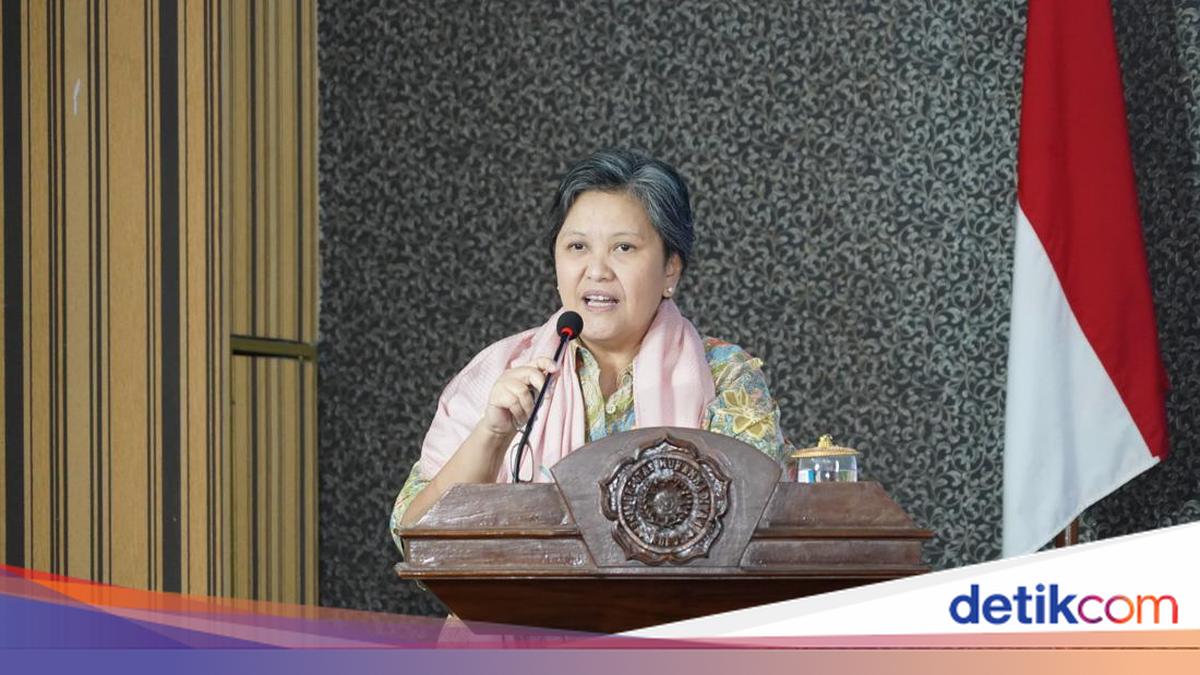
Deputy Speaker of the People’s Consultative Assembly (MPR RI), Lestari Moerdijat, has called for the strengthening of child protection systems from an early age through a joint movement involving all elements of the nation. According to her, multi-stakeholder collaboration is the key to breaking the chain of violence against children, whose cases continue to rise year after year.
“Handling cases of violence against children each year is impossible for the Ministry of Women’s Empowerment and Child Protection (PPPA) to accomplish alone without active involvement across a multi-stakeholder ecosystem,” said Lestari Moerdijat in a written statement on Wednesday (9 July 2026).
She made the remarks while opening an online discussion themed “Breaking the Chain of Violence against Children: Strengthening Protection, Parenting, and Psychosocial Service Systems”, organised by the Denpasar 12 Discussion Forum.
According to Lestari, collaboration forms the foundation for building a child protection system that is holistic, safe and sustainable for the future of the younger generation.
Lestari, who is familiarly known as Rerie, assessed that the roots of violence against children often lie within the home, resulting from the accumulation of economic pressures faced by parents as well as repressive parenting patterns passed down between generations.
In addition, Rerie, who is also a member of Commission X of the House of Representatives (DPR RI), noted that the handling of child violence cases often neglects the mental recovery of victims.
This is influenced by unequal access to and quality of psychosocial rehabilitation services, which remain concentrated in major cities.
In fact, she noted, child protection is guaranteed under the 1945 Constitution through Article 28B Paragraph (2), which guarantees every child’s right to live, grow, develop, and be free from violence and discrimination. Furthermore, Article 34 Paragraph (1) also mandates the state to care for abandoned children.
Rerie also highlighted SIMFONI PPA data showing that the number of child violence cases rose from 11,952 in 2021 to 19,628 in 2024.
“The increase in these case numbers demonstrates the need for accurate mapping of escalation areas so that legal intervention and preventive efforts can run hand in hand to unravel the iceberg phenomenon that has so far escaped the law,” she said.
The Head of the Operational Development Sub-Division of the Directorate of Women and Child Protection Crimes and Human Trafficking at the National Police Criminal Investigation Department (Bareskrim Polri), AKBP Ema Rahmawati, said that children are a vulnerable group who must receive special protection from the state.
According to Ema, in addition to processing cases, the police also provide protection to victims. She explained that handling child violence cases requires a special approach because perpetrators are often the victim’s closest relatives who hold positions of power. Threats of violence are also increasingly developing through digital access.
“The complexity of evidence gathering and the understanding among law enforcement officials in handling cases remain obstacles in proving cases of violence against children,” she said.
Meanwhile, the Deputy Chairperson of the Indonesian Child Protection Commission (KPAI), Jasra Putra, reminded that National Children’s Day, commemorated on 23 July, must serve as momentum to strengthen the child protection system.
“Do not wait until tomorrow, let alone wait until 2045,” he asserted.
According to him, the implementation of all child protection regulations must involve all parties. Moreover, children currently make up roughly one-third of Indonesia’s total population, so the needs of the child protection system must be met from an early stage.
A consultant at the Lentera Anak Foundation, Reza Indragiri Amriel, assessed that violence against children often begins with divorce, custody disputes, and parents being cut off from access to their children.
According to him, such conditions can trigger violence against children, particularly if the handling process does not take child protection aspects into account.
Psychologist and holistic health consultant Shinta Sari Shaleh said that the greatest wound experienced by child victims of violence is often not physical, but rather the way victims view themselves.
She argued that victims’ mental health recovery must be carried out thoroughly, involving parents and family.
Senior journalist Usman Kansong added that perpetrators of violence are often themselves victims of past violence, forming a chain of violence that repeats continuously.
Therefore, according to him, victims must receive serious attention through counselling and recovery so that they do not become perpetrators later in life.
Usman also reminded that violence against children takes not only physical, verbal and psychological forms, but also structural violence resulting from systems unable to fulfil children’s rights, such as the right to education, to play, and other basic rights.
“We should also pay attention to this structural violence, in addition to physical and verbal violence,” he concluded.
Source: jawawa.id (https://jawawa.id/newsitem/lestari-moerdijat-calls-for-strengthened-early-childhood-protection-system-1783565556)
Originally published by detikcom (https://news.detik.com/berita/d-8566194/lestari-moerdijat-dorong-penguatan-sistem-perlindungan-anak-sejak-dini), translated from Indonesian