
Lestari Moerdijat Calls for 30% Women’s Representation on the KPU and Bawaslu
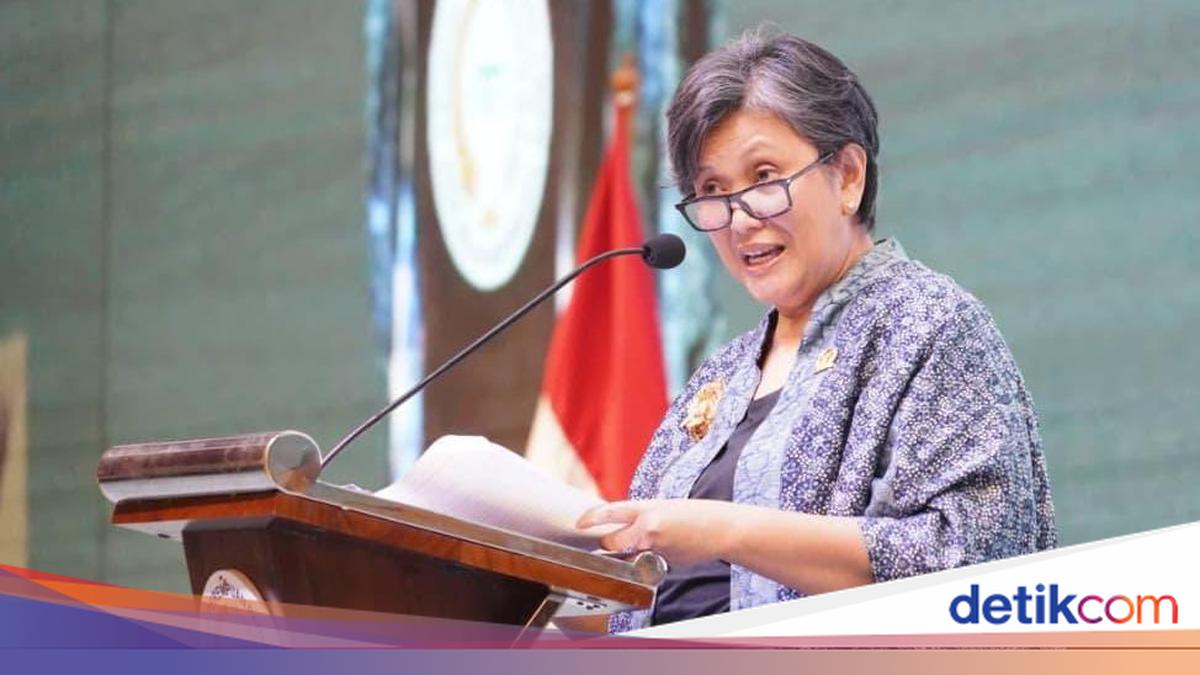
Deputy Speaker of the People’s Consultative Assembly (MPR RI) Lestari Moerdijat, known as Rerie, has stressed that transparent selection and equal representation in election-organising bodies are prerequisites for electoral fairness and better governance. She said the lack of adequate women’s representation on the General Elections Commission (KPU) and the Election Supervisory Agency (Bawaslu) could narrow the perspectives informing strategic decisions.
“Decisions by election organisers, from candidate verification to campaign monitoring, determine whether the contest is fair. Women therefore need to take part in those decisions, from the national to the regional level,” Rerie said in a written statement on Thursday (26 November 2026).
Data gathered during a judicial review at the Constitutional Court show that women remain well below the 30% threshold in election-organising bodies. The KPU for the 2022–2027 period has only one woman among its seven members, while Bawaslu has one woman among five members.
At provincial level, as of July 2026, 15 of the 38 provincial KPU offices had no women members at all. The situation is similar at provincial Bawaslu offices. Only six provinces meet the minimum 30% representation threshold, while 14 have no women members.
“Women must have an equal opportunity to stand as candidates, compete fairly and take part in decision-making as election organisers. The law must ensure that these opportunities are guaranteed at every stage,” she said.
She called for the revised Election Law to require women to make up at least 30% of the final membership of the KPU, Bawaslu, selection committees and ad hoc bodies at every level. The same principle, she added, should apply from the formation of selection committees through to the appointment of members.
Beyond the composition of the bodies, Rerie highlighted the importance of transparency in the management of election budgets. The Audit Board of Indonesia (BPK) conducted a special-purpose audit of the KPU and Bawaslu’s expenditure management for the 2024 simultaneous regional elections, producing 55 audit reports.
The BPK found instances of non-compliance and weaknesses in planning and budgeting, implementation and accountability, as well as reporting.
“Transparency is not simply about access to information; it also means accountability for the use of public funds. Election organisers must be able to account for every rupiah entrusted to them by the public,” she said.
The BPK’s findings, she said, strengthen the case that selection of election organisers should consider not only technical competence but also integrity and commitment to open governance.
Rerie urged the House of Representatives’ Commission II to ensure that the revised Election Law provides for stricter, more transparent budget oversight. She stressed that meeting the 30% threshold should not be an end in itself.
Data from the Indonesian Women’s Political Caucus (KPPI) show that women account for 22.4% of members of the House of Representatives (DPR RI), 19.08% of provincial legislative council members and 16.47% of regency and city legislative council members. According to Rerie, a member of Commission II, the figures show that affirmative measures without sustained development and transparency in parties’ internal selection processes will merely fill a quota.
“Regulations can compel parties to nominate women, but they cannot compel voters to choose candidates who are not yet prepared. If we pursue the numbers without sustained development, public education and transparency in parties’ internal selection, then 30% will be no more than filling a quota, rather than improving quality,” she said.
She also called for protection for candidates and election organisers facing intimidation, harassment or gender-based violence, including online. The revised Election Law, she said, should establish a safe complaints mechanism, protect complainants’ confidentiality and ensure that every report is followed up.
For Rerie, transparent selection and equal representation are inseparable issues. Together, they determine whether election organisers can work impartially and earn public trust.
“If the imbalance in the composition of election bodies is allowed to persist and their selection remains opaque, electoral justice will be nothing more than rhetoric. The Election Bill must be an instrument for correcting course, not merely endorsing old practices,” she concluded.
Source: jawawa.id (https://jawawa.id/newsitem/lestari-moerdijat-calls-for-30-womens-representation-on-the-kpu-and-bawaslu-1795704723)
Originally published by detikcom (https://news.detik.com/berita/d-8771820/lestari-moerdijat-dorong-keterwakilan-perempuan-30-di-kpu-dan-bawaslu), translated from Indonesian