
Lestari Moerdijat: Appropriate Mitigation of Potential Energy Crisis Essential to Protect the Public
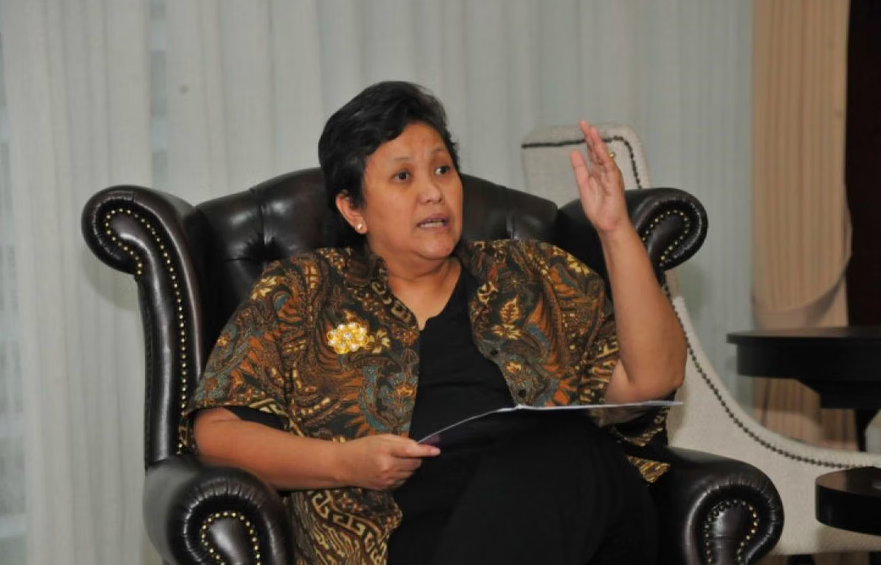
Appropriate mitigation of potential energy crises amid deteriorating global economic conditions is crucial, as part of efforts to protect every citizen.
“Efforts to protect society from the threats of global energy crisis impacts must be intensified with appropriate policies,” said Deputy Speaker of the Indonesian People’s Consultative Assembly (MPR RI) Lestari Moerdijat in her written remarks at the online discussion themed “Challenges of the Global Energy Emergency Post-US-Israel and Iran Conflict” held by the Denpasar Discussion Forum 12 on Wednesday (1/4).
The discussion, moderated by Arimbi Heroepoetri, S.H., LL.M. (Aide to the Deputy Speaker of MPR RI), featured speakers Sugeng Suparwoto (Deputy Chairman of Commission XII of the House of Representatives), Harris, S.T., M.T. (Secretary of the Directorate General of New, Renewable Energy, and Energy Conservation, Ministry of Energy and Mineral Resources / EBTKE ESDM RI), and Fabby Tumiwa (CEO of the Institute for Essential Services Reform / IESR).
Additionally, Dr. Yayan Satyakti (Energy Expert from Padjadjaran University / Unpad) attended as a respondent. Lestari emphasised that realistic policies based on proper mitigation are needed to minimise public concerns regarding potential energy crisis impacts.
“An energy crisis will have chain effects on all sectors. The government must have an appropriate mitigation scheme and clear communication regarding energy policies to the public,” stressed Rerie, Lestari’s familiar name.
In the long term, Rerie, who is also a member of Commission X of the House of Representatives, urged the government to accelerate energy diversification programmes.
According to her, reliance on fossil energy makes Indonesia vulnerable to global energy price fluctuations.
“We cannot continue to rely on energy imports indefinitely. Energy diversification is essential to achieve national energy independence,” said the member of the NasDem Party’s Supreme Council.
Deputy Chairman of Commission XII of the House of Representatives Sugeng Suparwoto revealed that Middle Eastern countries still dominate global oil and gas production, around 800 billion barrels. Thus, added Sugeng, the Middle East is called the heart of the world’s oil and gas.
Meanwhile, Sugeng explained, Indonesia’s oil and gas production is 845,000 barrels per day, while fuel consumption is 1.6 million barrels per day.
Indonesia’s oil and gas reserves are only 2.4 billion barrels. Thus, said Sugeng, Indonesia’s current position is as a net fuel importer.
The allocation for oil and gas and electricity subsidies and compensation in the 2026 State Budget, revealed Sugeng, amounts to Rp400 trillion.
With the current situation, emphasised Sugeng, every US$1 increase in oil prices requires an additional subsidy of Rp6.7 trillion.
According to Sugeng, there needs to be an increase in exploration of new oil sources to strengthen national oil and gas reserves in anticipation of global political and economic dynamics.
In addition, Sugeng also proposed a petroleum fund to enable Indonesia to anticipate global oil and gas price fluctuations.
In the long term, he added, do not forget to develop the potential of new and renewable energy that we have.
Secretary of the Directorate General of EBTKE ESDM RI Harris revealed that the government is currently preparing anticipatory steps for global oil and gas price fluctuations.
Several such steps, said Harris, include efficiency measures in the form of implementing work-from-home (WFH) for civil servants (ASN) and private employees, efficiency in official vehicles, official travel, and transitioning from petrol motorcycles to electric motorcycles.
In addition to these efficiency steps, added Harris, efforts are also being prioritised to accelerate the energy transition towards the utilisation of new and renewable energy (EBT).
In 2025, revealed Harris, 15.75% of national energy supply will already use EBT. This year, he added, the EBT utilisation target is 16%-20% of national energy.
With these various efforts, explained Harris, fossil fuel consumption can be gradually reduced.
CEO of IESR Fabby Tumiwa opined that what is happening now is a global fossil energy crisis.
Fabby assessed that Indonesia is currently capable of handling short-term oil and gas supply disruptions due to turmoil in the Middle East.
However, said Fabby, Indonesia’s condition remains vulnerable to prolonged oil price shocks and logistics disruptions.
According to Fabby, the calming of conflict in the Middle East does not immediately normalise global oil and gas supply conditions.
Because, he explained, damage to oil and gas production facilities due to war in the Middle East requires a long time to repair. This situation, emphasised Fabby, must also be anticipated.
Energy Expert from Unpad Yayan Satyakti opined that building a fuel buffer stock supported by increasing domestic fuel supply capacity is important to realise.
This step, said Yayan, is very good for obtaining more efficient prices when global fuel supply disruptions occur.
Similarly, added Yayan, with efforts to establish a petroleum fund that must be realised to support research and development of energy in the country.
From the research results, Yayan hopes that various development steps in the national energy sector can anticipate future energy utilisation dynamics.
Senior Journalist Usman Kansong opined that the US and Israel attacks on Iran impact the potential fossil-based energy crisis, leading to fuel-saving measures.
This saving of fossil energy consumption, according to Usman, has actually been carried out by the government before the war in the Middle East occurred.
Whether that is in the form of the B50 policy, transition to EBT, or building new refineries.
In the context of saving, according to Usman, an evaluation of the current fuel prices is needed.
“Whether the current non-increasing fuel prices are actually squandering our State Budget or making society