
Lessons from the New Order: Tommy Soeharto's Monopoly over the Clove Commodity
Jakarta, CNBC Indonesia - President Prabowo Subianto has officially formed a state-owned enterprise named PT Danantara Sumber Daya Indonesia. Through this new SOE, the government will control the international distribution channels of a number of strategic commodities, such as coal, crude palm oil (CPO), and ferro alloys.
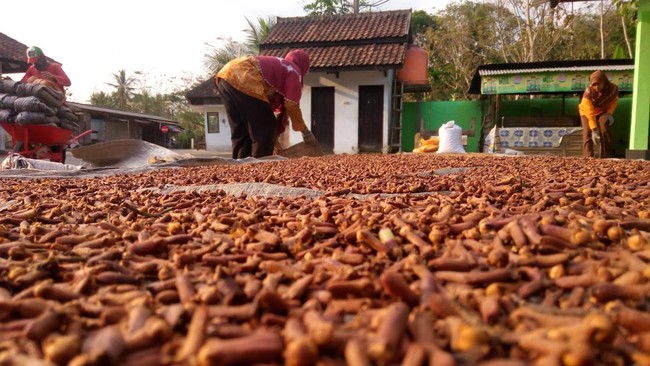
Although it sounds new, policies of this type have occurred before in Indonesia. In the New Order era, the government also formed a special institution to control the trading of important national commodities, namely cloves. The agency was called Badan Penyangga dan Pemasaran Cengkeh (BPPC).
BPPC stood up in the 1990s and was led by Hutomo Mandala Putra or Tommy Soeharto, the son of President Soeharto and Prabowo’s brother-in-law at the time.
Through Presidential Decree Number 20 of 1992 concerning the Domestic Production Clove Trading, the government placed BPPC as the main controller of national clove trade. The government argued it was necessary to intervene to stabilise clove prices and protect farmers’ welfare.
Under this regulation, farmers were no longer allowed to sell harvests directly to traders or tobacco factories. They were required to sell cloves first to Village Unit Cooperatives (KUD). After that, KUD would sell the cloves to BPPC. From BPPC, the cloves were then channelled to large traders or the tobacco industry.
In other words, the entire cloves trading chain was practically within a single channel controlled by BPPC. The government said the system was designed to keep clove prices stable while helping farmers.
“That to maintain the price level of domestically produced cloves and to strengthen the capacity to help clove farmers in diversifying and converting clove plants, it was deemed necessary to review the regulation of the domestic clove trade,” reads the considerations in Presidential Decree Number 20 of 1992.
However, from the outset BPPC faced controversy. Many argued the agency created a monopoly because all cloves trade could only pass through one gate.
The issue also arose when BPPC required large funds to operate. Bank Indonesia initially refused to provide financing. Yet the refusal eventually changed.
“Although the Governor of the Central Bank, Adrianus Mooy, initially rejected Tommy’s request for funding from the central bank, he was compelled to grant it after Tommy asked for his father’s support,” Andrew Rosser writes in The Politics of Economic Liberalisation in Indonesia (2003).
In April 1991, BPPC obtained a Rp369 billion loan from BI. Then in October 1991, the central bank disbursed a further Rp300 billion. According to the daily Ekonomi Neraca (8 May 1992), the funds were used by KUD to purchase farmers’ clove harvest.
Despite the large injections, BPPC’s problems continued. In early 1992, BPPC was reportedly on the brink of bankruptcy.
“BPPC faced many problems. Ranging from overproduction of cloves, interest burdens and repayment of bank loans including Bank Indonesia Liquidity Credit, to stockpiles of cloves,” writes Bali Post (13 March 1992).
The farmers bore the brunt. Rather than improving farmers’ welfare, BPPC was accused of driving clove prices down. As the sole trader, BPPC held a dominant position in setting purchase prices.
Citing the book Ekspedisi Cengkeh (2013), before BPPC, clove prices ranged from Rp7,500 to Rp20,000 per kilogram. After BPPC began operating, the purchase price fell to around Rp2,000 per kilogram. The price could even be cut further if the clove quality was deemed poor.
Although bought cheaply, BPPC sold the cloves at higher prices. The farmers were left short.
“One bag of wet cloves is equivalent to one motorcycle. Imagine, my motorcycle cost Rp120,000 back then. To obtain that price, you only needed one large bag of wet cloves. Now how could I?” says Mr Hodde, a clove farmer interviewed for the book Ekspedisi Cengkeh (2013).
BPPC’s history ended in January 1998 amid the economic crisis. Through Presidential Decree Number 21 of 1998, President Soeharto officially dissolved BPPC. After that, farmers were free to sell cloves to anyone and trade once again followed market mechanisms.