
Lenient Sentences for Corrupt Officials and Permissive Political Parties Keep Corruption Repeating
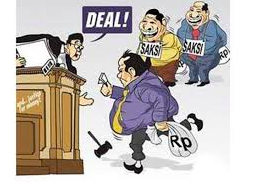
Corruption eradication in Indonesia is still considered far from ideal because punishments for perpetrators of graft remain very light. At the same time, political parties are seen as having failed to keep problematic figures off the stage of power.
Herdiansyah Hamzah, also known as Castro, a lecturer at the Faculty of Law of Mulawarman University, expressed his concern over the phenomenon of corruption that shows no sign of abating. According to data from Indonesia Corruption Watch, the average sentence in corruption cases stands at only around three years. Such minimal punishment is considered incapable of producing a deterrent effect, both for the perpetrators and the wider public.
“Imagine, for the crime of robbing state funds worth billions or even trillions of rupiah, the average sentence is only three years. Clearly, there is no deterrent effect whatsoever,” said Herdiansyah when contacted.
The excessively light sentences make perpetrators reluctant to weigh the consequences of their actions, so they do not hesitate to commit repeat offences.
The statement emerged amid the furore over a sting operation by the Corruption Eradication Commission (KPK) that netted 17 people. Among those caught in the covert operation were Lampri, Director General of Control and Order of Land and Space at the Ministry of Agrarian Affairs and Spatial Planning/National Land Agency; I Sontang Coin Manurung, Head of the Bogor Regency Land Office; and Tardi, Head of the Tangerang City Land Office.
The case also dragged in Fahd Arafiq, Chair of the Golkar Party’s Central Executive Board; Arif Sugiyanto, former Regent of Kebumen; and Adrianto Pitojo Adhi, President Director of PT Summarecon Agung Tbk.
From the sting operation, investigators seized around 20 boxes, cartons and suitcases containing rupiah banknotes and foreign currency with an estimated value of tens to hundreds of billions of rupiah. The matter is all the more worrying because political parties appear to turn a blind eye to the track records of candidates for public office.
The screening function that should operate strictly has instead been drowned out by mere popularity-driven pragmatism. Political parties tend to be permissive and give a stage to figures who have previously been implicated in legal cases or have problematic records. “Beyond the issue of deterrence, there is also the problem of political parties failing as a filter to produce people who genuinely have integrity,” said Herdiansyah.
Moral standards on the practical political stage are increasingly eroded. In fact, the absolute requirement for a leader lies in a clean track record and an unwavering commitment to fighting corruption.
“A politician’s heart should lie in matters of integrity: what they have done, whether they have committed grave sins against the fight against corruption, including other crimes,” he concluded.