
Lemhannas Governor: Geopolitical Awareness Is Not Just for Diplomats
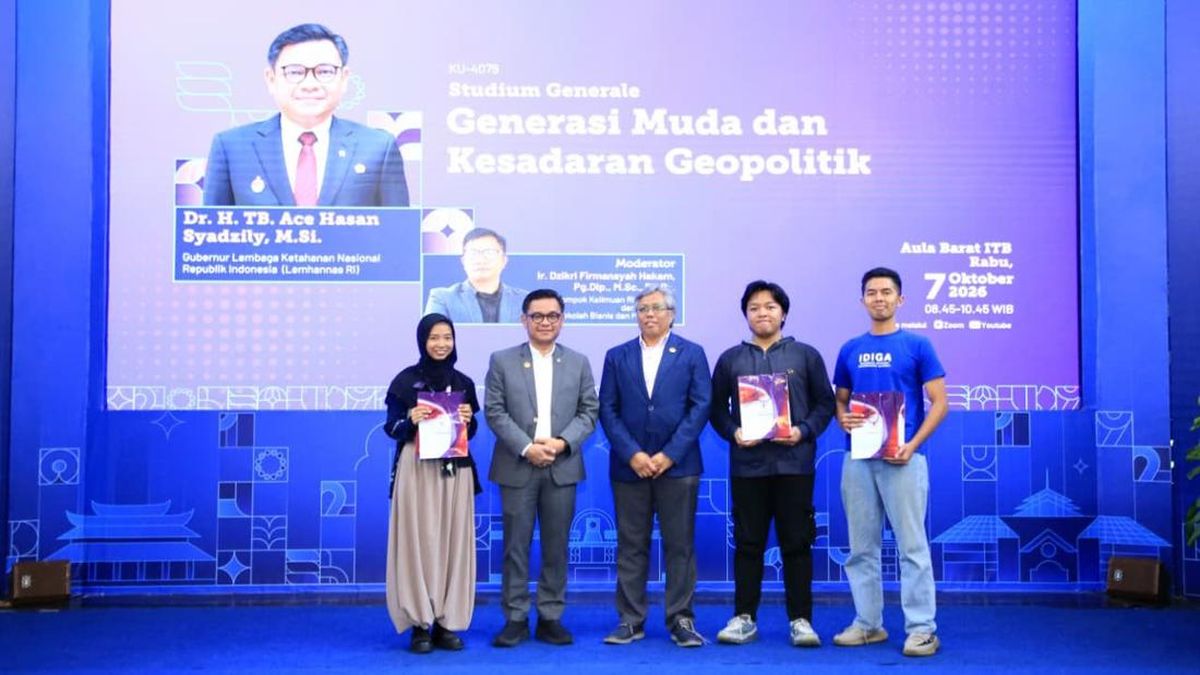
The Governor of the National Resilience Institute of the Republic of Indonesia (Lemhannas RI), Ace Hasan Syadzily, said geopolitical awareness should not be a skill reserved for diplomats or national leaders. The ability to understand global dynamics should also be developed among the public, particularly young people.
Ace delivered the message during a public lecture entitled “Building Geopolitical Awareness Among Young People: Understanding the World, Defining Our Position, Making a Contribution” at the Bandung Institute of Technology (ITB) on Wednesday (7 October).
He explained that geopolitical awareness is the ability to read, understand and respond to shifts in global power critically and strategically. This ability is increasingly important because international issues now have a direct bearing on everyday life. Geopolitical awareness, he said, should not be regarded as the concern of a select few.
As examples, he cited disruption in the Strait of Hormuz amid the Iran-Israel conflict, which pushed logistics costs up by 150–200 per cent, and a landslide at the Grasberg mine in Papua in 2025 that reduced global copper supplies. The two events show how developments abroad affect Indonesia, while also underlining that Indonesia is not merely a recipient of their effects.
A basic expression of geopolitical awareness is a critical approach to information. Ace encouraged students not only to read, but also to investigate who produced a piece of information and what interests they might have.
He suggested asking five questions: what happened, why did it happen, who has an interest in it, what impact does it have on the nation, and what can be done? This approach, he said, should help young people become actors rather than merely targets of information and propaganda.
Ace outlined five capabilities young people should develop on the path to 2045: strategic awareness, critical thinking, awareness of national interests, global competence and digital literacy.
He stressed that geopolitical awareness should extend beyond knowledge and become an asset for national resilience. Building it is not solely the responsibility of students, but a shared undertaking involving the government, universities, young people, the technology ecosystem, society and youth organisations.
He said he hoped ITB would produce productive and innovative young people, as well as adaptive and competitive leaders. Geopolitical awareness, he said, would determine Indonesia’s strategic role.
Ace also noted that, according to 2025 data from Statistics Indonesia (BPS), there are 66 million people aged 15–29 in Indonesia. If they are not adequately prepared, this group could face skills gaps, polarisation, vulnerability to information, and dependence on technology. “Technology is a source of power, both today and in the future,” he said.
“Once again, technology is power. Indonesia needs to create, develop, master and secure technology,” Ace said.
In closing, he said geopolitics is not simply about what happens in the world, but about how changes in the world affect Indonesia. He urged young people not to remain spectators, but to become actors, so that geopolitical awareness can develop into the ability to adapt and lead to tangible contributions to national resilience.
“Golden Indonesia 2045 is not only about the Indonesia in which we will live, but also the Indonesia we are shaping today,” Ace concluded.
Source: jawawa.id (https://jawawa.id/newsitem/lemhannas-governor-geopolitical-awareness-is-not-just-for-diplomats-1791463925)
Originally published by CNN Indonesia (https://www.cnnindonesia.com/nasional/20261008185315-25-1413288/gubernur-lemhannas-kesadaran-geopolitik-bukan-sekadar-milik-diplomat), translated from Indonesian