
Legislators Urge Immediate Waste Management Before PSEL Completion
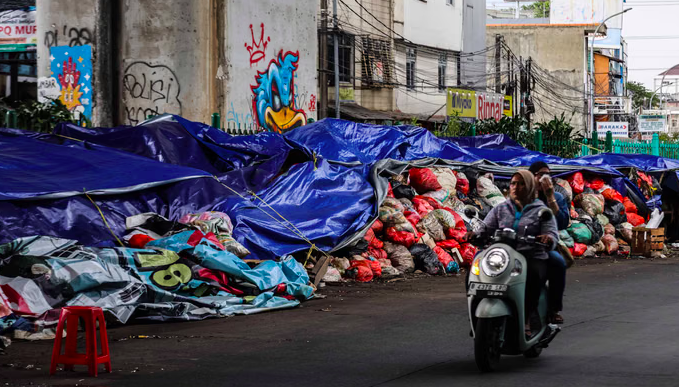
The Jakarta Regional People’s Representative Council (DPRD DKI) Commission D is urging accelerated waste management from upstream to midstream sectors to prevent the capital’s waste problem from worsening while awaiting the construction of the Waste-to-Energy Plant (PSEL).
Commission D Chair Yuke Yurike stressed that upstream and midstream waste management must be prioritised, as PSEL construction is expected to take up to three years.
‘More focus is needed on resolving issues at the upstream and midstream levels,’ Yuke stated in a press release on Thursday (28 May).
She said upstream waste management can start with public education on waste segregation, provision of infrastructure, and expanding community-based waste management areas.
At the midstream level, efforts should focus on optimising facilities like TPS 3R, TPST, RDF, and biogas installations. She highlighted that institutional strengthening and financial support are crucial for an effective waste management system.
Yuke noted that Jakarta’s waste problem has drawn central government attention, with the President reportedly giving special focus to national waste management through relevant ministry oversight.
‘We want all parties to help resolve Jakarta’s waste issue, at least showing progress,’ Yuke stressed.
Meanwhile, Judistira Hermawan, Chair of the DPRD DKI Jakarta’s Special Committee on Waste Management, highlighted Jakarta’s daily waste volume of around 9,000 tonnes. He stated that resolving the issue cannot rely solely on downstream processing technology.
He argued that public discipline in segregating waste at home is key to successful management, making citizen support as crucial as the government’s push for waste-to-energy technology.
‘Regardless of the technology’s cost, without collective support—including the public’s willingness to segregate waste at source—progress will be impossible,’ Judistira said.
He confirmed the DPRD would continue monitoring waste management policies to align with Governor’s Instruction No. 5 of 2026 on Source-Based Waste Segregation and Management.
‘This is a collective effort involving all stakeholders in Jakarta—government and citizens alike,’ Judistira concluded.