
Legislator Welcomes Constitutional Court Ruling: No New Tricks on Remaining Internet Quota
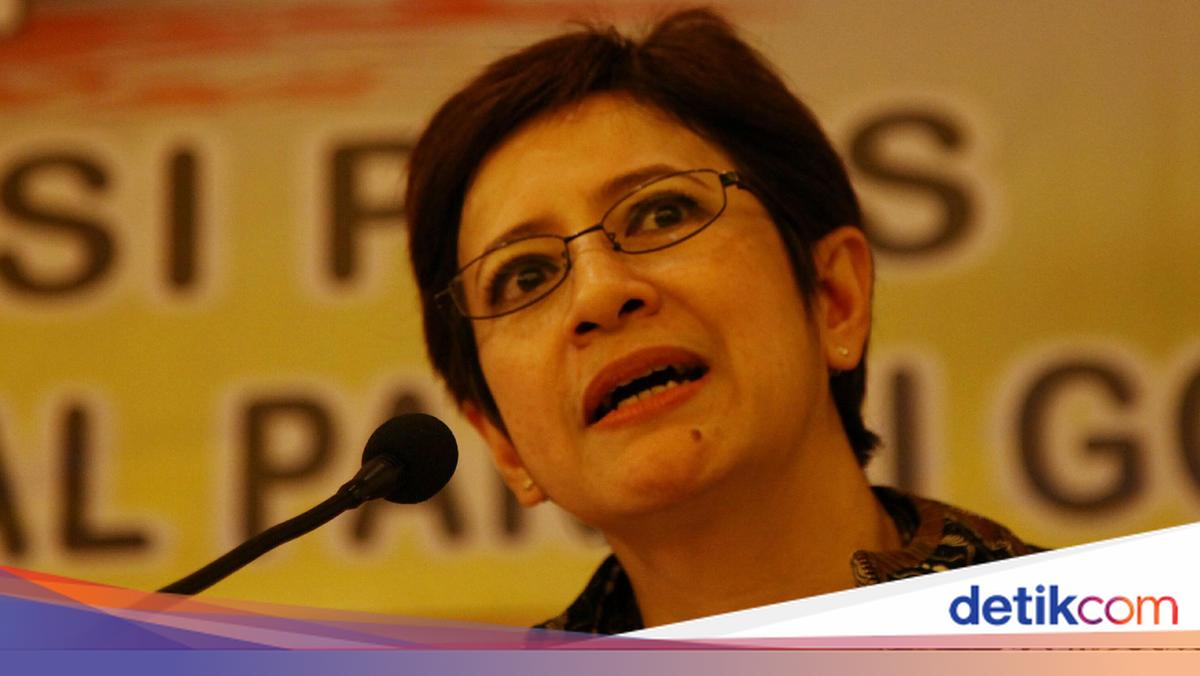
Nurul Arifin, a member of Commission I of the Indonesian House of Representatives (DPR RI), has responded to the Constitutional Court’s (MK) decision granting part of a petition and ordering that purchased internet quota be usable until fully exhausted without any additional charges. Nurul hopes operators will comply with the ruling.
“The public must not be granted the right to retain their remaining quota only to then be charged more. That would clearly contradict the spirit of the Constitutional Court’s ruling, which seeks to deliver justice for consumers,” Nurul told reporters on Friday (24/7/2026).
Nurul noted that telecommunications operators have many business strategy options besides imposing additional costs on customers. She believes companies should use the ruling as a moment to boost innovation.
“Operators can strengthen network efficiency through technological optimisation, including the use of artificial intelligence in traffic management. With a more efficient network, operational costs can also be reduced without having to sacrifice customers,” Nurul said.
“Operators’ business models must evolve. They should not rely solely on selling internet quota. There are many digital business opportunities that can be developed without burdening the public with more expensive tariffs,” she continued.
The Golkar legislator urged operators not to engage in practices that substantively harm consumers. She cited examples such as reducing the quota within packages sold at the same price, imposing overly restrictive rollover limits, or adding conditions that make it difficult for consumers to exercise their rights.
“There must be no new tricks. For instance, prices stay the same but the quota is cut, or rollover applies only to certain packages with complicated conditions. The spirit of the Constitutional Court’s ruling is to protect consumers, so its implementation must reflect that spirit,” she asserted.
She also urged the government to promptly draft implementing regulations that provide certainty for all parties, and asked the Business Competition Supervisory Commission (KPPU) to monitor how telecom companies implement the ruling.
“The government must ensure the ruling is implemented well through clear, transparent regulations that provide legal certainty. On the other hand, the KPPU also needs to supervise against price collusion among operators that could harm the public,” Nurul said.
“We want a telecommunications industry that remains healthy and able to invest in building networks across the remotest parts of the country, while at the same time the public receives quality services at affordable prices. These two interests must go hand in hand,” she added.
The Constitutional Court’s ruling
As summarised by detikcom on Thursday (23/7/2026), several petitions concerning expired internet quota were handled by the Constitutional Court. The Court has rejected at least four such petitions.
A different ruling was later issued in case number 273/PUU-XXIII/2025, filed by online motorcycle taxi driver Didi Supandi, online culinary trader Wahyu Triana Sari, and lecturer-advocate Rega Felix. The Court granted part of the petitioners’ request.
“Ruling: granting the petitioners’ request in part,” said Chief Justice Suhartoyo in the ruling read out on the Constitutional Court’s YouTube channel on Thursday (23/7/2026).
“Declares that Article 28 paragraph (1) in Article 71 point (2) of Law Number 6 of 2023 on Job Creation as contrary to the 1945 Constitution and conditionally not legally binding, insofar as it is not interpreted to mean that ‘the tariff amounts set by telecommunications network operators and/or telecommunications service providers are determined by the network and/or service providers based on a formula set by the central government, with the obligation to provide telecommunications service options that guarantee that remaining quota belonging to telecommunications service users remains active and usable’,” he continued.
In its considerations, the Court stated that purchased internet quota must be usable by consumers until fully exhausted. The Court stressed that no additional charges may be imposed.
“In real terms, quota that has not been fully used or enjoyed must remain protected as the property right of telecommunications service users, to be used until that quota runs out, without being burdened with additional charges or tariffs on the pretext of extending the active period or for any other reason,” Constitutional Court Justice Adies Kadir said at the reading of Ruling Number 273/PUU-XXIII/2025 at the Court building.
The Court said tariff formulas and telecommunications service schemes must not be framed solely through the commercial lens of telecommunications operators. It stressed that existing rules must guarantee reasonable protection for telecommunications service users.
Such protection, the Court said, need not always take the form of a single uniform service model. The Court stated that protection can be provided through the offering of various flexible package options.
The Court set out options to prevent internet quota from simply expiring, namely through:
accumulation or rollover of quota;
extension of the active period;
transfer of benefits;
compensation;
refund; or
other forms of protection.