
Legislator Warns Mastery of Digital Instruments Must Not Lead to Destructive Impact
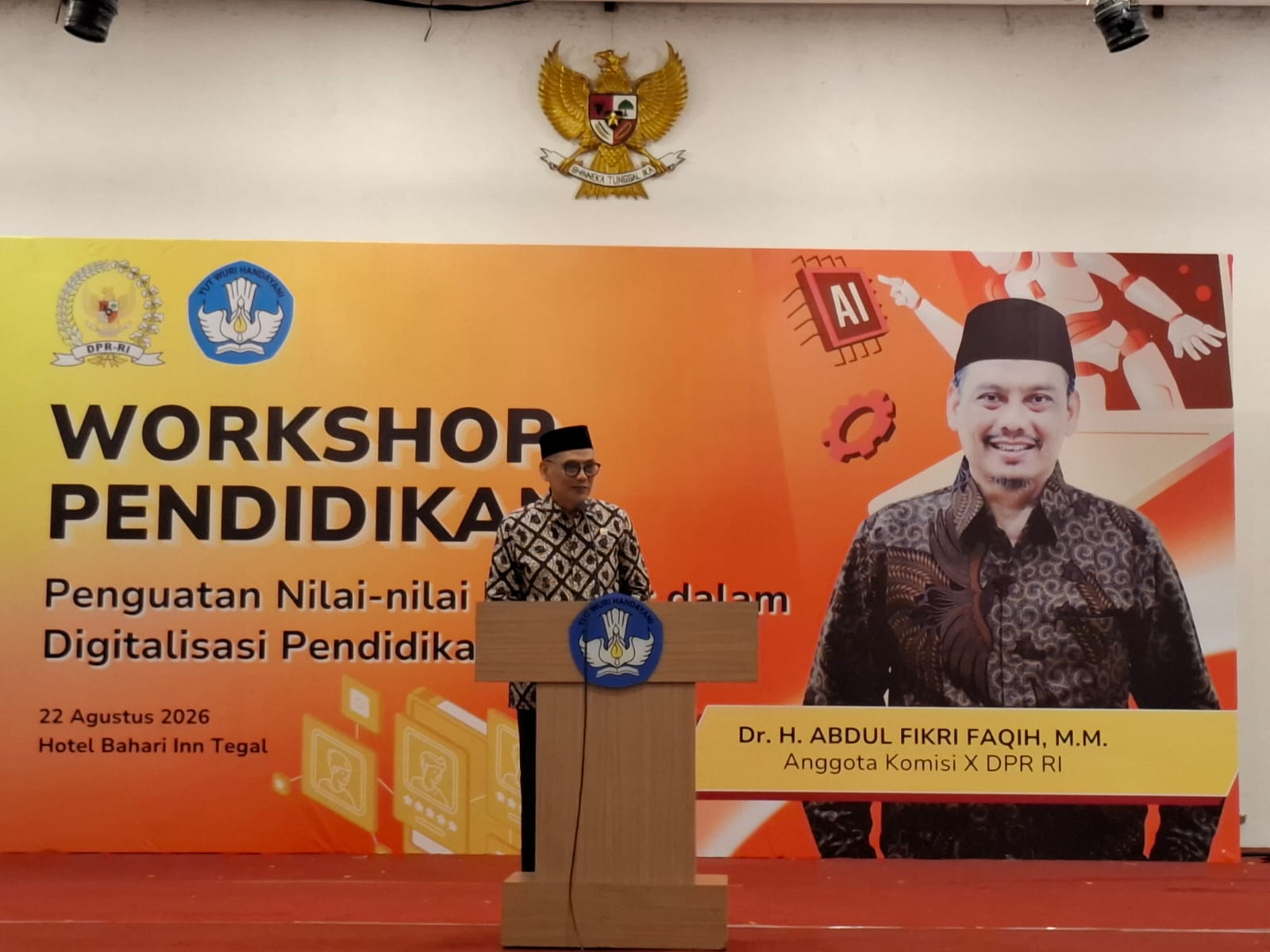
The characteristics of education are crucial and urgent as the primary moral defence for students. No matter how advanced the technology or artificial intelligence (AI) adopted in the national curriculum, mastery of these digital instruments must be balanced with strong ethics and character so as not to bring destructive impacts.
This was conveyed by legislator and member of House of Representatives Commission X, Abdul Fikry Faqih, following an education workshop with the theme “Strengthening Character Values in Educational Digitalisation” at a hotel in Tegal City, Central Java, on Saturday (22/8).
Fikri assessed that the digital challenges facing children today are already highly complex. Digital literacy is not merely a technical ability, but also concerns the formation of ethics, mental resilience, and critical awareness.
“Therefore, digital literacy must be understood as a comprehensive life skill that shapes individuals into wise, safe, and responsible technology users,” said Fikry.
Fikry stated that House of Representatives Commission X is pushing for the strengthening of character education and moral ethics to be included in the national curriculum through the revision of the National Education System Law (Sisdiknas).
“Strengthening character education and moral ethics in the national curriculum is highly appropriate for addressing social problems that frequently occur, such as bullying, digital violence, and moral degradation among students,” explained the legislator from Electoral District IX of Central Java.
Directorate of Early Childhood Education at the Ministry of Primary and Secondary Education, Djajeng Baskoro, said the education workshop on strengthening character values is a strategic training activity to improve teacher competence and understanding in implementing positive character cultivation in students.
“This activity focuses on practical provision so that educators are able to integrate moral values, attitudes, and good habits into the students’ learning ecosystem,” said Djajeng.
According to Djajeng, through this provision activity, the ministry wants teachers and education personnel to actively apply Pancasila values. “Tangibly into daily habits and culture within the school environment,” explained Djajeng.
The Head of the Tegal City Education and Culture Office, Dewi Umaroh, represented by the Head of Education Personnel Development, Listiana Kusumawardani, appreciated the implementation of the education and innovation workshop, particularly educational digitalisation initiated by House of Representatives Commission X member Abdul Fikri Faqih.
“The activity is in line with the crucial programme of the Ministry of Education. Educational digitalisation is very important and must be balanced with a process of character strengthening, both for teachers and students,” said Listiana.