
Legislator: US-Iran conflict a momentum to strengthen food and energy security
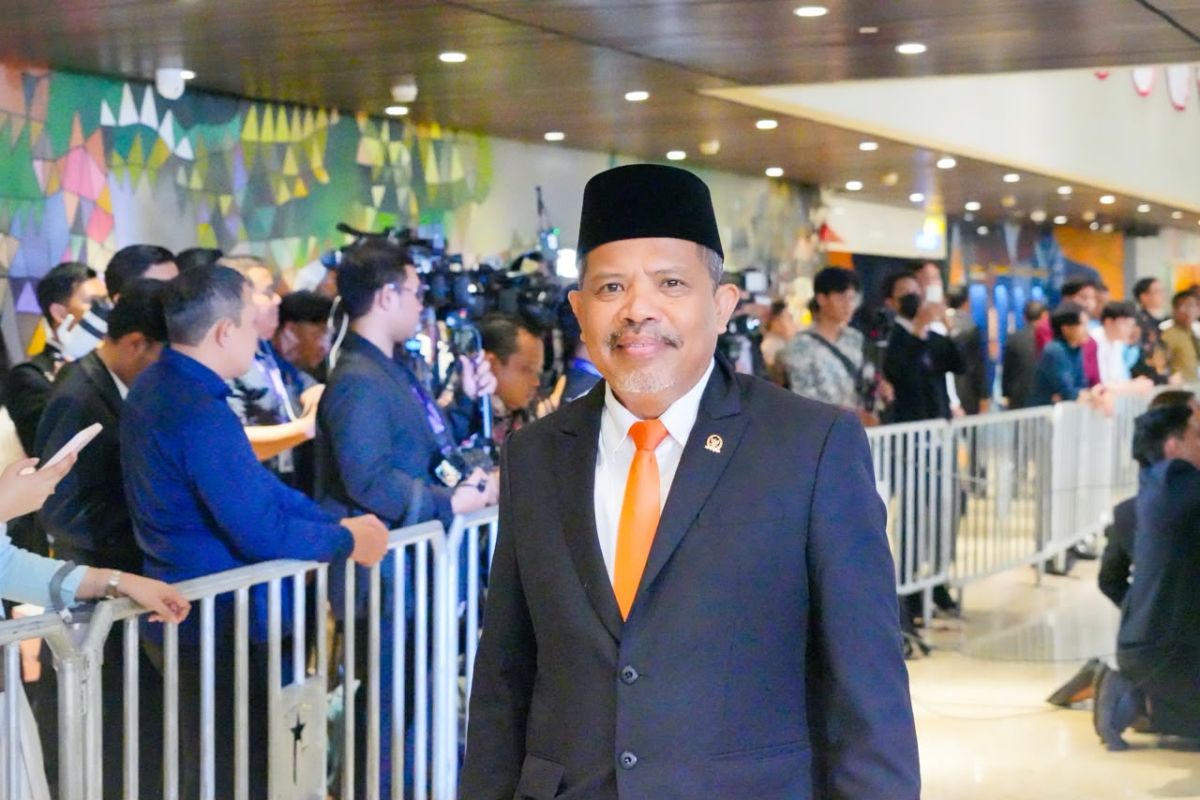
Jakarta (ANTARA) - House of Representatives Commission IV member Johan Rosihan has assessed that the conflict between the United States and Iran presents a momentum for Indonesia to strengthen its food and energy security in order to reduce vulnerability to global price fluctuations.
Johan said the government needs to prepare measured mitigation measures, because geopolitical disruptions in the Middle East have the potential to affect oil prices, logistics costs, exchange rates, as well as food production and distribution costs.
“The impact will move like a domino effect. When oil prices and logistics costs rise, imported food prices will also come under pressure. If at the same time the rupiah weakens against the US dollar, Indonesia’s import burden will become even more expensive,” Johan said in an official statement received in Jakarta on Thursday.
From the energy perspective, Johan assessed that the rise in world oil prices needs to be anticipated, as it could increase pressure on energy costs and the state budget (APBN).
“The government must guarantee stock security and not make sudden decisions to raise subsidised fuel prices. However, the government must also be honest that if world oil prices remain high, pressure on the state budget, energy subsidies, transport, electricity, and food prices will become even greater,” he said.
He therefore proposed mitigation through securing fuel stocks, strengthening food reserves, stabilising the exchange rate, controlling distribution costs, as well as protecting farmers, fishermen, micro, small, and medium enterprises (MSMEs), and low-income communities.
Johan also assessed that national food production needs to be continuously increased, accompanied by strengthening government rice reserves, developing the domestic fertiliser and animal feed industries, and utilising alternative energy sources.
“This conflict must serve as a warning that dependence on imported food and energy is a strategic vulnerability. Food and energy security is not merely an economic matter, but part of national defence,” he said again.
Regarding food, he asked the government to also anticipate pressure on food commodities that are still imported from abroad, including wheat, soybeans, sugar, meat, and raw materials for animal feed.
According to Johan, rice shipments from the US to Indonesia do not pass through the Strait of Hormuz, so they are not directly affected by disruptions in that route.
However, the rise in energy prices due to the conflict could increase fuel costs, transport, ship insurance premiums, fertiliser, as well as food production and distribution.
Johan said the government also needs to provide a more detailed explanation regarding the plan to import 1,000 tonnes of special rice from the US, particularly concerning the type of rice, users, basis of need, and distribution mechanism.
The government previously explained that the allocation of 1,000 tonnes of rice is only for special classification rice from the US and its realisation still depends on domestic demand. The government also confirmed that there will be no imports of consumption rice in 2026.
Minister of Agriculture Andi Amran Sulaiman stressed that the rice planned to be brought in from the US is special rice, including basmati types to meet the needs of certain segments, not general public consumption rice.
According to Johan, food import policies need to remain aligned with the self-sufficiency agenda and the protection of domestic farmers’ production.
Therefore, every import plan needs to be based on clear needs and take into account national production and stock conditions.
“If national production and stocks are truly sufficient, the government must prioritise the produce of Indonesian farmers,” he said as well.
From the domestic supply side, Statistics Indonesia (BPS) projects rice production for public consumption throughout January-September 2026 to reach 28.71 million tonnes, relatively stable with an increase of 0.01 percent compared to the same period the previous year.
Perum Bulog on 13 August 2026 recorded rice stocks of around 5.4 million tonnes, while domestic rice absorption had reached around 3.4 million tonnes or about 80 percent of the 4 million tonne target for 2026.
Meanwhile in the energy sector, President Prabowo Subianto in early August ordered that subsidised fuel prices not be raised amid the dynamics of world crude oil prices. The government also guarantees that pertalite prices will remain maintained until December 2026.
The government is also undertaking efforts to reduce dependence on energy imports.
The Ministry of Energy and Mineral Resources (ESDM) records national petrol demand at around 40 million kilolitres per year, while domestic production is around 20 million kilolitres, so around 20 million kilolitres is still met through imports.
The government is, among other things, preparing the development of E20 bioethanol to reduce the need for petrol imports. In addition, the government has launched the B50 biodiesel mandate in July 2026 as part of a strategy to strengthen energy security and reduce imports of diesel products.
Furthermore, Johan assessed that strengthening domestic production and reserves needs to be continuously maintained, so that external shocks do not increase the burden on farmers, fishermen, small business actors, and low-income communities.
“The state must be present to protect the people while strengthening national food and energy independence,” he said again.
Source: jawawa.id (https://jawawa.id/newsitem/legislator-us-iran-conflict-a-momentum-to-strengthen-food-and-energy-security-1787241260)
Originally published by Antara (Indonesian) (https://www.antaranews.com/berita/5704081/legislator-konflik-as-iran-momentum-perkuat-ketahanan-pangan-energi), translated from Indonesian